As geopolitical tensions between the United States and Iran continue to fluctuate, the conversation surrounding a potential military escalation or invasion scenario is being watched closely in Metro Detroit. While the Middle East is thousands of miles away, the ripples of any significant military engagement—specifically a theoretical US invasion or sustained military response against Iran—would wash over Southeast Michigan with unique intensity.
Detroit is not just any American city in this context. It sits at the intersection of the nation’s automotive heart, a critical hub for the defense industry, and the home of the largest Arab-American population in the United States. From the tank plants in Sterling Heights to the community centers in Dearborn, the prospect of a US-Iran conflict is a local story with profound economic and social implications.
The Arsenal of Democracy: Defense Industry Implications
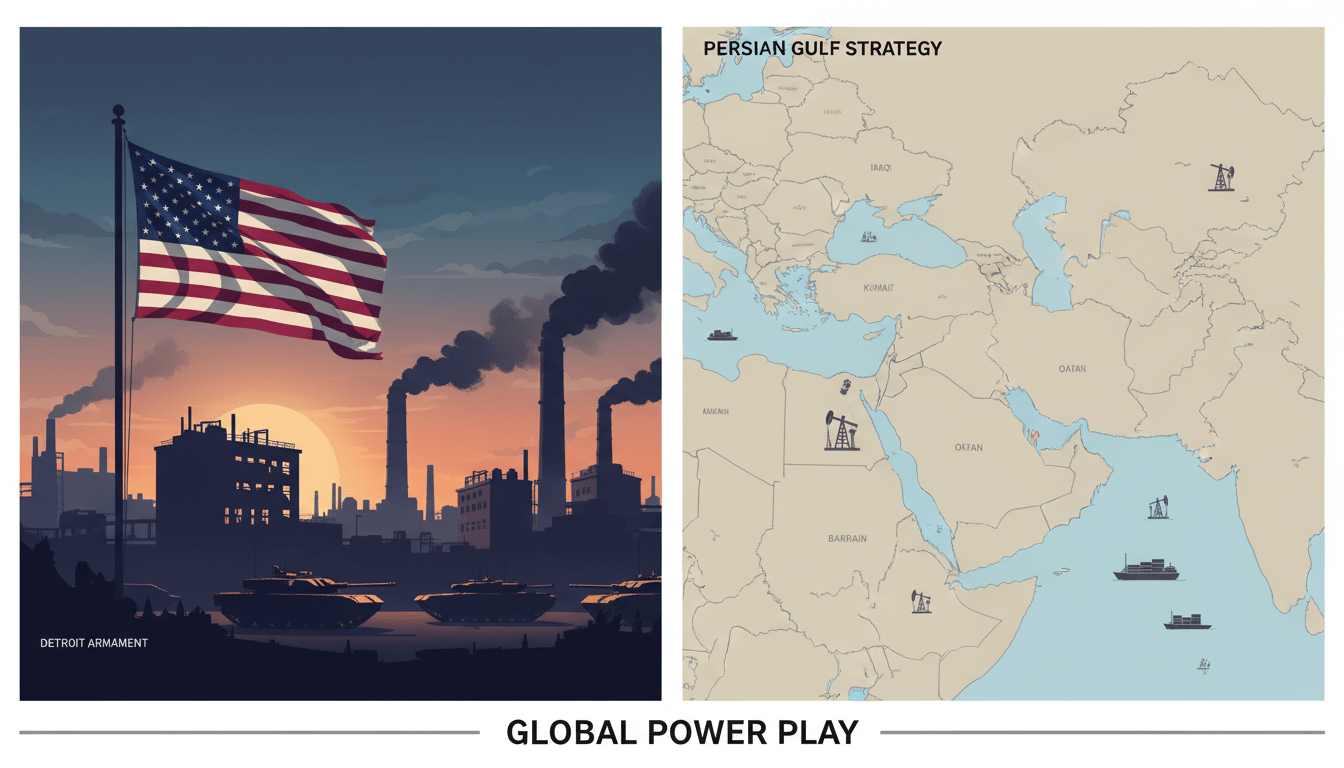
Historically, Detroit has been known as the “Arsenal of Democracy,” a title earned during World War II when the city’s manufacturing might was pivoted toward the war effort. Today, that legacy lives on, particularly in Macomb County, which remains a vital corridor for the U.S. defense sector.
General Dynamics Land Systems (GDLS), headquartered in Sterling Heights, is the primary manufacturer of the M1 Abrams main battle tank and the Stryker interim armored vehicle. In any scenario involving a ground invasion or a heavy military response in the Middle East, the demand for armored ground vehicles would likely surge.
According to data from the U.S. Census Bureau and local economic reports, the defense industry employs thousands of skilled workers in Macomb and Oakland counties. Defense analysts suggest that a conflict with a state actor like Iran, which possesses a sophisticated military compared to insurgent groups, would require a different strategic approach than the wars in Iraq or Afghanistan, potentially placing a higher premium on heavy armor and advanced defensive systems produced locally.
“The defense supply chain in Metro Detroit is highly responsive to geopolitical shifts,” said a local manufacturing consultant familiar with defense contracting. “While no one wants war, the reality is that heightened readiness levels often translate to increased shifts and contract modifications at facilities across Warren and Sterling Heights.”
Economic Fallout: The Oil Volatility Factor
Beyond the defense sector, the broader Detroit economy remains sensitive to energy prices. Despite the automotive industry’s pivot toward electrification, the production and sale of internal combustion engine trucks and SUVs remain the profit engine for Detroit’s “Big Three” automakers.
A military conflict in the Persian Gulf, specifically one involving Iran, would almost certainly disrupt the Strait of Hormuz, a critical chokepoint for global oil transit. Energy analysts predict that such a disruption could send crude oil prices skyrocketing. For Detroit, high gas prices historically correlate with a slowdown in truck and SUV sales, which could dampen the local economic recovery.
“Detroit’s economy is more diversified than it was in the 1970s or even 2008, but we are not immune to energy shocks,” noted a report from a regional business outlook panel. “If gas prices spike due to Middle East instability, consumer confidence dips, and that hits dealership lots immediately.”
Dearborn and the Human Cost
Perhaps nowhere in the United States is the prospect of war with Iran felt more personally than in Dearborn and Hamtramck. Wayne County is home to the highest concentration of Arab Americans in the country. While the Iranian-American community is distinct from the larger Arab-American demographic, the ripple effects of war in the region cause widespread anxiety across these interconnected communities.
Local community leaders have expressed concerns that a US invasion or military escalation could lead to a rise in domestic tensions, surveillance, and discrimination. For many residents who fled conflicts in Lebanon, Iraq, and Yemen, the rhetoric of war triggers painful memories and genuine fear for relatives still living in the region.
“When the news talks about ‘strategic targets’ and ‘collateral damage,’ people here hear about their neighborhoods and their families,” said a representative from a local community advocacy group in Dearborn. “The psychological toll of looming war is heavy. It affects local businesses, mental health, and the general sense of safety in our neighborhoods.”
Strategic Realities: What a Military Response Would Look Like
To understand the potential magnitude of a US-Iran conflict impact on Detroit, it is necessary to look at the scale of such an operation. Defense strategy experts emphasize that a conflict with Iran would not be a replay of previous engagements.
Iran utilizes asymmetric warfare strategies, including drone swarms and ballistic missiles. A US military response would likely involve significant air and naval power, but a ground invasion—the scenario that would most heavily engage Detroit’s tank manufacturing—is viewed by many strategists as a last resort due to the sheer geography and population size of Iran.
However, the mere posture of readiness impacts Detroit. The Michigan National Guard and local reserve units often play critical support roles in overseas deployments. Increased operational tempo means more local families dealing with deployments and the economic disruption of primary earners being sent overseas.
Impact on Detroit Residents
For the average resident of Detroit, the impact of these geopolitical tensions might seem abstract until it hits the wallet or the neighborhood. The primary ways this scenario could affect daily life include:
- Inflation at the Pump: An immediate rise in gas prices, increasing the cost of commuting and the price of goods transported by truck.
- Job Security: Potentially increased overtime for workers in the defense sector, contrasted with potential layoffs in the civilian auto sector if the economy contracts due to oil shocks.
- Social Cohesion: The need for increased solidarity with neighbors in Dearborn and Hamtramck who may face increased scrutiny or harassment during times of heightened national security rhetoric.
What Happens Next?
As Washington weighs its options, Detroit waits. The city’s unique position as both a manufacturer of the tools of war and a sanctuary for those fleeing it creates a complex duality. Local leaders continue to urge for diplomatic solutions, knowing well that while the defense industry might see a short-term boost, the long-term stability of the region relies on a healthy global economy and peaceful communities.
DetroitCityNews.com will continue to monitor defense contract announcements in Sterling Heights and community sentiment in Wayne County as this situation develops.