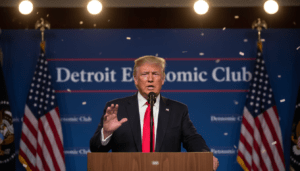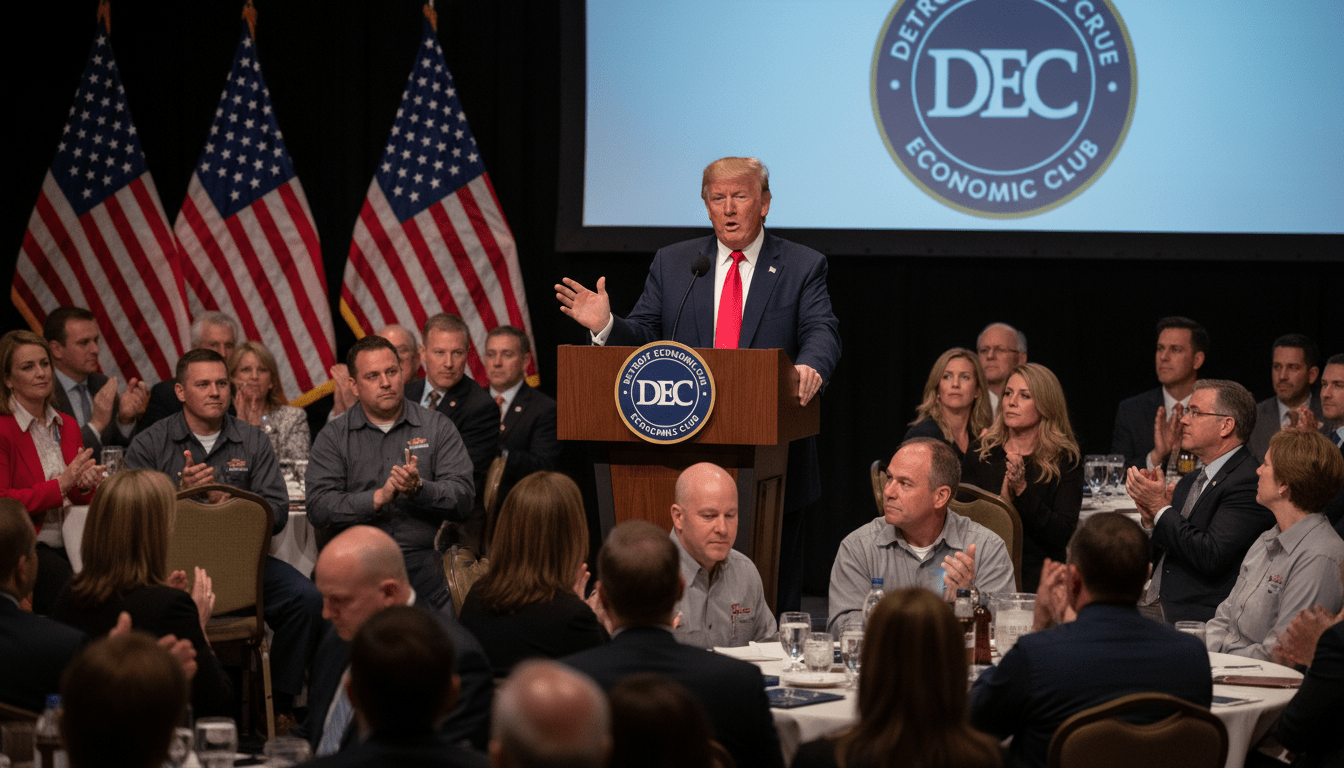
Former President Donald Trump returned to the Motor City this week, delivering a keynote address that centered heavily on the revitalization of the Detroit auto industry and broader economic policies aimed at domestic manufacturing. Speaking to a crowded room at the Detroit Economic Club, Trump outlined a vision for what he termed a “manufacturing renaissance,” promising to utilize tariffs and tax incentives to protect Michigan jobs and stimulate the local economy.
The speech comes at a critical time for Detroit, a city that has become a focal point in the national debate over the transition to electric vehicles (EVs), trade agreements, and labor rights. With Michigan serving as a pivotal swing state, the address was closely watched by political analysts and industry leaders alike.
Promises of a Manufacturing Renaissance
Trump’s address focused largely on trade protectionism as a tool to bolster the Detroit auto industry. He reiterated his plan to impose significant tariffs on vehicles imported from Mexico and China, arguing that such measures are necessary to prevent foreign automakers from undercutting domestic production.
“We are going to bring the car industry back to Michigan, bigger and better than ever before,” Trump told the audience. He suggested that under his proposed policies, foreign companies would be forced to build plants in the United States if they wished to sell to the American market without penalty.
One of the most specific policy proposals mentioned was the tax deductibility of interest on car loans. Trump proposed that American car buyers should be able to write off the interest paid on vehicle loans on their federal taxes, a move he claimed would stimulate demand for new vehicles and make ownership more affordable for working-class families. This proposal was met with applause from the attendees, though economists note that such a policy would require congressional approval.
Impact on Detroit Residents and Workers
For the residents of Detroit and the surrounding metro area, the health of the automotive sector remains inextricably linked to the local economy. According to data from the U.S. Bureau of Labor Statistics, the manufacturing sector still accounts for a significant portion of employment in Southeast Michigan. Changes to trade policy or tax incentives have direct ripple effects on household income in neighborhoods from Corktown to Jefferson Chalmers.
Local business owners are reacting cautiously to the proposals. “Any policy that puts more money in people’s pockets to buy cars is good for the dealerships and the suppliers,” said Mark Henderson, a manager at a local parts supplier in Warren. “But we also worry about supply chain costs. If tariffs go up on raw materials, our costs go up, and that gets passed to the consumer.”
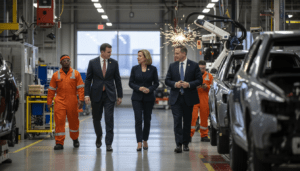
For United Auto Workers (UAW) members, the rhetoric regarding the Detroit auto industry is scrutinized closely. While protectionist trade policies generally appeal to labor unions, there is ongoing tension regarding the transition to EVs. Trump criticized the current federal push for electric vehicles, framing it as a threat to traditional automotive jobs. This stance resonates with some workers concerned about plant retooling, though major automakers like General Motors and Ford have already committed billions to EV infrastructure within the state.
For more on how local labor is reacting to industry changes, read our coverage on recent UAW negotiations and contract outcomes.
Industry Reaction and Economic Context
The reception to Trump’s speech among industry experts was mixed. While the concept of deducting car loan interest is popular among consumers, fiscal conservatives express concern over the potential impact on the national deficit. Furthermore, automotive analysts point out that the supply chain is now global; aggressive tariffs could invite retaliatory measures that might hurt American exports.
The Detroit Regional Chamber has frequently emphasized the need for a balanced approach to trade. In previous reports, the Chamber has highlighted that Michigan exports billions of dollars in goods annually, making the state sensitive to trade wars.
Regarding the “economic turnaround” mentioned in the speech, the context is nuanced. Detroit has seen stabilized property values and decreased unemployment over the last decade. However, inflation remains a pressing concern for locals. The promise to lower costs for car buyers addresses a specific pain point: the average transaction price for a new vehicle has risen sharply in recent years, putting new cars out of reach for many Detroiters.
The Road Ahead for Michigan
As the election cycle intensifies, Detroit remains a primary stage for economic policy debates. Trump’s visit underscores the symbolic and practical importance of the city. The proposals laid out regarding the Detroit auto industry—specifically the use of tariffs and tax cuts—offer a distinct contrast to the current administration’s focus on green energy subsidies and EV adoption.
The outcome of these policy debates will likely determine the trajectory of development in the region for the next decade. Whether through renewed manufacturing mandates or an accelerated shift to technology-focused mobility, Detroit finds itself once again at the crossroads of the American industrial economy.
Stay tuned to DetroitCityNews.com as we continue to track major development projects and policy shifts affecting the region.