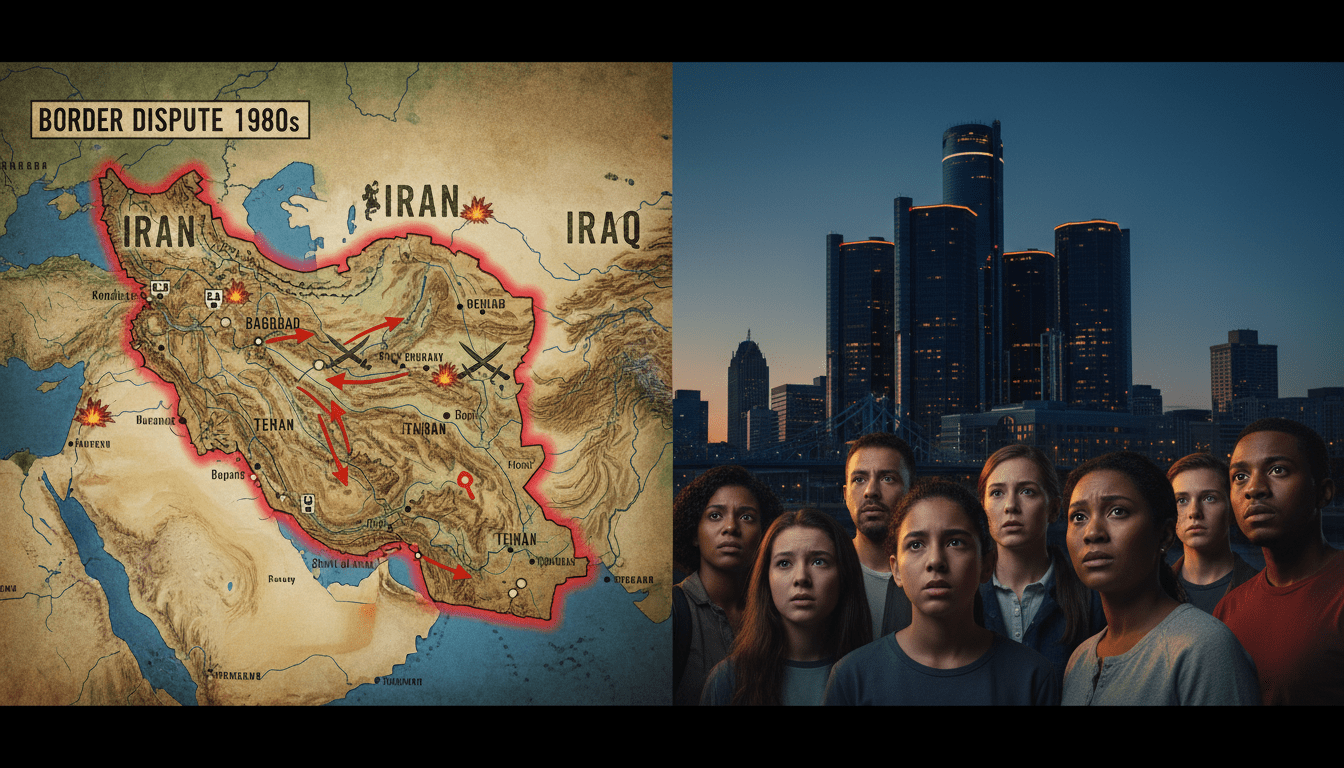
Tensions in the Middle East have escalated sharply this week following warnings from Iranian officials regarding alleged “terrorist movements” near the country’s western borders. The warning comes simultaneously with reports that the Trump administration is pivoting its regional strategy to deepen cooperation with Kurdish opposition groups. For the extensive Middle Eastern diaspora in Southeast Michigan, these geopolitical maneuvers are not just distant headlines—they are a source of immediate anxiety, political debate, and community concern.
According to state media reports out of Tehran, the Islamic Revolutionary Guard Corps (IRGC) has deployed additional units to the border regions, citing intelligence of imminent infiltration attempts by anti-regime factions. This militarization coincides with signals from Washington that the White House intends to leverage Kurdish rebel groups as part of a renewed “maximum pressure” campaign against the Iranian government. The convergence of these events has sent ripples through diplomatic channels and sparked intense discussions within Detroit’s diverse immigrant communities.
Escalating Iran Border Tensions
The situation on the ground remains fluid. Iranian military commanders have issued stark statements threatening “crushing responses” to any cross-border incursions. Tehran has long accused Kurdish opposition groups based in neighboring territories of fomenting unrest, labeling them as terrorist organizations. The recent uptick in rhetoric suggests that the Iranian regime perceives a credible threat to its internal stability, potentially exacerbated by shifting US foreign policy.
International observers note that the Trump administration’s reported willingness to engage with these Kurdish factions represents a strategic pivot. By bolstering groups that have historically opposed the clerical rule in Tehran, Washington appears to be seeking new leverage in the region. However, this strategy carries significant risks of destabilization, a concern echoed by foreign policy experts who fear a broader conflict could erupt if miscalculations occur along the volatile border.
“The rhetoric we are seeing is reminiscent of previous flashpoints, but the involvement of specific US policy shifts adds a new layer of complexity,” noted a report from the Associated Press covering the regional buildup. For military analysts, the concern is that skirmishes could spiral into a proxy war, drawing in neighboring nations and further straining US-Iran relations.
Impact on Detroit Residents
Southeast Michigan is home to the largest concentration of Arab Americans and a significant population of Middle Eastern descent in the United States. While the Kurdish population in Detroit is smaller compared to Nashville or Dallas, the broader Iranian and Middle Eastern communities in Wayne and Oakland counties are deeply intertwined with the region’s politics.
For many Iranian-Americans living in Metro Detroit, the news brings a mix of hope and trepidation. Some view the US pivot to Kurdish rebels as a necessary step to challenge an oppressive regime, while others fear that increased militarization will lead to bloodshed that harms civilians—including their own family members still living in Iran.
“Every time the temperature rises in the region, we feel it here,” said a representative from a local community advocacy group in Dearborn. “People are checking their phones constantly for news from relatives. There is a genuine fear that what politicians call ‘pressure’ will translate into suffering for ordinary people on the ground.”
Furthermore, local political organizers are already mobilizing. Discussions are underway regarding potential town halls and protests in downtown Detroit to demand de-escalation. The political engagement of Detroit’s diaspora has historically influenced the stances of Michigan’s congressional delegation, making the local reaction a key barometer for national political fallout.
Economic Implications for the Motor City
Beyond the humanitarian and political concerns, Detroit’s economy is particularly sensitive to instability in the Middle East. As the hub of the American automotive industry, Detroit relies heavily on stable energy prices. Geopolitical tensions involving major oil-producing nations like Iran almost invariably lead to volatility in global oil markets.
If the Iran border tensions escalate into open conflict or result in the disruption of shipping lanes in the Persian Gulf, gas prices in Michigan could spike. This would have a twofold effect on Detroiters: increasing the daily cost of living for commuters and potentially dampening consumer demand for trucks and SUVs, which are the profit engines for Detroit’s “Big Three” automakers.
Data from the U.S. Energy Information Administration suggests that even the speculation of conflict can drive crude oil prices upward. For local logistics companies and manufacturers already grappling with supply chain adjustments, a sudden rise in fuel costs would be an unwelcome financial burden.
Background & Regional Data
The relationship between the US, Iran, and Kurdish groups is historically complex. Kurdish populations, spread across Iran, Iraq, Syria, and Turkey, have often been pivotal players in regional conflicts. In Iran, the Kurdish minority has faced long-standing discrimination and economic marginalization, fueling separatist movements.
According to census data and community estimates, Michigan is home to hundreds of thousands of residents with roots in the Middle East. This demographic reality means that foreign policy decisions in Washington have direct electoral consequences in the state. In recent election cycles, foreign policy has become a top-tier issue for voters in cities like Dearborn and Hamtramck.
Local universities, including Wayne State University, have frequently hosted forums discussing US-Middle East relations, highlighting the academic and intellectual investment the city has in these global affairs. Experts warn that utilizing Kurdish rebels as a proxy force has historically yielded mixed results, often leaving the Kurdish people vulnerable once US strategic priorities shift.
What Happens Next
In the coming days, Detroit’s community leaders will be watching closely for the Trump administration’s official confirmation of support levels for the Kurdish rebels. Simultaneously, the diaspora community is monitoring Iranian state media for signs of military mobilization.
Local activists are urging Michigan’s lawmakers to push for diplomatic solutions rather than military escalation. “Our community knows the cost of war better than most,” the Dearborn advocate added. “We are urging caution and asking our representatives to prioritize stability.”
As the situation develops, Detroit City News will continue to monitor the local response and the potential economic impacts on Southeast Michigan families.