As the skyline of Detroit continues its rapid transformation, a coalition of preservationists, city planners, and local historians is sounding a call to remember the architectural ‘ghosts’ that still stand within city limits. While the renovation of Michigan Central Station and the Hudson’s site dominate headlines, a deeper layer of the city’s past remains largely unseen by the average resident. These hidden places Detroit continues to house serve as the backbone of its neighborhoods, offering a tangible link to a century of industrial and social evolution.
The Tension Between Development and Preservation
According to the City of Detroit’s Historic Designation Advisory Board (HDAB), the push for new housing and commercial space has created a complex environment for heritage sites. In the last three years, the city has seen a 15% increase in requests for historic site reviews, as developers seek to balance modern building codes with the cultural significance of aging structures. This tension is particularly visible in areas where forgotten landmarks are being rediscovered during the pre-construction phase of new neighborhood development projects.
1. The Michigan Building’s Ghost Theater
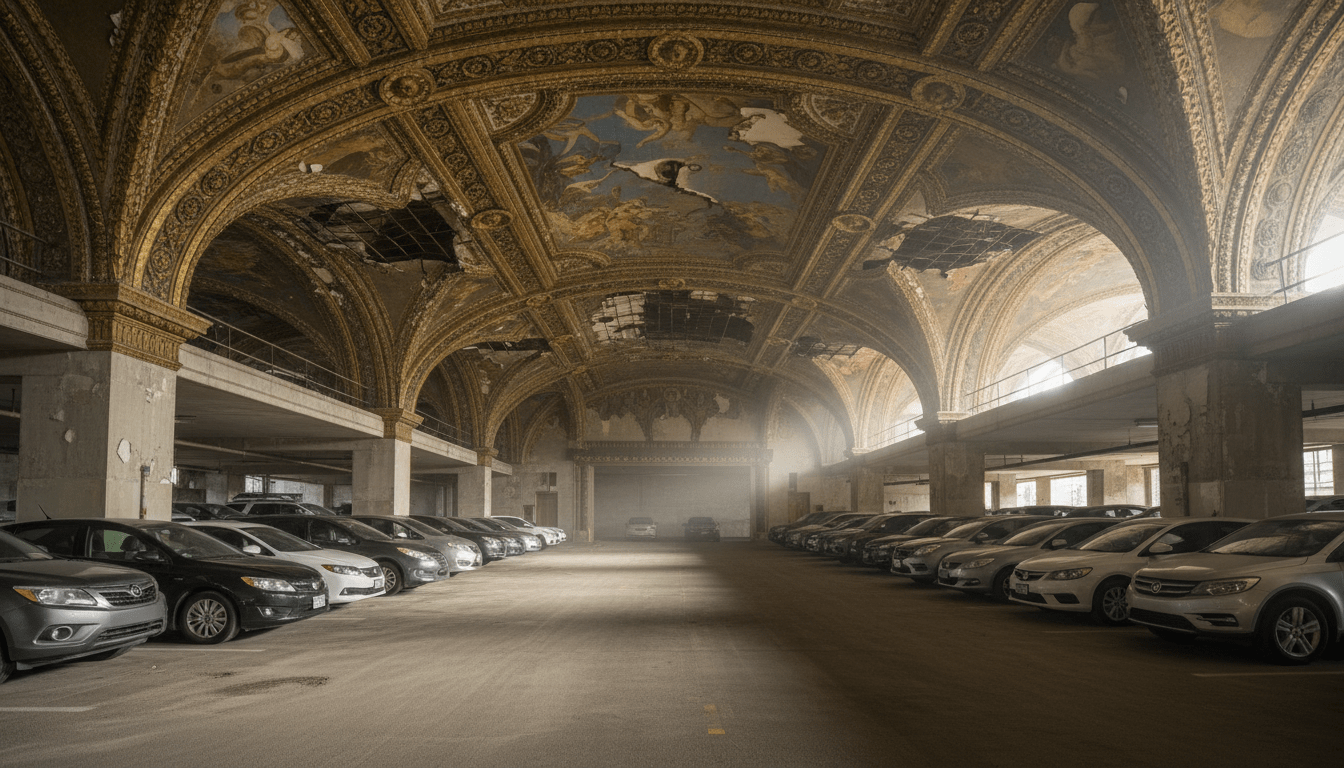
Perhaps the most surreal of Detroit’s hidden landmarks is the theater space within the Michigan Building. While many locals use the structure for parking, fewer realize they are parking their vehicles inside the remains of a 1926 grand movie palace. Designed by the renowned firm Rapp & Rapp, the theater was partially gutted in the 1970s to create a parking garage. Today, it stands as a haunting intersection of Detroit’s cinematic history and its mid-century adaptation to the automotive age. Historians at the Detroit Historical Society note that the structure’s ornate plasterwork and gilded ceilings remain largely intact above the parked cars, representing a unique architectural preservation-by-necessity.
2. The Birwood Wall (Detroit’s Segregation Wall)
Hidden in plain sight in a residential neighborhood near 8 Mile Road, the Birwood Wall remains a sobering reminder of the city’s history of housing discrimination. Built in 1941 to separate a new white development from an existing Black neighborhood, the half-mile concrete barrier is now part of Alfonso Wells Memorial Park. While many residents drive past it daily, its significance as a federally sanctioned structure of segregation is often overlooked. Local activists have worked to transform the wall with murals, turning a symbol of division into a site of education and cultural heritage.
3. The Ossian Sweet House
Located at the corner of Garland and Charlevoix, the Dr. Ossian Sweet house is a modest brick structure that was the site of a pivotal moment in the American civil rights movement. In 1925, Dr. Sweet, a Black physician, moved into the all-white neighborhood and was met with a violent mob. The subsequent legal battle, led by Clarence Darrow, established the right of Black Americans to defend their homes. Although it is a designated state historic site, it remains tucked away in a quiet residential block, often missed by those visiting the city’s more prominent museums.
4. The Abyssinia Intergenerational Center (Old St. James)
In the heart of the North End, the Abyssinia Intergenerational Center occupies what was once a grand church. This site served as a vital hub for the Black community during the Great Migration. Today, the structure is a focal point for grassroots preservation efforts. Data from the U.S. Census Bureau highlights the North End as an area of significant demographic shift, making the preservation of such communal spaces essential for maintaining a sense of continuity among long-term residents.
5. The Tunnels of the Guardian Building
The Guardian Building is famous for its ‘Cathedral of Finance’ lobby, but its subterranean levels hold secrets known only to building staff and architectural historians. A series of specialized tunnels once connected the building to adjacent financial institutions, designed for the secure transport of currency during the city’s peak as a global financial hub. While the public can tour the main floors, these lower levels remain a hidden artifact of the city’s banking dominance in the early 20th century.
6. The Old Detroit House of Corrections Site
While the actual structures are mostly gone, the site of the former Detroit House of Corrections (DeHoCo) in western Wayne County holds significant archaeological and historical weight. Once a self-sustaining prison farm that provided goods for the city, the site is now being considered for various green-space and redevelopment initiatives. For many Detroiters, the history of this site is a forgotten chapter of the city’s approach to social reform and labor in the early 1900s.
7. St. Agnes Church and School
In the LaSalle Gardens neighborhood, the ruins of St. Agnes Church represent the grand scale of Detroit’s religious architecture. Built in the 1920s to serve a burgeoning congregation, the church fell into disrepair following the 1967 civil unrest and the subsequent exodus of parishioners. Despite its weathered appearance, the site remains a pilgrimage point for urban explorers and historians who see it as a monument to the city’s mid-century peak and its late-century struggles.
Impact on Detroit Residents
The recognition of these hidden places Detroit offers is more than an academic exercise. For local residents, the preservation of these sites is tied to property values, community identity, and the tourism economy. According to a report by the Michigan Historic Preservation Network, properties within historic districts tend to maintain higher values during economic downturns compared to non-designated areas. Furthermore, these sites provide educational opportunities for local schools, allowing students to engage with history that occurred in their own backyards rather than in distant textbooks.
Background and Data: The Preservation Outlook
Data provided by the National Trust for Historic Preservation suggests that Detroit has one of the highest concentrations of ‘at-risk’ historic structures in the Midwest. However, the city has made strides in recent years. In 2023, the City of Detroit allocated additional funding to the Planning and Development Department to streamline the historic designation process. This move is aimed at preventing the ‘demolition by neglect’ that has claimed numerous landmarks over the past two decades.
What Happens Next
Looking forward, the fate of many of these hidden landmarks depends on public-private partnerships. The City of Detroit is currently reviewing zoning changes that would make it easier for small-scale developers to adaptively reuse historic buildings for modern housing. As Detroit continues to grow, the challenge will be to ensure that the city’s future is built alongside its past, rather than over it. For locals and visitors alike, these hidden sites remain ready to tell the story of a city that has always been defined by its resilience and its complexity.