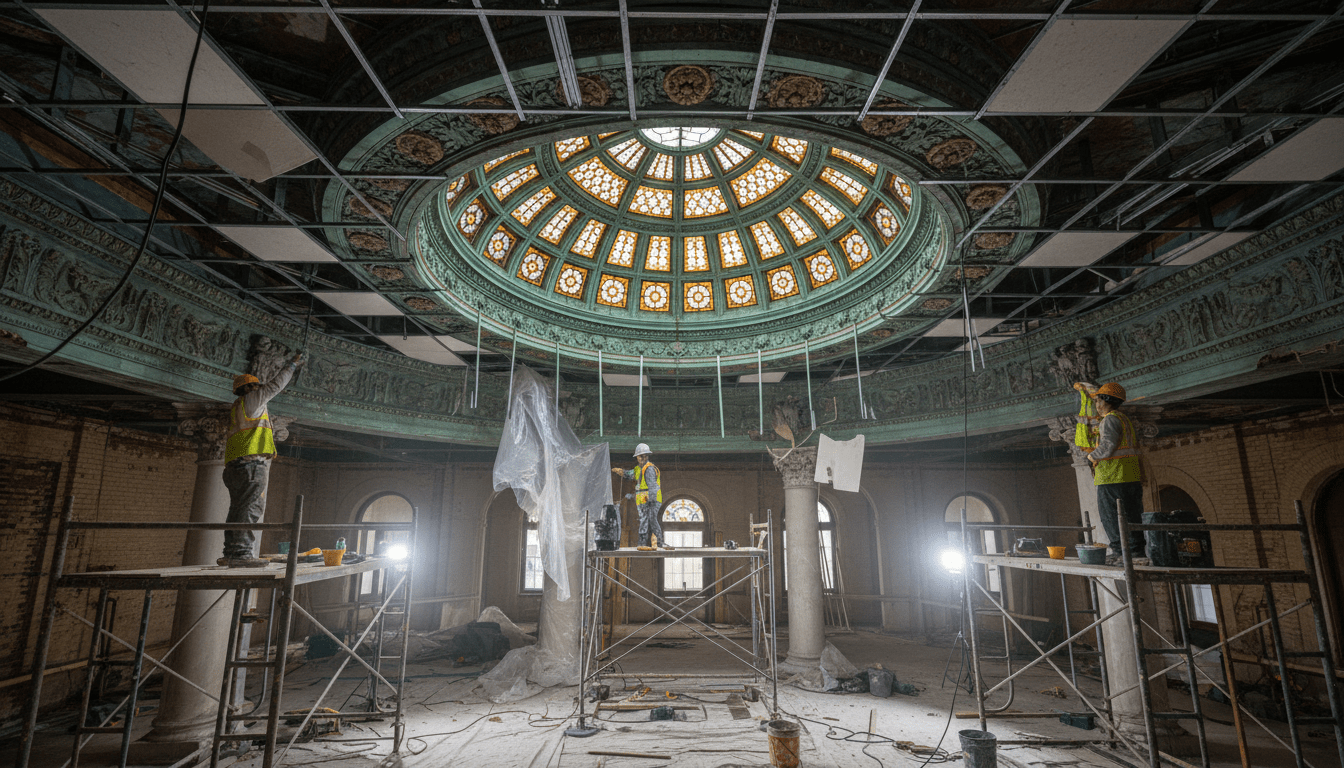
Construction crews working on the restoration of a prominent mid-rise structure in downtown Detroit have made a discovery that has halted work and drawn the attention of local historians. During the initial demolition phase of the interior walls, workers revealed a series of perfectly preserved architectural elements that had been hidden behind plaster and drywall for over seven decades. The discovery highlights the enduring legacy of Detroit architecture and the complexities involved in modernizing the city’s aging skyline.
A Hidden Glimpse into Detroit Architecture
The building, which was originally constructed in the mid-1920s during Detroit’s industrial peak, was undergoing a multi-million dollar conversion into mixed-use residential units. According to project managers on-site, the crew was removing a drop ceiling in what was once a grand lobby when they found an intact copper-framed skylight and ornate hand-carved limestone friezes. These elements, typical of the Art Deco and Neoclassical styles that define the era, were thought to have been destroyed during a 1950s modernization project.
“This find is a testament to the quality of craftsmanship that defined early 20th-century Detroit architecture,” said a representative from a local preservation group. “The fact that these features were simply covered up rather than demolished allows us a rare opportunity to restore the building to its original aesthetic brilliance while still providing the modern amenities that today’s residents expect.”
Impact on Detroit Residents and Neighborhood Identity
For residents of the surrounding neighborhood, the discovery is more than just a matter of aesthetics; it is a point of community pride. As the city continues to see a surge in neighborhood growth patterns, the preservation of historic landmarks plays a vital role in maintaining the unique character of Detroit. Unlike many other major American cities that cleared their historic cores during the urban renewal era, Detroit retains a high density of pre-war structures that offer a tangible link to its history.
Local business owners in the district have expressed optimism that the restored feature will serve as a draw for tourism and new residents. The inclusion of authentic historical elements often increases property values and attracts high-interest commercial tenants, such as boutique retailers and independent cafes. The developer has already indicated plans to alter the architectural drawings to incorporate the newly found skylight into the final design, ensuring it remains a central feature of the building’s public space.
Historical Context and Preservation Data
According to the City of Detroit Planning and Development Department, there has been a significant uptick in permit applications for adaptive reuse projects over the last five years. Data from the Detroit Historic District Commission indicates that the city currently manages over 100 designated historic districts, reflecting a concentrated effort to protect the structural history of the region. This trend is supported by federal and state tax credits designed to incentivize developers to maintain the historical integrity of their properties.
Records from the Detroit Historical Society suggest that many buildings from the 1920s utilized high-quality materials such as Indiana limestone, Italian marble, and local ironwork. When these buildings were updated in the mid-century to appear more “modern,” contractors often installed suspended ceilings and wood paneling over the original decorative work to save on heating costs and follow prevailing design trends. This has led to a “time capsule” effect, where contemporary developers are frequently surprised by what lies beneath the surface of their acquisition.
Restoration Challenges and Technical Precision
Restoring Detroit architecture is not without its hurdles. Experts note that when a hidden feature is discovered, it often requires specialized labor that can be difficult to source. The limestone friezes found this week, for instance, require a stone mason with expertise in 1920s carving techniques to repair minor chips and ensure structural stability. Furthermore, incorporating an old skylight into a modern HVAC system requires advanced engineering to ensure the building remains energy efficient.
The current project is part of a broader wave of historic preservation efforts aimed at revitalizing the downtown core. By choosing to preserve rather than replace, developers are often eligible for the National Park Service’s Federal Historic Preservation Tax Incentives program, which can cover up to 20% of the rehabilitation costs. This financial support is often the deciding factor in whether a historic building is saved or slated for demolition.
What Happens Next for the Project
The developers have confirmed that the project timeline will be extended by approximately three months to accommodate the restoration of the hidden features. In the coming weeks, a team of conservators will be brought in to assess the condition of the copper framing and the limestone. The goal is to integrate these elements seamlessly into the building’s new floor plan, which includes 40 luxury apartments and a ground-floor gallery space.
As Detroit continues its economic recovery, the intersection of history and modern development remains a focal point for city planners. The discovery at this downtown site serves as a reminder that the city’s architectural past is not just a memory, but a physical asset that continues to provide value. For now, the hidden feature remains under protective wrapping as the team prepares for the delicate work of bringing a piece of 1925 back into the light of 2024.