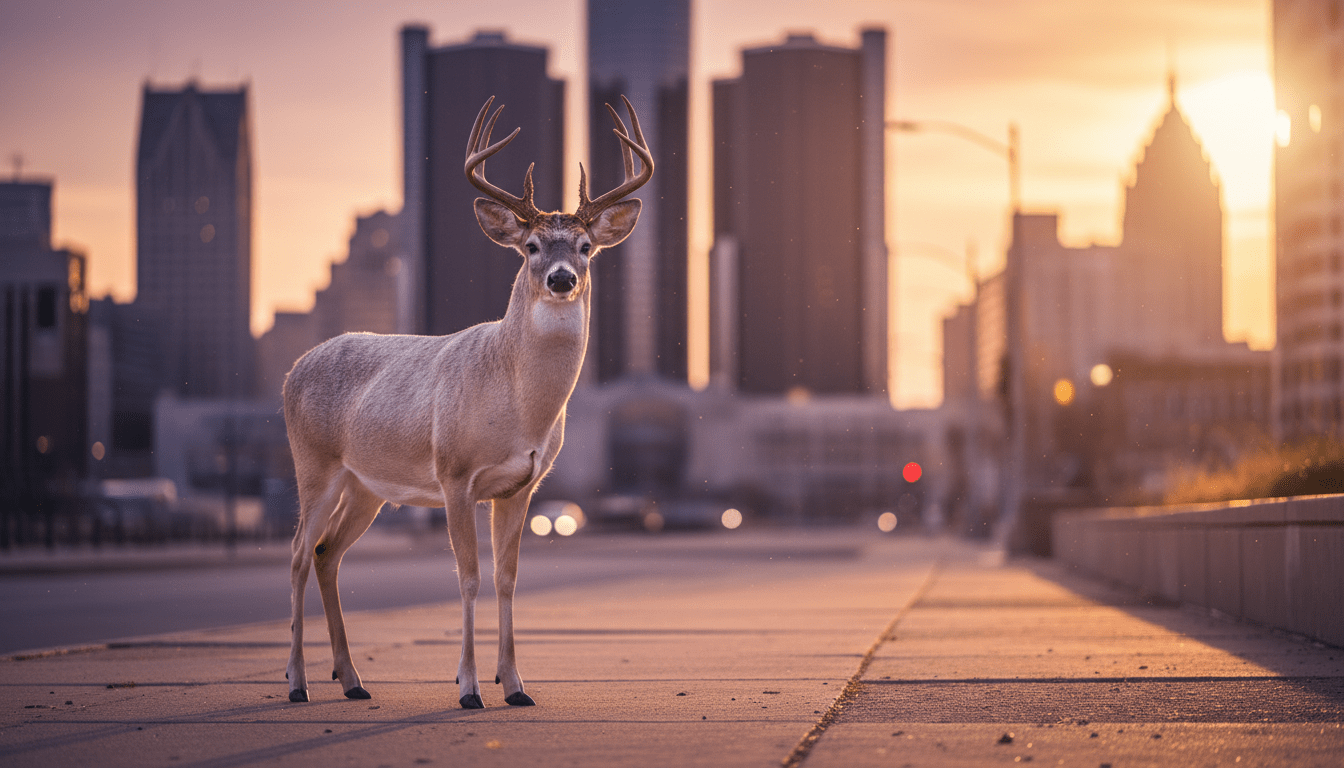
In recent weeks, the bustling streets of the Motor City have played host to an unusual set of commuters. Residents and office workers in the central business district have reported a surge in Detroit wildlife sightings, ranging from white-tailed deer leaping across Jefferson Avenue to a coyote spotted prowling near the shadows of the Renaissance Center. These encounters, many of which have gone viral on social media, are sparking a broader conversation about the shifting ecological landscape of the city and how Michigan nature is reclaiming space within the urban core.
The Rise of Detroit Wildlife in the City Center
The phenomenon began in early October when a series of videos surfaced on TikTok and X (formerly Twitter) showing a young buck navigating the manicured lawns of Hart Plaza. Shortly after, a red fox was photographed near the Spirit of Detroit statue, appearing largely unfazed by the surrounding traffic. These downtown animals are no longer restricted to the outskirts or the city’s larger parks like Belle Isle; they are increasingly being seen in high-traffic corridors, leading many to wonder why the heart of the city has suddenly become so attractive to local fauna.
According to wildlife biologists, this trend is a combination of habitat connectivity and the availability of resources. As Detroit continues to invest in greenways and expanded park systems, such as the Joe Louis Greenway and the Dequindre Cut, these paths act as biological corridors. They allow animals to move from more wooded areas into the concrete jungle with relative ease. For many residents, seeing urban wildlife against the backdrop of skyscrapers is a sign of a healthier, greener city, though it does come with unique challenges for municipal management.
A Changing Urban Ecosystem
Data from the Michigan Department of Natural Resources (DNR) suggests that the presence of larger mammals in urban environments is a statewide trend, but Detroit’s specific geography makes it a unique case study. With the Detroit River providing a constant water source and the city’s ongoing land-use shifts creating more open green spaces, the environment has become surprisingly hospitable. Experts note that as long as food sources remain available—either through natural vegetation or human-related waste—the presence of Detroit wildlife will likely remain a permanent fixture of the downtown experience.
“Animals are highly adaptable,” says a representative from the DNR’s wildlife division. “What we are seeing in Detroit is a reflection of how wildlife can thrive when given even a small window of opportunity. The key is ensuring that these animals remain wild and do not become overly dependent on human interaction.” This sentiment is echoed by local environmental groups who argue that the sightings should be viewed as a success story for urban reforestation efforts, provided that public safety remains a priority.
Impact on Detroit Residents and Safety Measures
For the thousands of people who live and work in the downtown area, the sightings have been a source of both wonder and caution. The Detroit Police Department has issued reminders to the public to maintain a respectful distance from any downtown animals they may encounter. While deer and foxes are generally non-aggressive, they can become unpredictable if cornered or if they feel their young are threatened. For those interested in how these changes affect local property values and development, more information can be found at DetroitCityNews.com/local-development.
The impact on local residents also extends to pet ownership. The presence of coyotes in particular has led to increased vigilance among dog owners in the downtown and Midtown neighborhoods. City officials recommend keeping pets on short leashes and avoiding the use of retractable leads in areas where wildlife sightings have been frequent. This shift in daily routine is a small price to pay for the unique experience of coexisting with Michigan nature in one of the most industrial cities in the world. Many residents have expressed that these sightings make the city feel more vibrant and alive, contrasting the traditional “concrete jungle” reputation with a more nuanced, ecological identity.
Background & Data: Understanding the Population Shift
Historically, Detroit’s wildlife was pushed to the fringes during the height of the city’s industrial boom. However, as the city’s footprint has changed over the last several decades, large swaths of land have transitioned from high-density housing and manufacturing to open meadows and secondary-growth forests. According to a study by researchers at Wayne State University, these vacant or underutilized lots provide critical nesting and foraging grounds for various species. You can read more about the evolution of these spaces in our deep dive into Detroit neighborhoods.
The Michigan Department of Natural Resources monitors these populations through citizen reports and field surveys. Their data indicates that the white-tailed deer population in Southeast Michigan has remained stable or increased slightly over the past five years, but their movement into urban centers has become more pronounced. This isn’t just a Detroit phenomenon; cities like Chicago and Toronto have seen similar spikes in urban wildlife, yet Detroit’s high volume of vacant land provides a much larger “buffer zone” for these animals to navigate before they reach the high-density downtown core.
What Happens Next: Coexistence in the Motor City
As winter approaches, experts predict that sightings of Detroit wildlife may increase as animals venture further in search of food. The city is currently looking into ways to better integrate wildlife management into its urban planning. This includes the potential for better signage in high-collision areas and public education campaigns on how to secure trash bins to prevent attracting scavengers. The goal is not to remove the animals, but to foster a sustainable coexistence that protects both the residents and the creatures that have chosen to call downtown home.
The viral sighting of a coyote near the Detroit Riverfront serves as a reminder that the city is part of a much larger biological network. As Detroit continues its path of revitalization, the integration of Michigan nature into its urban fabric will remain a key component of its modern identity. For now, residents are encouraged to keep their cameras ready but their distance wide, as Detroit’s newest neighbors continue to make themselves at home among the skyscrapers and historic landmarks of the city’s core.