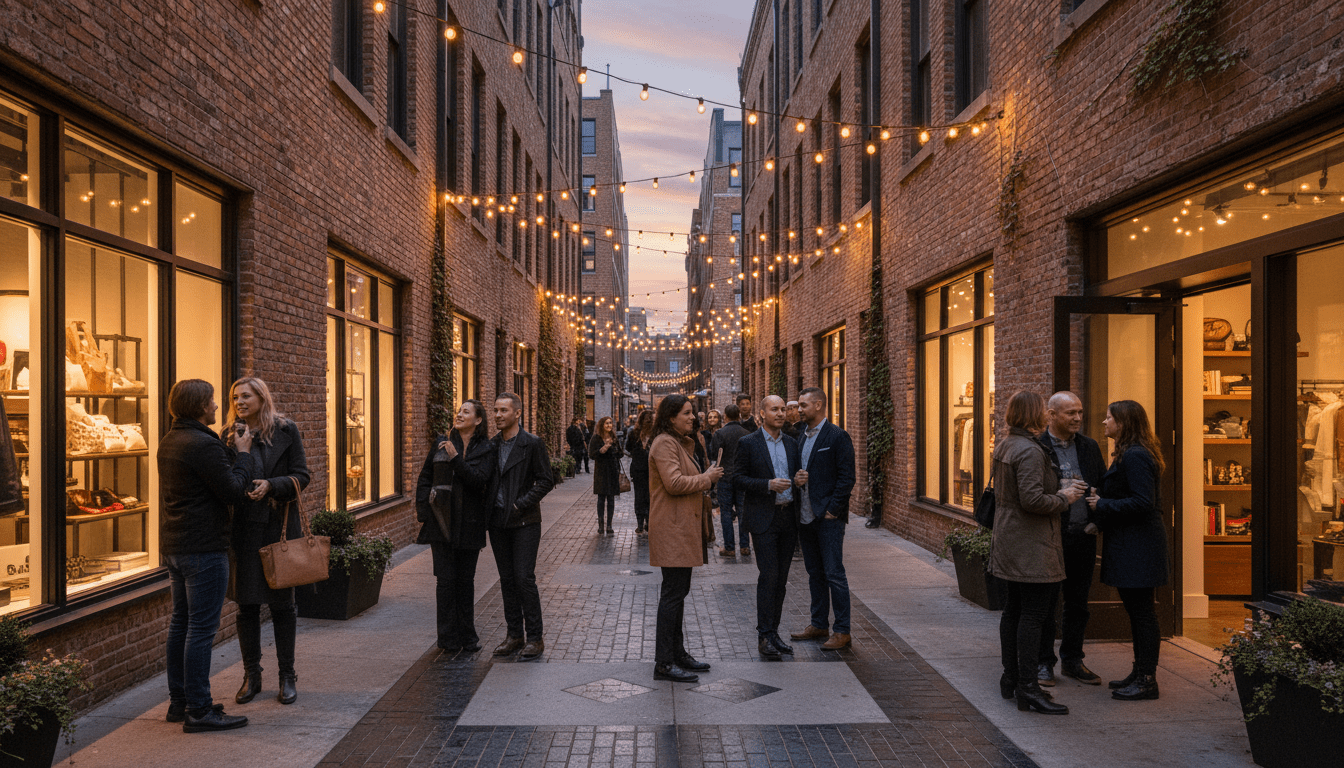
In the heart of downtown Detroit, a narrow passage once used for deliveries and trash collection has undergone a multi-million dollar transformation, emerging as what many urban planners and photographers now call the most photographed location in Michigan. Parker’s Alley, situated directly behind the Shinola Hotel, represents a shift in Detroit’s urban development strategy—prioritizing pedestrian-scale aesthetics over traditional automotive infrastructure.
The Architecture of Virality
The transformation of this Detroit street was not accidental. Developed by Bedrock Detroit, the real estate firm owned by Dan Gilbert, the alley was designed to evoke a sense of European walkability mixed with post-industrial grit. According to architectural reviews from the Detroit Free Press, the use of reclaimed brick, festoon lighting, and curated storefronts was specifically intended to create a “sense of place” that resonates in the digital age. The result is a viral location that attracts thousands of visitors weekly, specifically to capture images for social media platforms.
For local photographers, the alley offers a unique combination of natural lighting and textures. Data from Visit Detroit, the city’s official convention and visitors bureau, indicates that downtown foot traffic has increasingly centered around these “activated” alleys. The rise of Michigan photography enthusiasts flocking to the area has turned a formerly neglected service corridor into a significant city landmark. This trend mirrors similar urban movements in cities like London and Melbourne, where “laneway culture” has revitalized stagnant commercial districts.
Economic Engines Behind the Lens
While the aesthetic appeal is the primary draw for visitors, the economic implications for the city are substantial. The concentration of foot traffic in Parker’s Alley has provided a lifeline for a variety of small businesses. From high-end florists to local apothecaries, the businesses lining the alley report that a significant portion of their customer base is driven by individuals who initially visited the social media spot to take photos. According to reports from the City of Detroit Planning and Development Department, the success of Parker’s Alley has served as a proof-of-concept for the “Strategic Neighborhood Fund,” which seeks to replicate this high-density, pedestrian-friendly model in other areas of the city.
Economic data from the Downtown Detroit Partnership (DDP) suggests that the 48226 zip code has seen a marked increase in retail occupancy rates since the alley’s completion. This growth is directly linked to the area’s status as a Detroit street that offers more than just commerce—it offers an experience. The synergy between the Shinola Hotel’s luxury branding and the alley’s public accessibility has created a destination that bridges the gap between private development and public space.
Impact on Detroit Residents
The rise of these highly photographed corridors brings a complex set of reactions from long-time Detroit residents. On one hand, the increased security and cleanliness of the downtown core are welcomed. On the other hand, the “Instagrammable” nature of these spaces can sometimes feel exclusionary to those who remember the city before its recent wave of gentrification. For many, the concern is that the focus on creating a viral location for tourists might overshadow the needs of local residents for affordable services and transit.
Community organizers often point to the “Two Detroits” narrative—where the gleaming, highly-photographed downtown stands in stark contrast to neighborhoods that still lack basic infrastructure like reliable street lighting or paved sidewalks. However, proponents of the downtown revitalization argue that the tax revenue generated by these high-traffic landmarks is essential for funding services across the entire city. According to data from the DetroitCityNews.com economy section, the retail tax base in the downtown core has grown by over 15% in the last five years, providing a critical buffer for the city’s general fund.
Contextualizing the Trend
The phenomenon of the social media spot is not unique to Detroit, but the city’s specific history makes it a notable case study. For decades, Detroit was defined by its sprawling, car-centric layout. The move toward narrow, pedestrian-only alleys represents a fundamental departure from the mid-century planning that once dominated the region. This evolution has been documented by researchers at Wayne State University, who note that young professionals moving into the city prioritize walkability and visual character over suburban-style amenities.
Furthermore, the Michigan photography community has used these spaces to showcase a different side of the city. For years, the prevailing visual narrative of Detroit was one of “ruin porn”—images of abandoned factories and decaying homes. The shift toward photographing vibrant, restored spaces like Parker’s Alley or The Belt (another nearby activated alley) represents a rebranding of the city’s image on a global scale. This new imagery helps attract talent and investment, further fueling the cycle of development.
Future Outlook: Expanding the Model
Looking ahead, the City of Detroit and private developers are looking to expand this model of “curated urbanism.” Plans are already in motion for similar projects in the Corktown neighborhood, specifically around the newly renovated Michigan Central Station. The goal is to create a network of city landmark locations that are interconnected by transit and walkable corridors. As seen in the latest neighborhood development reports, the emphasis is moving toward “place-making”—the art of designing spaces that encourage people to stay rather than just pass through.
As Detroit continues to evolve, the balance between creating a Detroit street that is a viral sensation and one that serves the practical needs of its citizens will remain a primary challenge for city leaders. For now, the crowds gathered in Parker’s Alley with cameras in hand suggest that, at least from a tourism and branding perspective, the strategy is a resounding success. The alley stands as a testament to the power of design to transform the mundane into the extraordinary, turning a simple Detroit street into a global destination.