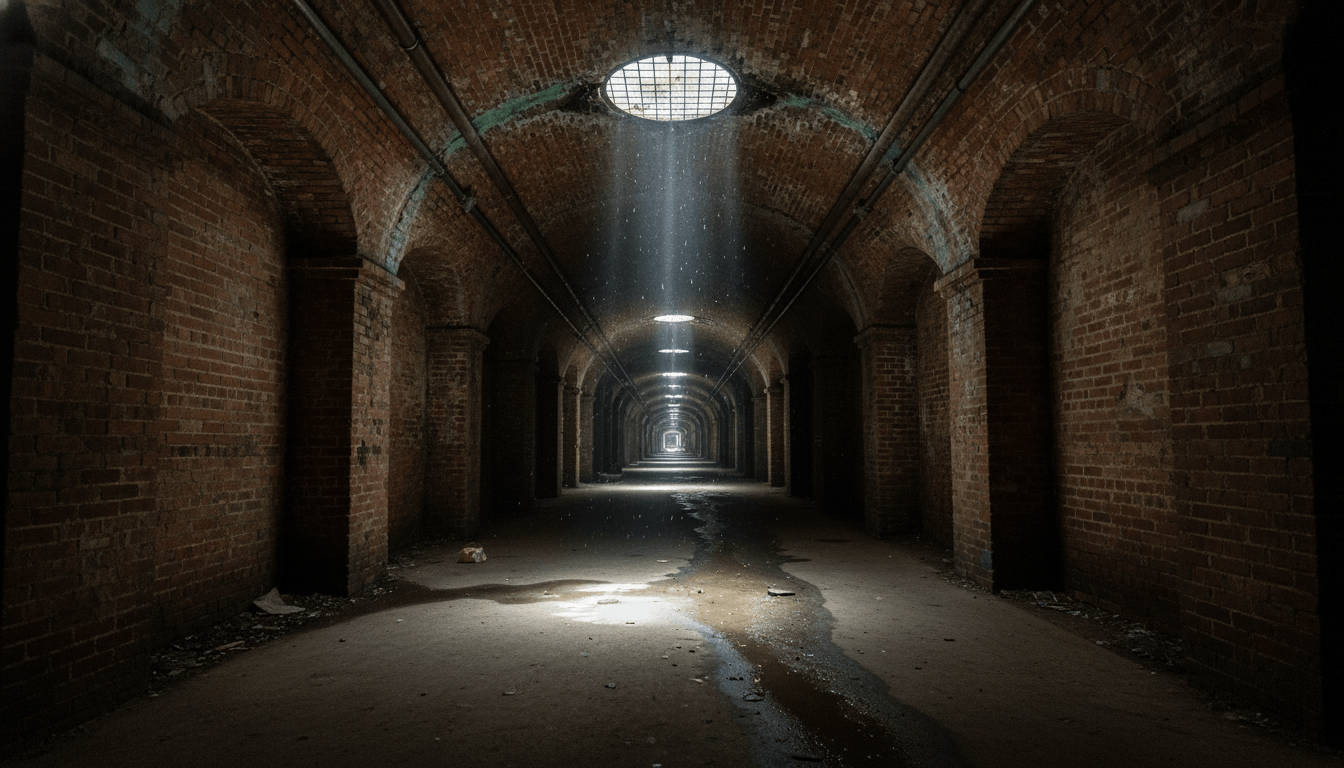
Recent reports of a previously undocumented Detroit tunnel discovered near the city’s waterfront have sent ripples through the local community of historians and urban explorers. The subterranean passageway, featuring weathered brickwork and remnants of early 20th-century utility systems, has reignited a long-standing fascination with the city’s hidden infrastructure. While the exact origins of the passage remain a subject of investigation, its emergence highlights the complex layers of history buried beneath the modern skyline.
A Legacy of Infrastructure and Intrigue
Detroit is no stranger to underground mysteries. From the legendary tunnels used during the Prohibition era to smuggle spirits from Canada to the vast network of salt mines deep below the surface, the city’s underground has always served a dual purpose: utility and secrecy. According to the Detroit Historical Society, many of these passages were originally designed as utility conduits, steam tunnels, or drainage systems during the city’s industrial boom in the early 1900s.
Historical records suggest that as the city expanded, older structures were often built over rather than demolished, leaving behind a labyrinth of forgotten spaces. This newest discovery, located near the eastern edge of the downtown district, appears to predate the mid-century redevelopment projects that reshaped the riverfront. Experts from the Detroit Historical Society note that while some tunnels were mapped for municipal purposes, many private commercial tunnels—constructed by breweries or department stores—remain off the official records.
The Rise of Urban Exploration in Detroit
The allure of hidden places has fueled a modern movement of urban exploration within the city. Armed with cameras and flashlights, local enthusiasts seek out these forgotten corridors to document a side of Detroit rarely seen by the public. However, city officials and safety advocates have expressed concern over the trend. The structural integrity of a century-old Detroit tunnel is often compromised by decades of moisture and neglect.
The City of Detroit’s Building, Safety Engineering, and Environmental Department (BSEED) has previously warned that entering unmapped subterranean spaces poses significant risks, including structural collapse, poor air quality, and exposure to hazardous materials. Despite these warnings, the curiosity surrounding Detroit’s “secret city” continues to grow, driven by social media platforms where explorers share high-resolution imagery of their findings.
Impact on Detroit Residents and Development
For residents, these discoveries are more than just a curiosity; they have practical implications for local development and property values. When a hidden Detroit tunnel is found during a construction project, it can lead to significant delays and increased costs for stabilization. For neighborhoods undergoing revitalization, such as Detroit’s historic districts, the presence of underground voids must be carefully managed to ensure the safety of new housing and commercial structures.
Furthermore, the fascination with urban exploration has led to a niche form of tourism. While the city does not officially sanction exploration of abandoned tunnels, local historical tours often highlight the locations of known underground sites, contributing to the cultural narrative of the city’s resilience and industrial heritage. This interest helps keep Detroit history alive for a younger generation of residents who may be unfamiliar with the city’s pre-war layout.
Mapping the Unknown: City Planning Challenges
The challenge for modern city planners is that much of the underground data is fragmented. According to the Michigan Department of Transportation (MDOT), while modern utility lines are meticulously logged using Geographic Information Systems (GIS), records from the late 19th and early 20th centuries are often incomplete or held in private archives. This creates a “guessing game” for engineers working on transit or infrastructure upgrades.
“Whenever we break ground in the older sections of the city, there is always the possibility of encountering something that isn’t on the maps,” a city infrastructure consultant stated in a recent public forum. The discovery of these hidden places often necessitates a pause in work to allow archaeologists and safety inspectors to evaluate the site. In some cases, these tunnels are filled with grout to prevent future sinkholes, while others are preserved if they are deemed to have significant historical value.
Future of Detroit’s Hidden Passageways
As Detroit continues its economic comeback, the balance between preservation and progress remains a central theme. Some community leaders have proposed repurposing certain accessible tunnels into unique public spaces, similar to underground projects seen in cities like New York or London. However, the cost of bringing these spaces up to modern safety codes is often prohibitive.
For now, the recently discovered Detroit tunnel remains a city mystery, secured by authorities to prevent unauthorized access. It serves as a stark reminder that beneath the bustling streets and new skyscrapers, the echoes of Detroit’s industrial past are still very much present. Whether these tunnels are eventually mapped, sealed, or opened to the public, they remain an integral part of the city’s identity, attracting those who wish to uncover the secrets of the Motor City’s subterranean world.