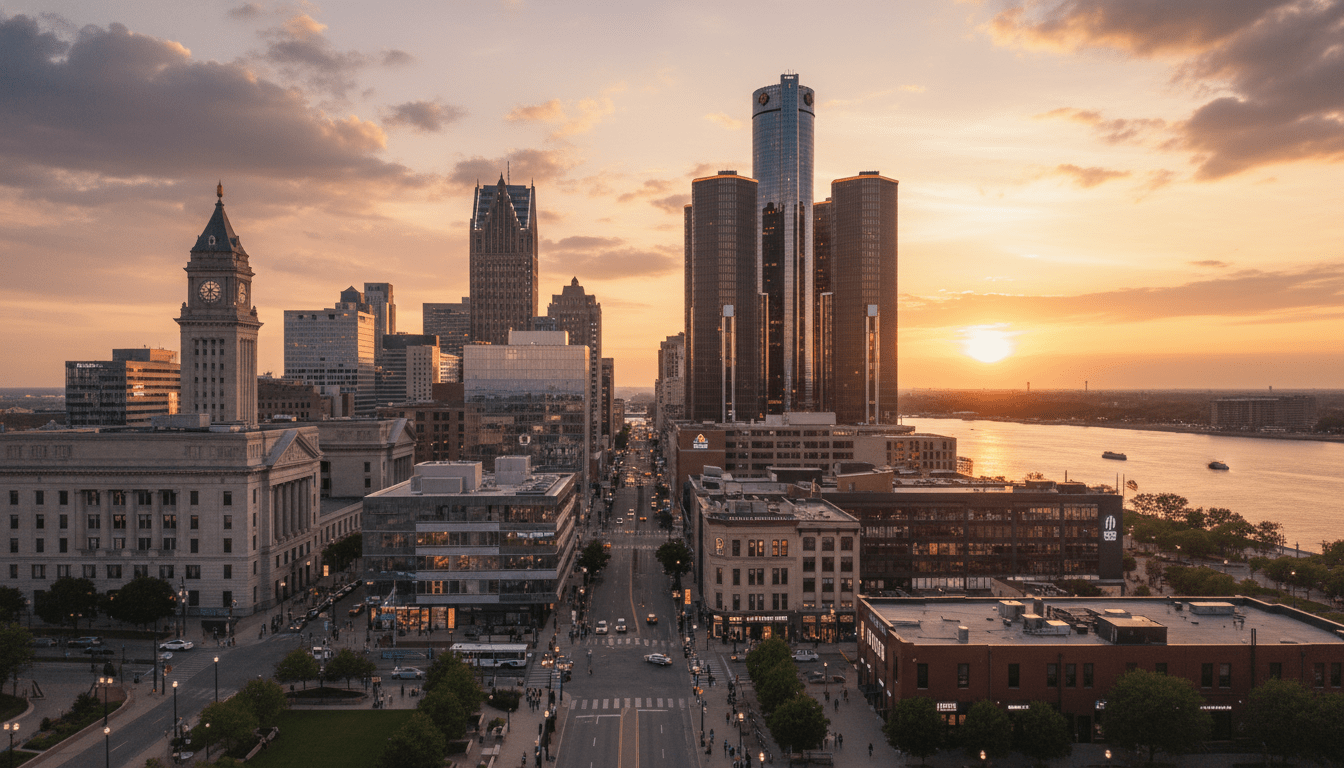
As the city of Detroit approaches the midpoint of the decade, the local skyline and street-level storefronts are undergoing a fundamental transformation. By 2026, the landscape of Detroit commercial real estate is expected to move beyond the post-pandemic recovery phase into a new era defined by mixed-use density and neighborhood-centric development. This shift is not merely aesthetic; it represents a strategic pivot in how businesses interact with the city’s urban core and its surrounding districts.
According to the Detroit Economic Growth Corporation (DEGC), the city’s development pipeline has remained robust despite national economic headwinds. Recent projections suggest that by 2026, the completion of several anchor projects will redefine commercial corridors in Corktown, Midtown, and the Central Business District. Businesses looking to enter the Detroit market are now prioritizing flexibility and community integration over traditional square footage.
The Mixed-Use Evolution and the Hudson’s Site Legacy
One of the most significant Detroit commercial real estate trends 2026 will be the full integration of the Bedrock Hudson’s site development into the city’s economic fabric. As the project nears its operational peak, it serves as a bellwether for high-end office and retail demand. Unlike previous decades where office towers remained isolated from the street, 2026 trends indicate a move toward ‘porous’ architecture—spaces that invite public interaction through ground-floor retail and green spaces.
Data from the Southeast Michigan Council of Governments (SEMCOG) suggests that the demand for traditional, single-use office space continues to decline, while mixed-use developments are seeing higher pre-leasing rates. For businesses, this means that finding a location now involves evaluating the ‘amenity ecosystem’ of a building rather than just its interior specs. High-speed connectivity, proximity to transit, and on-site residential units are becoming standard requirements for corporate tenants.
Impact on Detroit Residents
For the average resident, these commercial shifts are translating into more localized economic opportunities. The city’s ’15-minute neighborhood’ initiative, supported by the City of Detroit Planning and Development Department, aims to ensure that essential services and employment hubs are within a short walk or bike ride for residents. As commercial real estate trends in 2026 favor decentralized hubs, neighborhoods like Livenois-McNichols and Jefferson-Chalmers are seeing an influx of small business investment.
Local business owners have noted that the rise in neighborhood-based commercial activity is creating a more stable environment for retail. By 2026, the ‘shop local’ movement is expected to be reinforced by physical infrastructure, with more commercial permits being issued for adaptive reuse projects—turning former warehouses and vacant storefronts into community-facing businesses. This reduces the commute for many Detroiters and keeps more capital circulating within the local economy.
Adaptive Reuse and the Housing-Commercial Hybrid
Perhaps the most visible of the Detroit commercial real estate trends 2026 is the surge in office-to-residential conversions. With office vacancy rates in older Class B and C buildings remaining a challenge, developers are pivoting to residential models that include significant ground-floor commercial space. This trend is helping to address the city’s housing demand while simultaneously creating a built-in customer base for new businesses.
According to a report by the University of Michigan’s Economic Outlook, these conversions are critical for maintaining the density required to support Detroit’s growing service sector. The Michigan Central Innovation District in Corktown is a primary example of this trend, where tech startups and mobility companies are clustering around residential and hospitality offerings. By 2026, this district is expected to be a global hub for automotive technology, further driving up commercial values in the surrounding blocks.
Background & Data: Understanding the 2026 Market
The numbers behind these trends provide a clear picture of a city in transition. Current market analysis indicates that while the total volume of office leases may be smaller in terms of average square feet per tenant, the number of individual tenants is rising. This suggests a diversification of the Detroit economy, moving away from a reliance on a few large corporations toward a broader base of medium-sized enterprises and startups.
Reports from the City of Detroit Planning and Development Department highlight that zoning changes have played a crucial role in these 2026 projections. By simplifying the process for mixed-use designations, the city has paved the way for more creative uses of commercial property. This includes ‘maker spaces’ and light industrial facilities that share sites with retail outlets—a trend that is particularly prevalent in the Eastern Market area.
Business owners interested in the long-term health of the city should also look at the neighborhood development initiatives that are currently under construction. These projects are laying the groundwork for the 2026 commercial environment by improving infrastructure, such as improved street lighting and expanded broadband access, which are essential for modern business operations.
What Happens Next
Looking ahead to the remainder of 2026 and into 2027, the focus for Detroit commercial real estate will likely shift toward sustainability and ESG (Environmental, Social, and Governance) standards. New developments are increasingly being held to higher green building standards, which is becoming a major selling point for national firms looking to relocate or expand into Detroit.
As the city continues to foster small business growth through various grant programs and tax incentives, the commercial sector is poised for a more inclusive future. The key for businesses in 2026 will be adaptability. Whether it is a tech firm utilizing a coworking space in the District Detroit or a local bakery opening in a renovated storefront on the Avenue of Fashion, the trend is clear: Detroit’s commercial success is increasingly tied to its ability to be a multifunctional, community-oriented city.
While challenges remain, particularly regarding construction costs and interest rates, the momentum behind Detroit’s urban renewal suggests that the 2026 commercial market will be more resilient than the one that preceded the pandemic. For investors and business owners alike, the message is one of cautious optimism—contingent on being part of Detroit’s broader social and economic transformation.