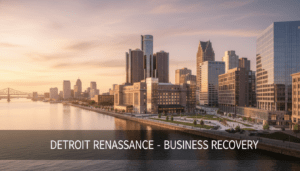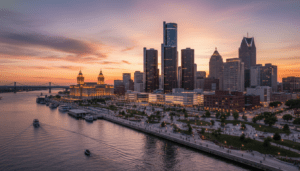
Detroit’s financial landscape is undergoing a significant transformation as the city moves past the immediate disruptions of the pandemic era and into a phase of structural growth. According to recent data and economic forecasts, the Detroit economic recovery is no longer just a downtown phenomenon, but is increasingly taking root in the city’s diverse neighborhoods through small business expansion and large-scale industrial investment.
While the initial years following 2020 were marked by volatility and labor shortages, 2024 has emerged as a stabilization point. Economic analysts now look toward 2026 as a pivotal year where the city’s diversified tax base and renewed manufacturing sector are expected to provide a buffer against broader national economic fluctuations. This resilience is fueled by a combination of public-private partnerships and a surge in entrepreneurial activity at the local level.
The Multi-Layered Detroit Economic Recovery
The current trajectory of Detroit’s economy is defined by more than just the performance of the ‘Big Three’ automakers. While the automotive sector remains the backbone of the region, the city has successfully courted tech firms, logistics hubs, and green energy initiatives. The development of the Michigan Central innovation district in Corktown stands as a primary example of this shift, creating a corridor for high-tech employment that did not exist a decade ago.
According to the Detroit Economic Growth Corporation (DEGC), the city has seen a marked increase in the number of small businesses successfully navigating the post-pandemic environment. Programs like Motor City Match have played a critical role in this survival and subsequent expansion, providing both the capital and technical assistance necessary for local entrepreneurs to move from pop-up concepts to permanent brick-and-mortar locations. This grassroots development is a vital component of the broader Detroit economic recovery, ensuring that commercial corridors outside of the city center remain vibrant.
Impact on Detroit Residents and Neighborhoods
For the average resident, the Detroit economic recovery translates into improved employment access and local services. Data from the U.S. Bureau of Labor Statistics indicates that Detroit’s unemployment rate, while still subject to seasonal fluctuations, has trended downward significantly from its 2020 peak. Perhaps more importantly, the quality of available jobs has shifted toward roles that offer higher wages and better long-term stability.
As part of the Detroit neighborhood development initiatives, the city has focused on ‘20-minute neighborhoods,’ where residents can access essential services within a short walk or bike ride from their homes. This urban planning strategy relies heavily on the success of local businesses. When a neighborhood grocery store or hardware shop opens, it does more than provide goods; it increases property values and fosters a sense of security and community permanence.
However, challenges remain. Residents continue to face pressures from rising inflation and housing costs. The city’s leadership has acknowledged that for the recovery to be truly equitable, the growth seen in 2026 must be accompanied by robust affordable housing protections and workforce training programs that prepare Detroiters for the high-tech manufacturing jobs of the future.
Background & Data: The Road to 2026
Evidence for sustained growth is backed by rigorous academic analysis. The University of Michigan’s Research Seminar in Quantitative Economics (RSQE) recently released an updated outlook for the city. In their Detroit Economic Outlook report, researchers forecast that the city will continue to add jobs through 2026, outperforming several other major Midwestern hubs. The report highlights that while the pace of growth may moderate compared to the immediate post-lockdown surge, the quality of the growth is more sustainable.
The RSQE report suggests that the city’s payroll employment is expected to grow by several thousand jobs annually over the next two years. Key sectors driving this growth include professional and business services, as well as the leisure and hospitality industry, which has finally returned to its pre-pandemic staffing levels. Additionally, the city’s income tax collections—a primary indicator of local economic health—have reached record highs, allowing the municipal government to invest back into infrastructure projects that were deferred during leaner years.
Infrastructure as an Economic Engine
The infusion of federal funding from the American Rescue Plan Act (ARPA) and the Bipartisan Infrastructure Law has acted as a catalyst. Major projects, such as the Joe Louis Greenway and the revitalization of the Detroit riverfront, are not merely recreational; they are economic engines. These projects create construction jobs in the short term and attract long-term commercial investment in the surrounding areas. As we look at local Detroit business news, it is clear that developers are increasingly eyeing sites adjacent to these new infrastructure corridors.
Future Outlook: What Happens Next?
Looking toward 2026, the Detroit economic recovery will face its next major test: the integration of artificial intelligence and automation in the manufacturing sector. How the city adapts to these technological shifts will determine the longevity of the current growth cycle. Local educational institutions, including Wayne State University and Detroit Promise, are already pivoting their curricula to align with the needs of the 2026 labor market.
The City of Detroit remains optimistic but cautious. Fiscal responsibility and the maintenance of a healthy rainy-day fund are top priorities for the Mayor’s office, ensuring that the city can withstand potential national recessions. For local business owners, the message is one of persistence. The focus for the next 24 months will be on scaling existing operations and leveraging the city’s growing digital infrastructure to reach a broader customer base.
Ultimately, the Detroit economic recovery is a story of resilience. By moving away from a mono-industrial economy and toward a diversified, neighborhood-centric model, Detroit is positioning itself as a leader in urban revitalization. The metrics for 2026 suggest a city that is not just recovering, but reimagining its role in the global economy while keeping its residents at the center of that vision.