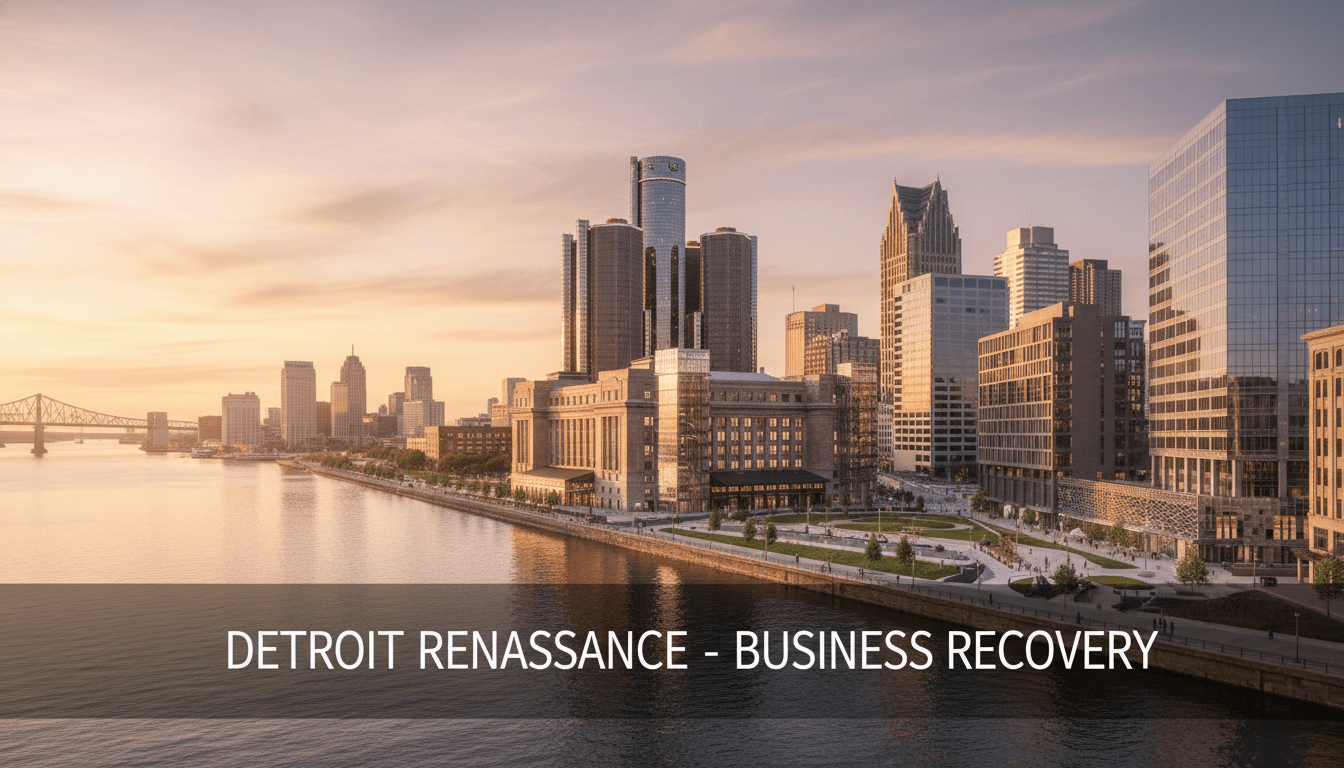
Detroit is entering 2026 with a renewed sense of economic purpose as the city moves past post-pandemic stabilization into a phase of sustainable growth. What was once described as a slow bounce-back has evolved into a comprehensive restructuring of the city’s commercial landscape. From the tech-heavy corridors of Corktown to the revitalized retail strips in the Livernois-McNichols area, the current state of Detroit business recovery reflects a city that is diversifying its industry base while strengthening its local entrepreneurship ecosystem.
The Current State of Detroit Business Recovery
According to the Detroit Economic Growth Corporation (DEGC), the city has seen a consistent uptick in commercial occupancy rates over the last 24 months. The strategy has shifted from simply filling vacant storefronts to ensuring that new businesses have the capital and infrastructure to survive long-term. Programs like Motor City Match have continued to play a pivotal role, recently surpassing significant milestones in total grants awarded to minority-owned businesses. This localized support is a cornerstone of the broader neighborhood development initiatives that aim to balance downtown investment with community-level growth.
Reports from the City of Detroit indicate that the diversification of the economy is no longer just a goal but a measurable reality. While the automotive industry remains the region’s backbone, the influx of logistics, financial services, and green energy startups has created a more resilient economic fabric. This diversification is seen as a safeguard against the cyclical nature of the manufacturing sector, which historically dictated the city’s financial health.
Impact on Detroit Residents and Employment
For the average Detroiter, the Detroit business recovery is most visible in the changing labor market. Data from the Michigan Department of Technology, Management & Budget suggests that unemployment rates in the city have stabilized near historic lows, despite national economic fluctuations. More importantly, the quality of jobs being created is shifting toward roles that offer higher wages and career advancement opportunities within the city limits.
Local business owners in neighborhoods like Jefferson-Chalmers and Grandmont-Rosedale have noted that increased foot traffic and local spending are direct results of improved residential density. As more people move back into renovated housing units—driven by local real estate trends—the demand for essential services, dining, and retail has soared. This cycle of residential and commercial growth is vital for maintaining the momentum of the city’s tax base, which in turn funds essential municipal services.
Innovation Hubs and the Tech Transformation
A significant driver of the 2026 outlook is the maturation of the Michigan Central innovation district. What began as a massive renovation project by Ford Motor Company has blossomed into a global hub for mobility and technology. This district has attracted dozens of ancillary businesses, ranging from software developers to sustainable energy researchers. This concentration of talent has positioned Detroit as a leader in the “future of mobility,” a sector that is expected to provide thousands of high-tech jobs over the next decade.
The integration of academic institutions is also a key factor. The University of Michigan’s Center for Innovation, located in the downtown area, has started producing its first waves of graduates and researchers who are choosing to stay in the city to launch their ventures. According to a recent study by the Detroit Economic Growth Corporation, this “brain gain” is essential for the long-term sustainability of the Detroit business recovery, as it provides the intellectual capital needed to compete with other major Midwestern tech hubs like Chicago and Columbus.
Background & Data: The Economic Outlook
The University of Michigan’s Detroit Economic Outlook, a long-standing analytical tool used by policymakers, recently highlighted that the city’s recovery is outperforming initial projections made in the early 2020s. The report points to several factors, including the successful implementation of the Strategic Neighborhood Fund and the continued federal support for infrastructure projects. These investments have repaired aging commercial corridors, making them more attractive to private investors who were previously hesitant to commit to the city.
Furthermore, the U.S. Census Bureau’s recent American Community Survey data indicates a steady rise in median household income within the city. While challenges regarding inflation and the cost of living remain, the growth in local business revenue has allowed many employers to increase starting wages to remain competitive. This economic lift is helping to bridge the gap between the city’s wealthiest and poorest districts, though city officials acknowledge that significant work remains in ensuring equitable growth across all 139 square miles of the city.
What Happens Next: Challenges and Opportunities
Looking toward the remainder of 2026 and into 2027, the focus of Detroit business recovery will likely shift toward sustainability and scaling. Many of the small businesses that opened during the initial post-2020 boom are now looking to expand into second locations or larger facilities. The city’s ability to provide “graduation space”—mid-sized commercial real estate that is affordable yet modern—will be the next test for Detroit’s planners.
Additionally, the city is preparing for the potential impact of national interest rate changes on commercial lending. To mitigate these risks, local organizations are working to establish more community-based lending pools that prioritize Detroit-based entrepreneurs. The goal is to create an economy that is self-sustaining and less reliant on external venture capital. As the city continues to rebuild, the emphasis remains on a “Detroit-first” approach that values long-term stability over rapid, unchecked expansion. With a clear strategy and strong partnerships between the public and private sectors, Detroit’s economic future looks more secure than it has in decades.