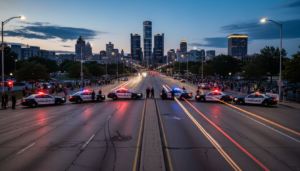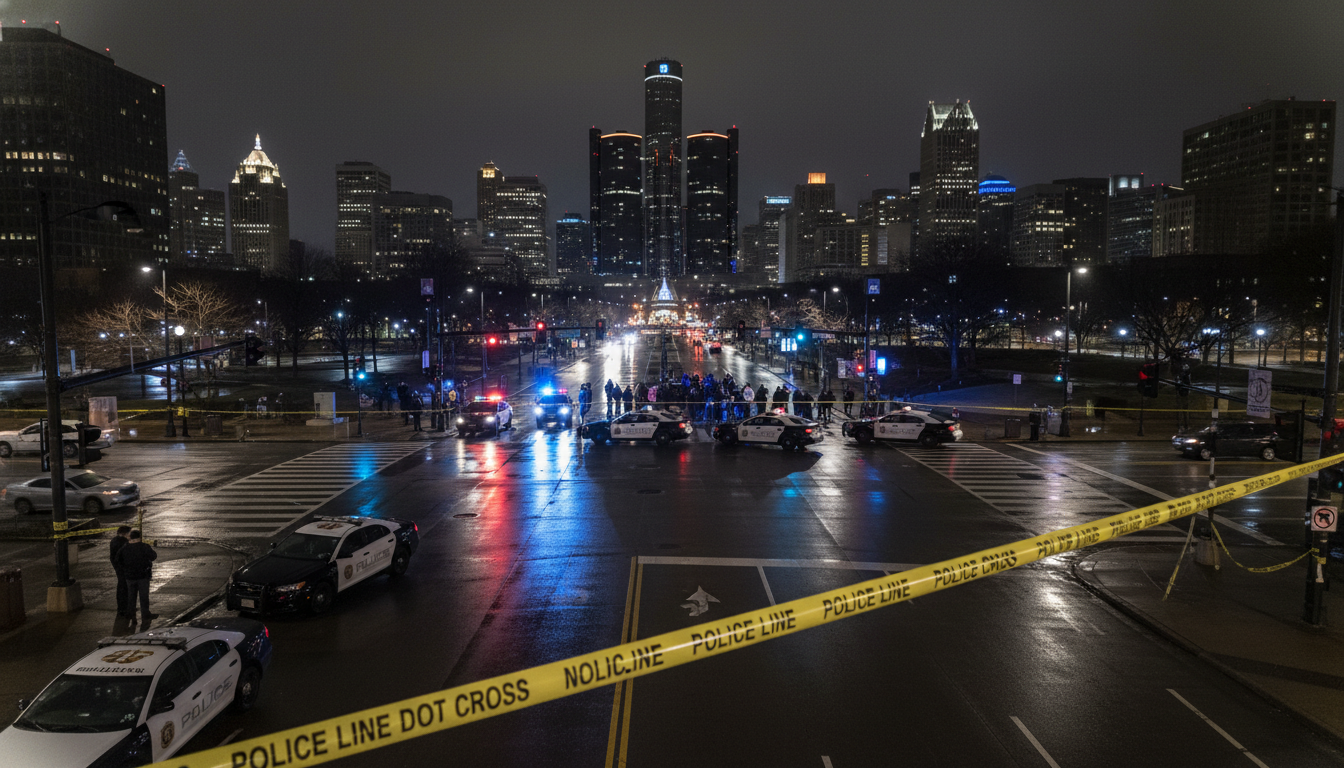
Illegal street racing and large-scale vehicle takeovers have surged across Detroit over the past several months, resulting in a series of arrests and significant injuries to both participants and bystanders. The Detroit Police Department (DPD) has responded by intensifying its enforcement efforts, utilizing specialized task forces and new legal tools to curb a trend that officials say poses a critical threat to public safety.
The Growing Frequency of Illegal Street Takeovers
In recent weeks, Detroit residents have reported an increase in late-night disturbances where hundreds of vehicles congregate to block major intersections and sections of the city’s freeways. These events, often coordinated through encrypted social media channels, involve high-speed drifting, “donuts,” and other reckless maneuvers. According to the Detroit Police Department, these gatherings are not just a nuisance but have become sites of escalating violence and physical harm.
During a recent incident near the intersection of Seven Mile Road and Greenfield, three individuals were hospitalized after a vehicle lost control during a stunt, striking a crowd of onlookers. DPD Chief James White has repeatedly emphasized that the department is taking a zero-tolerance approach to these events. Data provided by the City of Detroit Police Department indicates that dozens of vehicles have been impounded and multiple firearms have been seized during these specific enforcement operations.
Impact on Detroit Residents and Neighborhoods
For many living in neighborhoods like Corktown, Greektown, and the North End, the rise in Detroit street racing has significantly diminished the quality of life. The noise from high-performance engines and screeching tires often lasts until the early morning hours, while the physical blockage of roads prevents emergency vehicles from reaching their destinations efficiently.
Local business owners in the downtown district have reported that these takeovers often lead to property damage and discourage patrons from visiting late at night. “The safety of our customers is our primary concern,” one business operator near the Riverfront noted, citing several instances where patrons were unable to exit parking structures due to crowds blocking the streets. Beyond the immediate danger of traffic accidents, these events often draw crowds where secondary crimes, such as illegal firearm possession and narcotics sales, frequently occur.
This surge in activity follows a pattern seen in other major urban areas, but the infrastructure of Detroit—with its wide boulevards and expansive freeway system—makes it a particularly attractive destination for those involved in the street racing subculture. For further context on local safety initiatives, readers can view our previous coverage on Detroit neighborhood safety and community policing.
Legislative and Enforcement Responses
In response to the public outcry, the Detroit City Council has worked to strengthen local ordinances. New regulations now allow for the permanent forfeiture of vehicles involved in illegal street racing or takeovers. Previously, participants could often reclaim their vehicles after paying a nominal fine and impound fee. Under the updated rules, the hurdle for reclamation is significantly higher, aiming to serve as a stronger deterrent.
According to reports from the Michigan State Police (MSP), the crackdown extends beyond city streets to the surrounding highway system. MSP has collaborated with DPD on “Operation Precision,” a joint effort to intercept racers before they can establish a foothold in an intersection. The use of air support, specifically helicopters and drones, has become a cornerstone of these operations. By tracking vehicles from the air, officers can avoid high-speed ground chases that often end in crashes, instead coordinating with ground units to perform arrests once the vehicles have parked.
Statistics from the National Highway Traffic Safety Administration (NHTSA) highlight that illegal street racing contributes to hundreds of preventable fatalities nationwide each year. In Detroit, the focus is not only on the drivers but also on the spectators. Under current city law, individuals who knowingly attend these illegal gatherings can also face citations and fines, a move intended to de-incentivize the large crowds that fuel the atmosphere of these events.
Advancements in Surveillance and Prevention
To better manage the logistical challenge of monitoring dozens of potential takeover sites simultaneously, the city has expanded its Real Time Crime Center capabilities. Integration with the Green Light Detroit program and the installation of additional high-definition cameras at key intersections have allowed dispatchers to identify gathering crowds in real-time. This technological approach is discussed in detail in our report on DPD new surveillance technology.
Furthermore, the city has explored environmental design changes. The installation of “speed humps” in residential areas has been successful in deterring racing on local streets, but main thoroughfares remain a challenge. Some urban planners have suggested the use of specialized pavement textures or “rumble strips” at frequent takeover locations to make it physically impossible for vehicles to perform drifting maneuvers without damaging their equipment.
What Happens Next: A Long-Term Strategy
The Detroit Police Department has signaled that the current level of enforcement will remain in place indefinitely. “We are not going to let our streets be taken over by individuals who have no regard for human life,” Chief White stated during a press briefing. The department is also working on outreach programs to educate younger drivers about the dangers of illegal racing, directing them toward sanctioned track events at professional racing facilities in the region.
As summer approaches—a season that historically sees a spike in Detroit street racing—residents are encouraged to report illegal activity via the city’s non-emergency lines or the DPD Connect app. While the arrests and impoundments have provided a temporary reprieve in some districts, city officials acknowledge that a sustained, multi-faceted approach involving law enforcement, legislative action, and community engagement will be necessary to permanently reclaim the streets for public use.
With the Detroit Grand Prix returning to the city streets in a controlled, legal environment, officials hope to contrast the professional sport with the dangerous reality of illegal takeovers. The goal is to shift the culture away from reckless public endangerment and toward a respect for the shared urban environment.