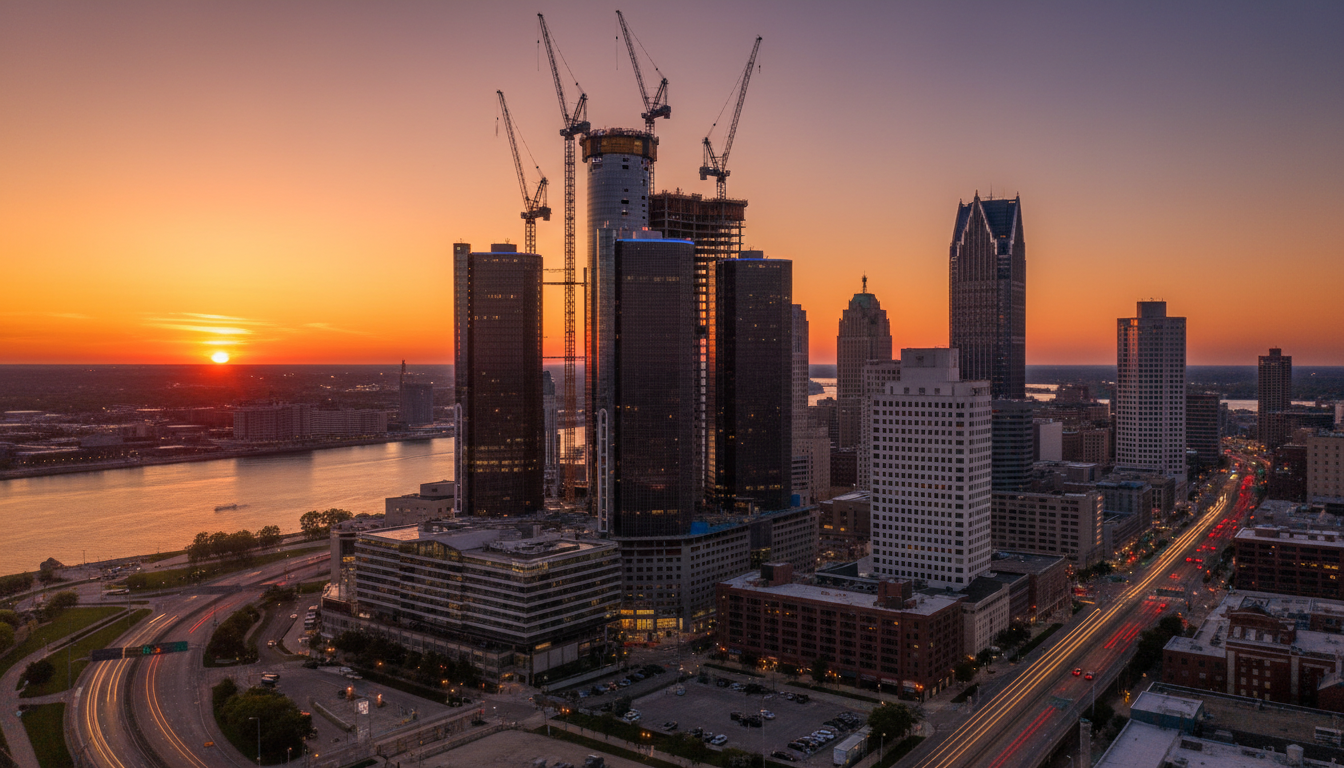
The silhouette of downtown Detroit is undergoing its most significant transformation in half a century. From the towering heights of the new Hudson’s site to the sprawling renovation of the Michigan Central area, billions of dollars in private and public investment are reshaping the city’s core. This surge in Detroit development is not merely about aesthetics; it represents a fundamental shift in the city’s economic strategy and its appeal to a new generation of residents and businesses.
The Pillars of Modern Detroit Development
At the heart of this transformation is the Hudson’s Detroit project, led by Bedrock, the real estate arm of Dan Gilbert’s Rock Family of Companies. The site, which once housed the iconic J.L. Hudson Department Store, is being replaced by a 1.5 million-square-foot mixed-use complex. According to project specifications released by Bedrock, the development includes a residential tower reaching 685 feet, making it one of the tallest structures in the state. The project is expected to provide high-end office space, a boutique hotel, and significant retail footprints that experts suggest will anchor the northern end of the Woodward Avenue corridor.
Further west, the Michigan Central innovation district has become a beacon for the tech industry. Ford Motor Company’s restoration of the historic train station serves as the centerpiece for a 30-acre campus designed to foster autonomous vehicle research and sustainable urban mobility. This project has already begun to attract satellite offices from major tech firms, fundamentally altering the real estate landscape in the Corktown neighborhood.
Economic Impact on Detroit Residents
While the physical changes to downtown Detroit are striking, the socio-economic implications for local residents are complex. The City of Detroit’s Planning and Development Department emphasizes that these projects are required to participate in Community Benefits Agreements (CBAs). These agreements often include provisions for local hiring quotas, investments in neighborhood parks, and funding for affordable housing initiatives.
Construction at this scale has created thousands of temporary trade jobs. According to data from the City of Detroit Planning Department, the influx of new commercial space is projected to support over 10,000 permanent jobs upon completion of the current development cycle. However, for many long-term residents, the rapid pace of downtown Detroit growth brings concerns regarding the rising cost of living. The city has countered these concerns by mandating that 20% of new residential units in subsidized projects be reserved for those earning below the Area Median Income (AMI).
The District Detroit and the Expansion of Entertainment
Another major driver of the skyline’s evolution is “The District Detroit,” a collaborative effort between Olympia Development of Michigan and Related Companies. This multi-phase plan aims to fill the gaps between the city’s professional sports arenas with residential, office, and green spaces. The proposal includes a new 25-story hotel and several mixed-use buildings that will bridge the gap between downtown and Midtown.
Real estate analysts suggest that the concentration of sports and entertainment venues in such a dense urban core is unique among American cities. This density is a primary factor in the recent Detroit real estate market trends, which show a marked increase in demand for urban loft living and high-rise apartments. As more people move into the city center, the demand for basic infrastructure, such as grocery stores and reliable public transit, continues to grow.
Background & Data: A Decade of Growth
To understand the current construction boom, one must look at the data from the past decade. Following the city’s bankruptcy exit in 2014, Detroit has seen a steady incline in building permit valuations. U.S. Census Bureau data indicates a stabilizing population in the downtown core, even as regional trends show more volatility. This stabilization is attributed to the diversification of the city’s economy, moving away from a pure reliance on automotive manufacturing toward healthcare, fintech, and creative services.
Internal reporting from neighborhood investment trackers shows that while downtown receives the lion’s share of media attention, the tax revenue generated by these skyscrapers is increasingly being diverted into the Neighborhood Improvement Fund. This fund supports smaller-scale projects in areas like Livernois-McNichols and Jefferson-Chalmers, ensuring that the benefits of the downtown Detroit boom reach the city’s residential outskirts.
What Happens Next for the Detroit Skyline
Looking ahead, the timeline for these massive projects suggests that 2025 and 2026 will be milestone years for the city. The Hudson’s site is expected to open its doors in phases, while the final touches on the Water Square hotel—located on the former site of the Joe Louis Arena—will add hundreds of rooms to the city’s hospitality capacity. This is critical for Detroit’s bid to host more international conventions and large-scale sporting events like the NFL Draft.
As the construction cranes eventually move to new sites, the focus of city leadership will likely shift from building new structures to maintaining the momentum of occupancy. The success of this era of Detroit development will ultimately be measured not by the height of the buildings, but by the sustainability of the economic ecosystem they create for all Detroiters. The city stands at a pivotal moment, transitioning from a period of recovery to one of sustained, visible growth.