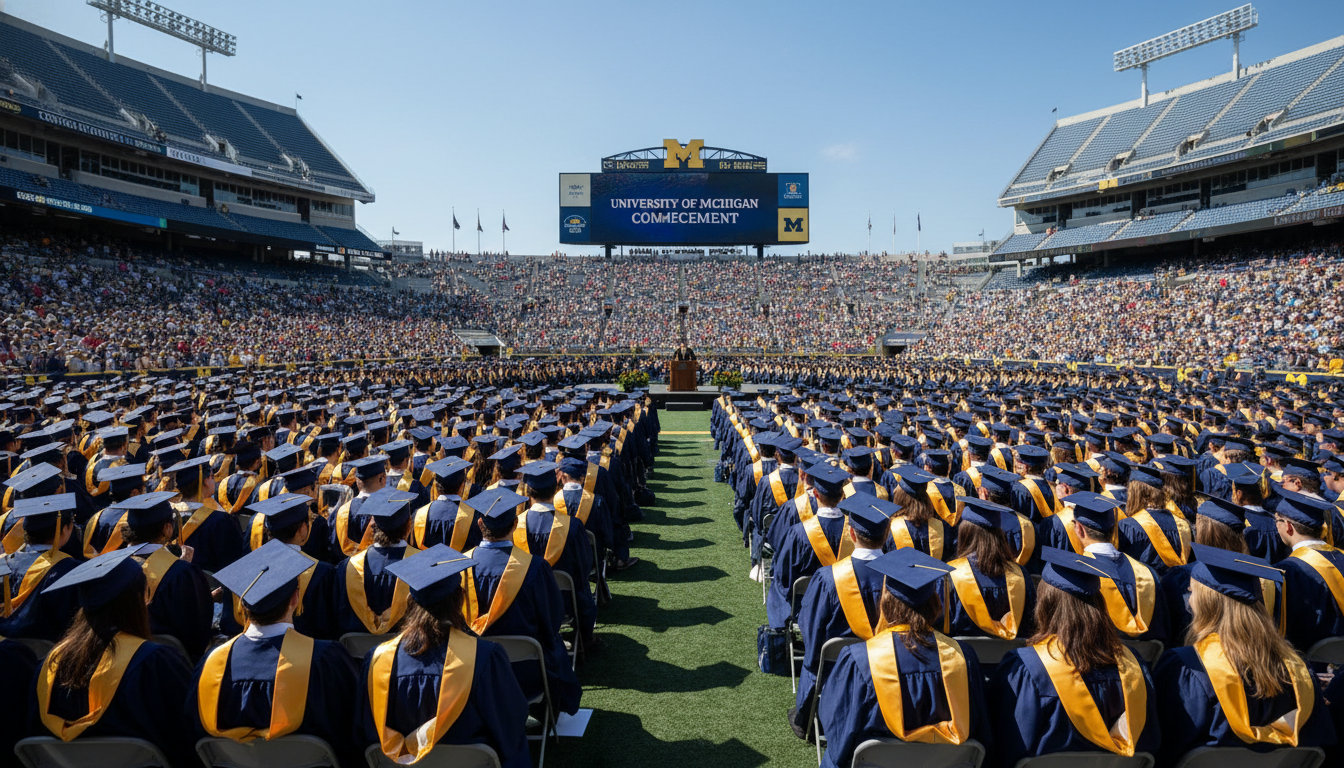
The University of Michigan’s 2024 spring commencement, traditionally a celebration of academic achievement at the iconic Michigan Stadium in Ann Arbor, has instead become the epicenter of a national conversation regarding campus politics and freedom of expression. A student-led commencement speech that touched on pro-Palestinian activism has ignited significant backlash from various advocacy groups, including the Anti-Defamation League (ADL), while simultaneously drawing support from civil rights organizations and campus activists.
The Commencement Controversy Unfolds
During the ceremony, student speakers addressed a crowd of tens of thousands, including graduates, faculty, and family members. While many of the remarks focused on the traditional themes of perseverance and future success, several speakers utilized the platform to draw attention to the ongoing conflict in Gaza and the humanitarian crisis in the region. The inclusion of these themes was not an isolated incident but rather the culmination of months of heightened campus tensions that saw encampments, protests, and administrative clashes throughout the academic year.
According to the University of Michigan’s official communication office, the school maintains a commitment to upholding the principles of free speech, even when that speech is viewed as controversial or divisive. However, the specific content of the commencement remarks has led critics to argue that the university failed to maintain a neutral or inclusive environment for all attendees. The University of Michigan commencement speech controversy has since transitioned from a campus-level disagreement to a broader debate involving state legislators and national non-profits.
ADL Criticism and the National Response
The Anti-Defamation League (ADL) was among the first national organizations to issue a formal statement regarding the event. ADL Midwest Regional Director Sarah van Loon expressed concern that the commencement stage was used to promote rhetoric that many Jewish students and families found alienating or exclusionary. In a public statement, the ADL criticized the university administration for what it described as a failure to prevent the graduation ceremony from being redirected toward a singular political agenda.
“Commencement should be a time for all students to feel celebrated,” the ADL statement noted in reported speech, emphasizing that the focus on geopolitical activism at such a high-profile event can create a hostile environment. This sentiment was echoed by several alumni and donors who have since called for more stringent oversight of student speaker selection processes. Conversely, student organizers associated with the UM Broadside and other campus groups have defended the speeches as a necessary exercise of the First Amendment and a reflection of the student body’s moral conscience regarding international human rights.
Impact on Detroit and Metro Area Residents
The controversy at the University of Michigan resonates deeply within the Detroit metropolitan area. Southeast Michigan is home to one of the most diverse populations in the United States, including significant Arab-American and Jewish-American communities. Events in Ann Arbor often serve as a social and political barometer for the region, and the fallout from the commencement speech has triggered discussions in local community centers from Dearborn to West Bloomfield.
For Detroit residents, the university’s handling of these issues is more than an academic debate; it reflects how local institutions manage the diverse and sometimes conflicting perspectives of their constituents. Many families in the Detroit area have children attending the university, and the campus climate directly affects their sense of safety and belonging. Local community leaders have pointed out that the tension on campus often mirrors the tensions felt in local city council meetings and neighborhood gatherings. You can read more about how these social issues are shaping local policy on our Detroit Social Issues page.
Background and Institutional Data
Data from the U.S. Department of Education indicates that the University of Michigan is one of several elite public institutions currently under scrutiny for its handling of Title VI complaints, which pertain to discrimination based on shared ancestry. The university has faced pressure from both the federal government and internal stakeholders to update its “Disruptive Activity Policy” to better define the boundaries of protest on campus.
According to reports from The Detroit Free Press, the university administration has been attempting to navigate a middle ground. President Santa Ono has frequently issued statements emphasizing the “dual responsibility” of protecting free speech while ensuring that no student is targeted for their identity. However, as the University of Michigan commencement speech controversy demonstrates, finding that balance remains an elusive goal for one of Michigan’s largest employers and intellectual hubs. For further context on regional infrastructure and education investments, visit Detroit Development News.
What Happens Next for U-M Campus Politics
Looking ahead, the University of Michigan Board of Regents is expected to review the protocols for future graduation ceremonies. There is active discussion within the university Senate regarding whether commencement speakers should be vetted more rigorously or if the university should adopt a policy of institutional neutrality, similar to the Chicago Principles of free expression.
The outcome of these deliberations will likely set a precedent for other Michigan institutions, including Wayne State University and Michigan State University, which have also experienced similar student activism. As the 2024-2025 academic year approaches, the focus for the university will be on reconciliation and the implementation of new guidelines designed to prevent a repeat of the disruption seen this spring. For now, the debate over pro-Palestinian activism and campus politics continues to be a defining feature of the Michigan academic landscape, highlighting the challenges of maintaining a cohesive community in a politically polarized era.