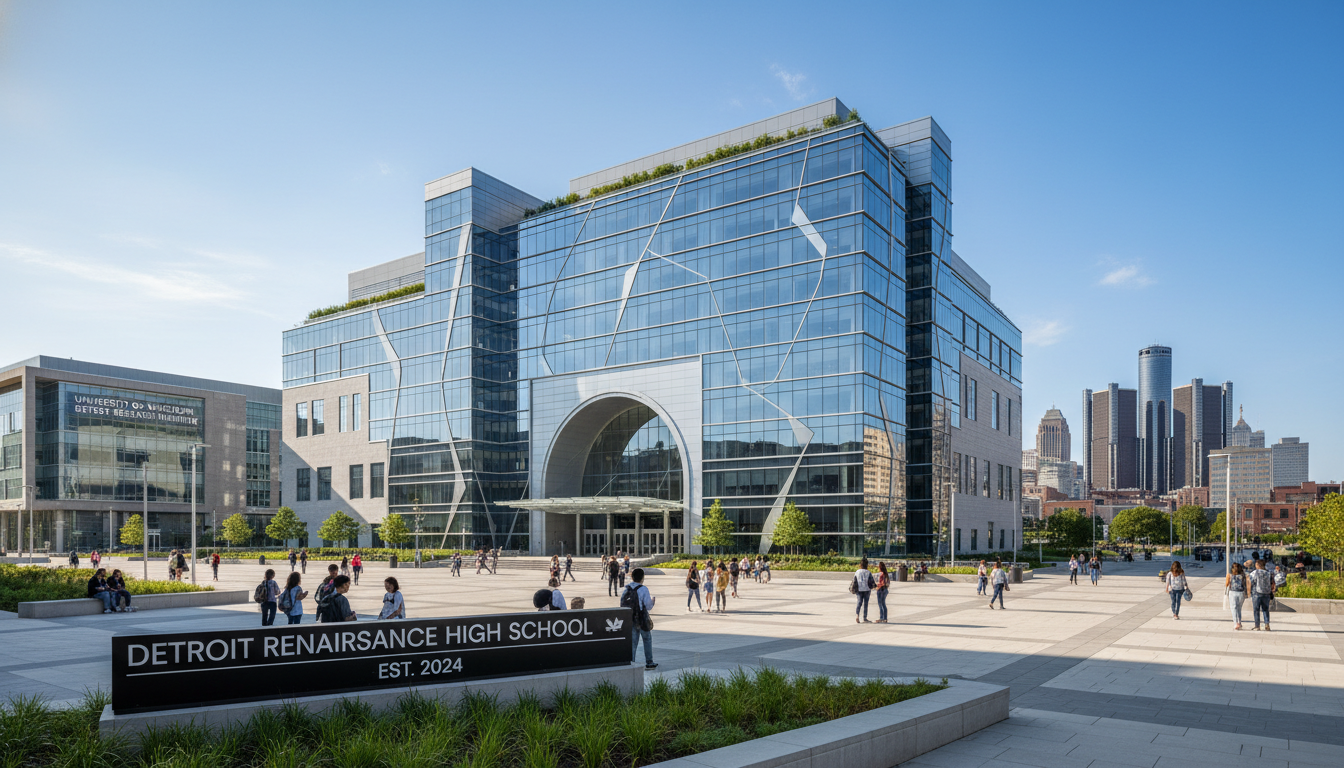
As the city enters 2026, the Detroit education system is navigating a transformative period characterized by massive capital investments, shifting demographics, and a renewed focus on post-secondary workforce readiness. From the implementation of the Detroit Public Schools Community District (DPSCD) multi-year facility master plan to the anticipated opening of major university research hubs in the downtown core, the landscape for students and educators is being fundamentally reshaped.
According to the City of Detroit’s latest development briefings, the integration of academic institutions into the city’s economic fabric has become a primary pillar for long-term stabilization. This evolution is not merely about new buildings, but about addressing decades of systemic challenges while positioning Detroit schools to meet the demands of a modernizing labor market.
The Evolution of Detroit Schools and K-12 Infrastructure
At the heart of this transformation is the DPSCD’s $700 million facility master plan. By the start of the 2026 academic year, several high-profile renovations and new constructions are expected to reach completion. According to official reports from the Detroit Public Schools Community District, these upgrades target long-standing issues such as HVAC reliability, classroom modernization, and the expansion of career and technical education (CTE) centers.
Dr. Nikolai Vitti, Superintendent of DPSCD, has emphasized in board meetings that the quality of the physical environment is directly linked to student retention and teacher recruitment. The district has prioritized schools in high-density neighborhoods like Cody and Mumford, ensuring that the revitalization of education Detroit residents rely on is not confined solely to the downtown area. These structural improvements coincide with a stabilized enrollment trend, a significant milestone after years of contraction.
Expanding Higher Education: Universities in Detroit Take Center Stage
The role of universities Detroit hosts has expanded significantly as the city transitions into 2026. A centerpiece of this growth is the University of Michigan Center for Innovation (UMCI) in The District Detroit. This graduate-level facility, focused on technology and entrepreneurship, represents a shift toward higher education as an anchor for local business growth. By 2026, the center is expected to be fully operational, attracting hundreds of researchers and students to the city center.
Meanwhile, Wayne State University continues to deepen its footprint in Midtown, particularly through its urban health and tech-equity initiatives. The university’s commitment to providing local residents with pathways into medical and engineering fields remains a cornerstone of the study in Detroit experience. Data from the U.S. Census Bureau suggests that as these institutions expand, the educational attainment of the local workforce is showing modest but consistent improvement, particularly among young professionals staying in the city after graduation.
Impact on Detroit Residents and Families
For the average Detroit family, these changes mean more than just new glass and steel. The improvement of local school facilities has a documented correlation with neighborhood stability. Property values in areas with newly renovated schools have seen steady growth, similar to trends observed in the Detroit housing market over the past year. Parents are increasingly looking at school proximity and quality as a primary factor in choosing where to live within the city limits.
Furthermore, the ‘Detroit Promise’ scholarship program continues to provide tuition-free paths to college for eligible graduates. This program has significantly lowered the financial barrier for families, making the prospect of a university degree a reality for students who previously viewed it as unattainable. Local community leaders note that the combination of better K-12 facilities and guaranteed college access is beginning to stem the tide of ‘school-choice’ migration to the suburbs.
Background, Data, and Remaining Challenges
Despite the optimism, the Detroit schools landscape faces persistent hurdles. Data from the Michigan Department of Education (MDE) indicates that while graduation rates have risen by approximately 4% since 2022, chronic absenteeism remains a critical metric that administrators are struggling to control. Post-pandemic recovery has been slower in Detroit than in some other Michigan districts, requiring targeted interventions in literacy and mathematics.
Funding also remains a topic of intense debate at the state level. While the 2026 budget reflects a commitment to per-pupil funding increases, the rising cost of labor and construction materials has put pressure on the district’s ability to complete all planned facility upgrades on schedule. Administrators are currently working with the state legislature to secure long-term capital millage support to maintain the momentum gained over the last three years.
What Happens Next: The 2030 Vision
Looking beyond 2026, the city’s educational leaders are focused on the ‘2030 Vision,’ which aims to align education Detroit programs with the emerging green-energy and automotive technology sectors. As the city continues to attract investment in electric vehicle manufacturing and software development, the need for a localized, highly skilled workforce is more urgent than ever. Internal reports on Detroit tech hub growth highlight that the success of these industries is inextricably linked to the quality of the local school system.
The next twelve months will be pivotal as the district transitions from a phase of construction to a phase of academic assessment. For Detroit residents, the promise of a modernized, equitable, and high-performing education system is closer to reality than it has been in a generation, though the path forward requires sustained political and community commitment.