As Detroit moves further into 2026, the landscape of the local housing market has transitioned from a period of rapid recovery into a more mature, yet complex, phase of growth. The influx of corporate investment, led by the full activation of the Michigan Central District and the completion of the Hudson’s site development, continues to exert upward pressure on property values in the city’s core. However, this growth brings with it a critical discussion regarding long-term affordability for lifelong residents.
The Current State of the Detroit Real Estate Market 2026
Data recently released by the City of Detroit and local real estate analysts suggests that the Detroit real estate 2026 landscape is defined by two distinct speeds. While the greater downtown area and neighborhoods like Corktown and the North End have seen property values stabilize at record highs, the outer-ring neighborhoods are seeing a resurgence in interest as buyers seek out more accessible price points. According to reports from the City of Detroit Housing and Revitalization Department, the focus has shifted heavily toward rehabilitating existing structures through the Strategic Neighborhood Fund.
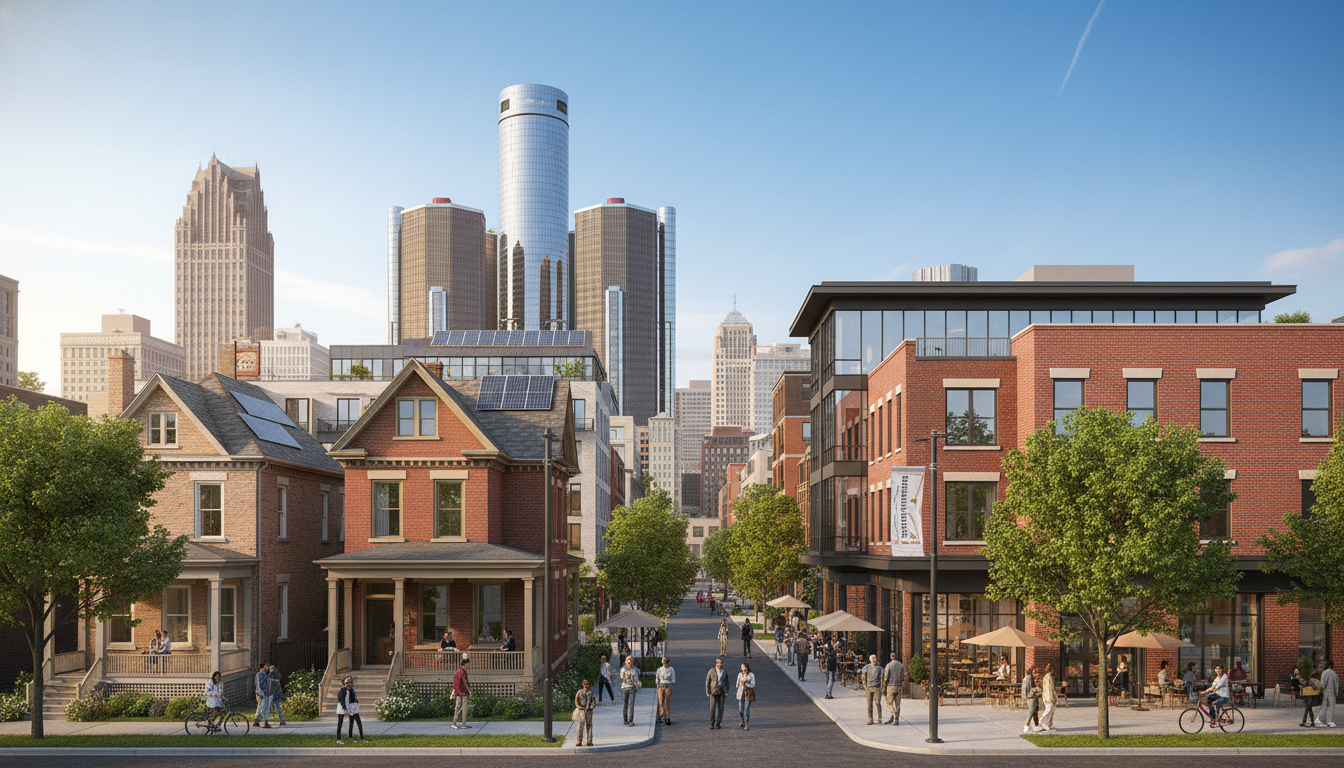
Property investment Detroit remains a central theme for national and local developers. Unlike the speculative buying seen a decade ago, current investment is increasingly focused on mixed-use developments that combine residential units with ground-floor commercial spaces. This shift is designed to create “20-minute neighborhoods” where residents can access daily needs within a short walk or bike ride, a concept heavily promoted in recent neighborhood development initiatives.
Impact on Detroit Residents
For many residents, the shift in the Detroit housing market presents a double-edged sword. On one hand, the increase in home equity for long-time homeowners in neighborhoods like Bagley or University District has provided newfound financial security. On the other hand, the rising assessed values have led to higher property tax bills, which can be a burden for those on fixed incomes. City officials have responded by expanding the Homeowners Property Tax Assistance Program (HPTAP) to mitigate the risk of displacement.
Local housing advocates emphasize that while the increase in home prices Detroit residents are seeing is a sign of a healthier economy, it also necessitates a stronger focus on the preservation of affordable housing. The city has made strides in this area by requiring developers who receive public subsidies to set aside at least 20% of units for those earning 60% or less of the Area Median Income (AMI).
Background & Data: Understanding the Shift
Looking at the data provided by the U.S. Census Bureau and recent market surveys, the average sale price of a single-family home in Detroit has seen a steady 4.5% annual increase over the last three years. While still significantly lower than national averages, the pace of growth in Detroit has outstripped many other Midwestern cities. Many who chose to buy house Detroit options in 2024 are now seeing significant returns on investment, particularly in areas adjacent to the Joe Louis Greenway.
The rental market is also evolving. As homeownership becomes more competitive, the demand for high-quality rental units has spiked. This has led to a surge in new construction permits across the Midtown and New Center areas. Economic analysts point to the city’s broader economic diversification—moving beyond just automotive manufacturing into tech and green energy—as a primary driver for the sustained demand in the housing sector.
What Happens Next: The Future Outlook
As we look toward the remainder of 2026 and into 2027, the Detroit real estate market is expected to remain resilient despite national economic fluctuations. The continued development of the Detroit Riverfront and the expansion of transit options like the QLine extensions are expected to maintain high demand in the city’s eastern and northern corridors. Industry experts suggest that the “gold rush” phase of property investment Detroit has evolved into a more strategic environment where sustainable growth and community integration are key to success.
For prospective buyers and current residents alike, the message for 2026 is clear: Detroit is no longer just a “value play” for investors, but a competitive market that requires careful navigation of neighborhood-specific trends and a deep understanding of local zoning and tax incentive programs. The city’s ability to balance its newfound growth with equitable housing policies will likely define its real estate narrative for the next decade.