As the calendar turns toward 2026, the City of Detroit is entering a critical phase of physical transformation. Following years of post-pandemic recovery and the strategic deployment of federal relief funds, the focus has shifted toward long-term sustainability and connectivity. The landscape of Detroit infrastructure 2026 is defined by a move away from traditional highway dominance and toward a more integrated, multimodal urban environment. From the controversial yet historic removal of I-375 to the revitalization of arterial neighborhood roads, the city is undergoing its most significant structural facelift in over half a century.
The Multi-Year Roadmap: Detroit Infrastructure 2026
The core of the 2026 vision is centered on the Five-Year Transportation Program managed by the Michigan Department of Transportation (MDOT). This roadmap outlines several billion dollars in investment aimed at modernizing the aging concrete that has long defined the Motor City. Unlike previous eras that focused solely on moving cars faster, the current administration is prioritizing “complete streets”—a design philosophy that treats pedestrians, cyclists, and transit riders with the same importance as motorists.
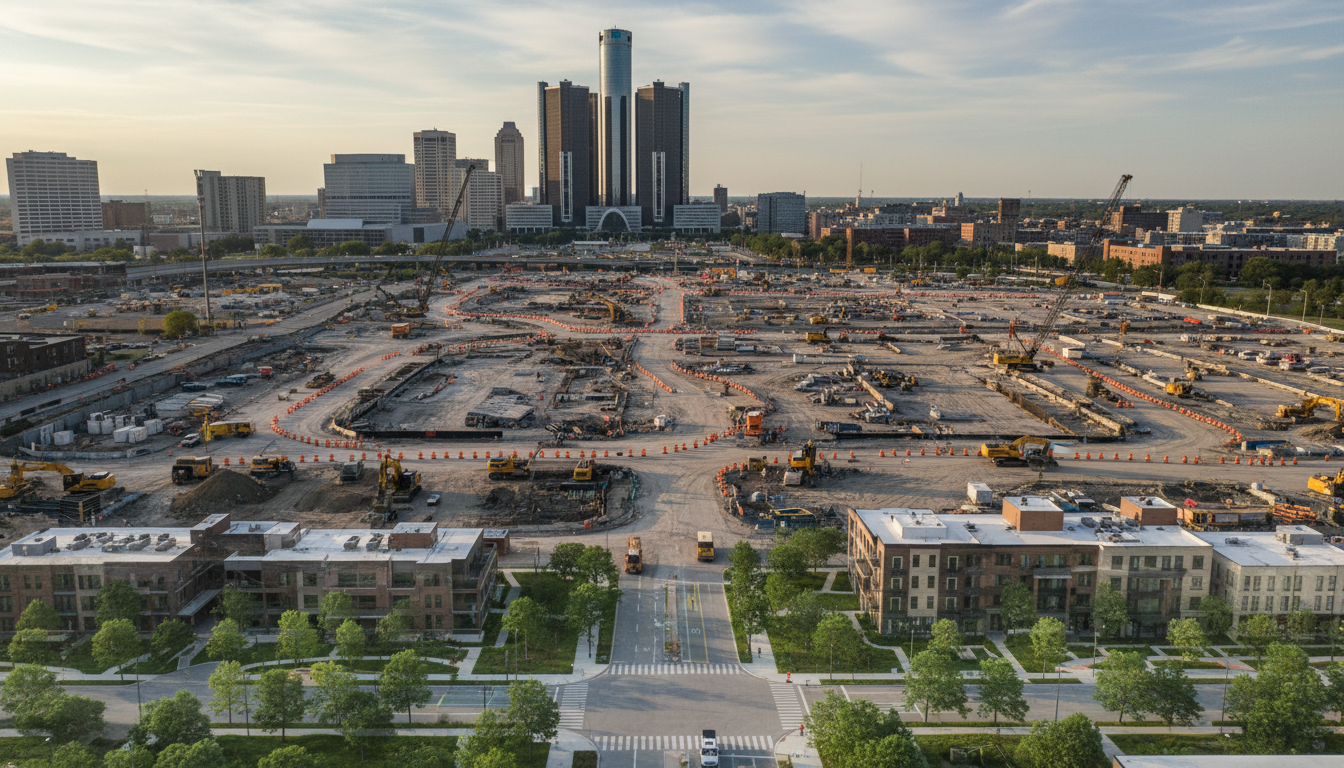
Construction in Detroit during this period will be heavily concentrated on the I-375 Reconnecting Communities Project. According to MDOT, the project aims to replace the sunken, outdated freeway with a street-level boulevard. This move is intended to rectify historical injustices where the original construction decimated the Black Bottom and Paradise Valley neighborhoods. By 2026, the initial grading and utility relocation phases are expected to be in full swing, creating a new gateway into the downtown district that encourages walkability and new commercial development.
Major Road Projects and Bridge Repairs
Road projects in Detroit for 2026 aren’t limited to the downtown core. The Department of Public Works (DPW) has identified several key corridors for complete reconstruction. Heavy-traffic routes like Grand River Avenue and Gratiot Avenue are slated for significant upgrades. These projects typically involve full depth pavement replacement, modernizing traffic signals with AI-driven timing sensors, and the installation of ADA-compliant ramps at every intersection.
Bridge safety remains a high priority for city planning in Detroit. Data from the Southeast Michigan Council of Governments (SEMCOG) suggests that while the number of “poor-rated” bridges has stabilized, the maintenance cycle must accelerate to prevent further degradation. In 2026, several overpasses crossing the I-75 and I-94 corridors are scheduled for deck replacements. These closures will likely necessitate complex detour routes, which city officials say are necessary to ensure the structural integrity of the region’s logistics network.
Impact on Detroit Residents and Local Businesses
For the average Detroiter, these infrastructure projects represent a double-edged sword. While the long-term benefits include increased property values and improved safety, the short-term reality is one of orange barrels and transit delays. Residents in neighborhoods like Corktown and the North End have already seen how neighborhood development trends follow closely behind road improvements.
Local business owners, particularly those along the Michigan Avenue corridor, are bracing for the impact of construction. However, the City of Detroit has implemented programs to assist small businesses during major utility and road work. These initiatives include enhanced signage to direct customers to open entrances and occasional grants to offset losses caused by limited street access. The goal is to ensure that the businesses that have stood by Detroit during its lean years are still there to enjoy the benefits of a modernized infrastructure.
Urban Planning and the Joe Louis Greenway
A cornerstone of city planning in Detroit is the continued expansion of the Joe Louis Greenway. By 2026, several new segments of this 27.5-mile loop are expected to be operational, connecting residents from the riverfront to the limits of Highland Park and Hamtramck. This project is more than just a bike path; it is an infrastructure-led economic development tool designed to turn vacant land into recreational assets.
According to the City of Detroit’s Planning and Development Department, the greenway is attracting interest from developers looking to build affordable housing adjacent to the trail. This synergy between transit and housing is a key component of the Detroit real estate forecast, as proximity to non-motorized infrastructure becomes a premium selling point for younger residents and retirees alike.
Sustainability and Smart City Technology
Detroit infrastructure 2026 is also getting “smarter.” The city is currently piloting several programs involving connected vehicle technology and green stormwater infrastructure. Rather than simply funnelling rainwater into the sewer system, new road projects are incorporating bioswales and permeable pavements. This reduces the load on the Great Lakes Water Authority (GLWA) systems and helps prevent the localized flooding that has plagued Detroit neighborhoods during heavy summer storms.
Furthermore, the 2026 projects will see an increase in Electric Vehicle (EV) charging infrastructure integrated directly into public rights-of-way. As the automotive industry pivots toward electrification, Detroit is positioning itself as a testbed for “wireless charging” roads, with pilot segments already being evaluated for expansion near the Michigan Central innovation district.
Funding the Future: Challenges and Opportunities
The scale of these projects is made possible by a combination of state funds, city bonds, and federal grants from the Infrastructure Investment and Jobs Act (IIJA). However, analysts warn that the rising cost of materials and labor could pose a challenge to the 2026 timeline. The City of Detroit has been proactive in bundling projects to achieve economies of scale, but global supply chain fluctuations remain a wildcard.
Despite these challenges, the outlook remains optimistic. The infrastructure being laid today is designed to last for the next fifty years. By focusing on quality over quick fixes, Detroit is attempting to break the cycle of constant emergency repairs. The 2026 construction season will be a period of significant transition, but the result promises to be a more resilient, accessible, and economically vibrant city for all its inhabitants.
What Happens Next
As we move closer to 2026, residents can expect more detailed community meetings and town halls. MDOT and the Detroit DPW have pledged transparency in their scheduling, providing digital dashboards where citizens can track the progress of road projects in their specific zip codes. While the orange barrels may be a nuisance, they are the most visible sign of a city that is no longer just surviving, but actively building its future.