The City of Detroit is formalizing an ambitious strategy for its 2026 cultural season, positioning the city as a global epicenter for the arts and neighborhood-centric celebrations. According to the Detroit Office of Arts, Culture and Entrepreneurship (Detroit ACE), the 2026 calendar is expected to feature a record number of sanctioned community events Detroit residents and international visitors will experience, marking a significant milestone in the city’s post-pandemic cultural resurgence.
A Strategic Vision for Detroit Cultural Events 2026
City officials and local arts organizers are viewing 2026 as a pivotal year for the local economy. Data from the Michigan Economic Development Corporation (MEDC) suggests that cultural tourism in Southeast Michigan is projected to grow by 12% over the next two years, driven largely by a revitalized schedule of Detroit cultural events 2026. This growth is supported by increased municipal funding aimed at diversifying the types of programming available in neighborhoods outside of the downtown core.
Rochelle Riley, the Director of Arts and Culture for the City of Detroit, recently highlighted that the 2026 strategy focuses on ‘equity in expression.’ This initiative ensures that while legacy events continue to thrive, new art shows Detroit-wide will receive the logistical support needed to reach wider audiences. The city’s commitment includes streamlined permitting processes and enhanced security for public gatherings, ensuring that the 2026 season is both expansive and safe.
The Return of Major Festivals in Detroit
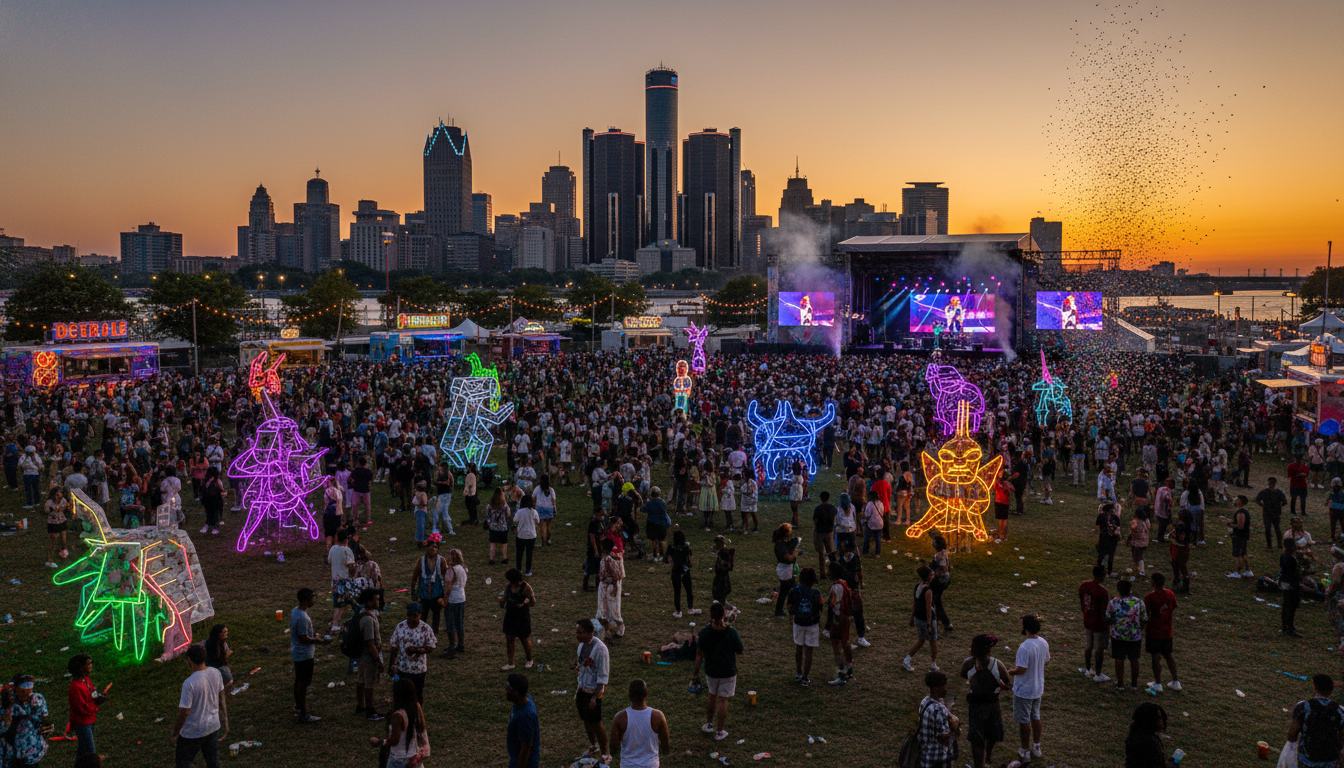
The 2026 season will see the return of several cornerstone events that define the city’s identity. The Movement Electronic Music Festival and the Detroit Jazz Festival remain the anchors of the summer season, but organizers are already planning for expanded footprints in 2026. Sources within the Detroit Jazz Festival Foundation indicate that new satellite stages may be introduced to accommodate projected attendance increases.
Furthermore, the North American International Auto Show (NAIAS) is expected to further integrate cultural programming into its January 2026 schedule. By blending automotive innovation with local art shows Detroit artists can participate in, the city aims to create a multi-sensory experience that transcends traditional trade show boundaries. This synergy between industry and art is a key component of the city’s long-term economic development plan.
Revitalizing Neighborhood Community Events Detroit
Beyond the bright lights of Hart Plaza, the 2026 calendar places a heavy emphasis on community events Detroit neighborhoods can claim as their own. The ‘City Walls’ mural program is expected to culminate in a city-wide ‘Mural Week’ in the autumn of 2026, which will include guided tours of new installations in areas like Brightmoor and the North End. This project not only beautifies the city but also provides a platform for local creators to engage directly with their neighbors.
Impact on Detroit Residents and Small Businesses
The surge in Detroit cultural events 2026 is expected to have a tangible impact on the local workforce. According to reports from the Detroit Economic Growth Corporation (DEGC), festivals Detroit hosts provide critical revenue streams for small businesses, particularly those in the hospitality and service sectors. Local business owners in the Eastern Market district have already expressed optimism, noting that a consistent flow of cultural events helps stabilize year-round employment.
For residents, the influx of art and music brings both opportunities and challenges. While the increase in neighborhood vitality is welcomed, the City of Detroit is working to address concerns regarding traffic congestion and noise ordinances. Infrastructure improvements, including the expansion of bike lanes and enhanced public transit routes near festival sites, are currently being prioritized to ensure that locals can navigate the city effectively during peak event periods. You can read more about recent neighborhood development updates that are facilitating these changes.
Background and Data: The Economics of Culture
The shift toward a more robust cultural calendar is backed by historical data. A study by the University of Michigan’s economic research team found that for every dollar spent on arts programming in Detroit, there is a secondary economic impact of roughly seven dollars in the surrounding community. This includes spending at gas stations, grocery stores, and local boutiques.
Furthermore, data from the U.S. Census Bureau highlights that Detroit has one of the highest concentrations of independent artists in the Midwest. By leveraging Detroit cultural events 2026 as a marketing tool, the city hopes to retain this talent and discourage ‘brain drain’ to other major metros like Chicago or New York. The focus is on creating a sustainable ecosystem where artists can live, work, and exhibit their pieces through various art shows Detroit supports through grants and public space allocations.
What Happens Next: Preparing for the 2026 Kickoff
As the city moves closer to 2026, the focus will shift from planning to execution. The Detroit ACE office is scheduled to release a comprehensive digital guide in late 2025 that will provide a centralized location for all festival dates and artist registration information. This digital infrastructure is designed to make the festivals Detroit hosts more accessible to the tech-savvy traveler and the local resident alike.
Residents are encouraged to participate in upcoming town hall meetings to voice their opinions on how community events Detroit plans for 2026 should be managed. Ensuring that the cultural growth of the city is inclusive remains a top priority for the administration. For more information on how public spaces are being transformed, see our latest report on the Detroit Riverfront expansion.
With a clear vision and strong institutional backing, Detroit is set to prove that its cultural heart beats stronger than ever. The 2026 season promises to be more than just a series of dates on a calendar; it is a testament to the city’s resilience and its enduring status as a beacon of American creativity.