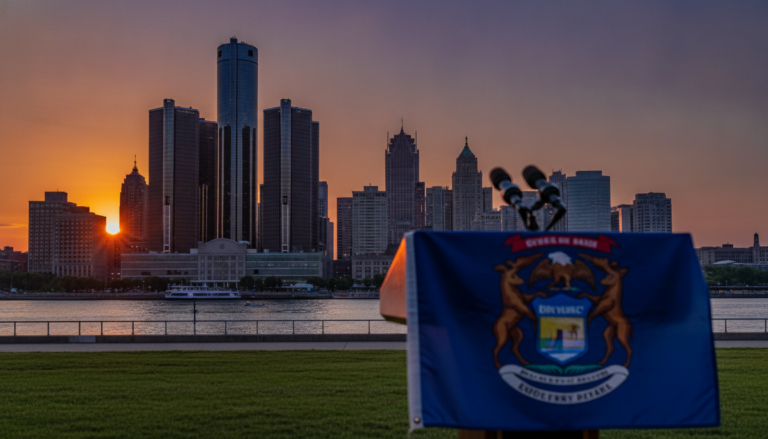
As 2026 unfolds, the skyline of Detroit represents more than just a storied architectural past; it has become the physical manifestation of a rapidly maturing technology sector. What was once a recovery narrative is now a story of sustained growth, as the Detroit startup scene in 2026 has evolved into a nationally recognized hub for mobility, clean energy, and financial technology. Driven by strategic public-private partnerships and a surplus of engineering talent, the city is no longer chasing the shadows of coastal tech hubs but is instead carving out a unique identity as the epicenter of ‘industrial tech.’
The Hub of Mobility and Innovation
At the center of this transformation is the Michigan Central district in Corktown. According to reports from the Michigan Economic Development Corporation (MEDC), the district has successfully reached full occupancy in its dedicated startup spaces, housing over 150 early-stage companies focused on mobility and electrified infrastructure. This ecosystem has benefited significantly from the integration of real-world testing grounds, allowing new businesses in Detroit to pilot autonomous delivery systems and drone technologies within city limits.
State data indicates that venture capital investment in Michigan-based startups has seen a consistent 12% year-over-year increase since 2023. Unlike the broader national trend of cooling tech investments, Detroit has remained resilient by focusing on ‘hard tech’—solutions that bridge the gap between software and physical manufacturing. Local industry analysts suggest that the city’s ability to leverage its existing manufacturing supply chain has made it a safer bet for investors looking for tangible ROI.
Impact on Detroit Residents
The growth of tech companies in Detroit is having a tangible impact on the local workforce. For many residents, the proliferation of these companies has led to the creation of thousands of high-wage jobs that do not always require a four-year degree. Programs like the Detroit at Work initiative have partnered with several of these emerging firms to create ‘upskilling’ pipelines, ensuring that long-term residents are not left behind as the economy shifts toward automation and digital services.
Housing and neighborhood development are also feeling the ripple effect. As the startup ecosystem in Detroit expands, professional demand has revitalized secondary commercial corridors in neighborhoods like New Center and the North End. While this has raised concerns regarding gentrification, the city has implemented stricter community benefits agreements for tech firms receiving local incentives, requiring them to invest in local STEM education and neighborhood infrastructure. You can read more about recent Detroit housing developments and how they are adjusting to the influx of new workers.
Institutional Support and Economic Data
Data from the Detroit Regional Partnership highlights that 2026 has seen a record number of ‘spin-off’ companies emerging from the city’s major research institutions and legacy automakers. The focus on innovation in Detroit is particularly strong in the electric vehicle (EV) sector, where startups are working on battery recyclability and grid-balancing software. These companies are filling the gaps left by larger manufacturers, providing specialized solutions that are then integrated into global supply chains.
The University of Michigan’s most recent economic outlook report notes that the ‘brain drain’—the historical trend of graduates leaving the state for California or New York—has reversed for the third consecutive year. ‘Detroit’s cost of living combined with the high concentration of specialized engineering roles has made it a magnet for talent,’ the report states. Furthermore, the city’s commitment to diversity in tech has yielded results, with Detroit ranking among the top five U.S. cities for minority-owned tech startups, according to a recent study by the Brookings Institution.
Challenges and the Road Ahead
Despite the optimism, the startup scene faces hurdles. Talent retention remains competitive, and the need for improved public transportation between tech hubs and the suburbs is a frequent point of discussion among local business owners. The city’s aging infrastructure requires continued investment to support the high-speed data needs of a tech-heavy economy. There is also the ongoing challenge of ensuring that the economic growth in Detroit neighborhoods is equitable across all zip codes.
According to the Michigan Economic Development Corporation, the next phase of Detroit’s strategy involves expanding the ‘tech-zone’ designation to include more areas along the Woodward Corridor, providing tax credits for startups that move into rehabilitated historic buildings. This move is intended to maintain the city’s aesthetic character while providing the modern office environments required by 21st-century firms.
What Happens Next
Looking toward the end of 2026 and into 2027, the focus is expected to shift toward international expansion. Several Detroit-based fintech and mobility startups are already preparing for initial public offerings (IPOs) or international partnerships with European and Asian markets. The City of Detroit’s Office of Mobility Innovation is also expected to announce a new series of pilot programs for ‘smart city’ infrastructure, which will likely attract another wave of new businesses in Detroit looking to test their hardware in a dense urban environment.
As Detroit continues to redefine itself, the startup ecosystem remains a cornerstone of the city’s broader economic resilience. By blending its industrial heritage with forward-looking technology, Detroit is proving that the future of innovation is not just digital—it is built in the Motor City.