As Detroit moves through 2026, the landscape of the city’s education system is undergoing its most significant structural and academic shift in decades. Driven by a combination of federal recovery funds, long-term facility master plans, and high-stakes investments in higher education, the city is attempting to bridge the gap between historic disinvestment and a future-ready workforce. From the modernization of Detroit schools to the expansion of the city’s academic footprint in the downtown core, the strategy is increasingly focused on retention: keeping students in the city from kindergarten through their professional careers.
Modernizing the Detroit Public Schools Community District
The Detroit Public Schools Community District (DPSCD) has entered a critical phase of its 20-year Facility Master Plan. According to official reports from the Detroit Public Schools Community District, the district is currently executing over $700 million in capital improvements. These funds, largely drawn from the American Rescue Plan Act (ARPA) and internal capital allocations, are being used to replace aging HVAC systems, renovate historic school buildings, and construct new facilities to replace those beyond repair.
Superintendent Dr. Nikolai Vitti has frequently emphasized that the physical environment of Detroit schools is directly tied to student performance and teacher retention. By the start of the 2026-2027 academic year, nearly 40% of the district’s planned renovations are expected to be complete. This modernization effort is not merely cosmetic; it includes the installation of state-of-the-art STEM labs and enhanced security infrastructure, reflecting a shift toward competitive educational standards seen in neighboring suburban districts.
The Expansion of Universities in Detroit
While K-12 education remains the foundation, the growth of universities in Detroit is reshaping the city’s geography. Wayne State University (WSU) continues to be the anchor institution in Midtown, reporting a steady increase in enrollment for its engineering and medical programs. Data from the Michigan Department of Education indicates that WSU’s local recruitment initiatives have increased the number of DPSCD graduates entering the university by 15% since 2023.
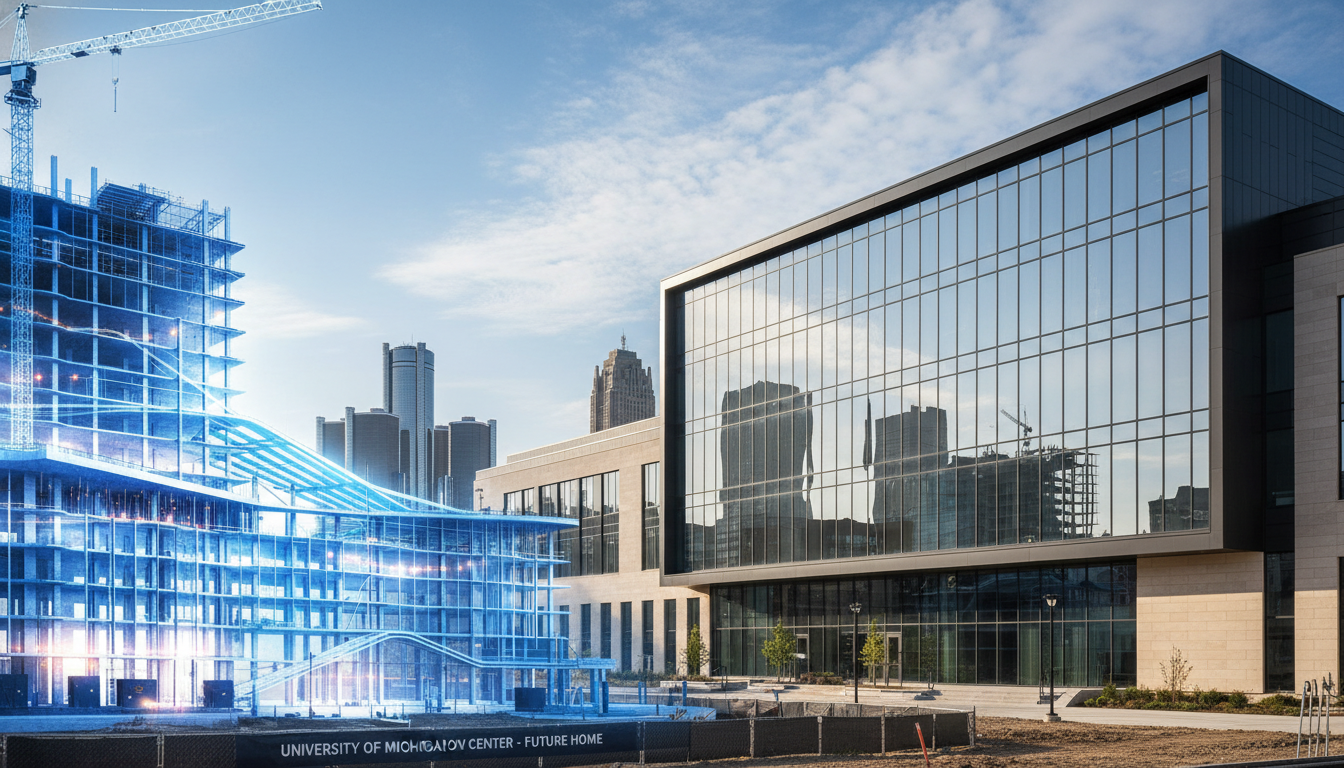
Furthermore, the skyline is being redefined by the University of Michigan Center for Innovation (UMCI) in the District Detroit. This multi-million dollar collaboration is designed to provide graduate-level programs focused on technology, sustainability, and urban planning. For those looking to study in Detroit, the presence of a world-class research hub downtown provides a direct pipeline to the city’s growing tech and mobility sectors. Local leaders view these institutions as essential for reversing the “brain drain” that has historically seen educated youth migrate out of the city.
Impact on Detroit Residents
For local families, these shifts in education Detroit represent both opportunity and transition. The expansion of the Detroit Promise—a program that offers tuition-free college to eligible Detroit high school graduates—has become a cornerstone of resident life. This program has significantly lowered the financial barrier for families who previously viewed higher education as unattainable.
However, the rapid development of the education system also brings challenges. Residents in neighborhoods like Livernois and the North End have seen property values rise as local Detroit schools show signs of improvement. While this boosts home equity for longtime residents, it also increases the cost of living for new families. To mitigate this, the city has integrated education planning with its neighborhood stabilization initiatives, ensuring that school improvements do not lead to displacement.
Vocational Training and Workforce Development
Recognizing that not every student follows a four-year degree path, 2026 has seen a surge in Career Technical Education (CTE) within Detroit schools. The Breithaupt and Randolph Career and Technical Centers have seen record-breaking enrollment. These centers focus on high-demand trades such as electrical work, advanced manufacturing, and healthcare. This push aligns with the city’s broader economic goals of staffing large-scale Detroit development projects with local labor.
According to data from the U.S. Census Bureau and the Michigan Bureau of Labor Market Information, Detroit-based jobs in skilled trades are projected to grow by 12% through 2028. By integrating these certifications into the high school curriculum, the city is attempting to provide immediate economic mobility for its youth.
Background & Historical Context
The current state of education in the city cannot be understood without acknowledging the decade of state oversight that ended in 2017. For years, Detroit schools faced declining enrollment and crumbling infrastructure. The 2026 outlook is the result of nearly a decade of local control and stabilized governance. While challenges such as chronic absenteeism and literacy rates remain, the trajectory has moved from crisis management to strategic growth. Comparative data shows that literacy proficiency in early grades has seen a modest but consistent 3% annual increase over the last three years, though it still lags behind state averages.
What Happens Next
Looking toward the 2027 academic year and beyond, the focus will likely shift from building infrastructure to academic specialized programming. The city is expected to announce further partnerships between private tech firms and the public school system to create “innovation academies.” As more students choose to study in Detroit, the pressure will be on the city to ensure that the quality of life and the job market remain robust enough to keep that talent within city limits. The success of the current $700 million investment will ultimately be measured not by the newness of the buildings, but by the graduation rates and economic outcomes of the students within them.