A growing conversation within the Detroit Public Schools Community District (DPSCD) and city hall is centering on a critical logistical hurdle: how the cost of getting children to class impacts the quality of their education after the final bell rings. As the city explores expanding free or subsidized transit for youth, education advocates argue that reducing the financial burden of Detroit schools student transport could unlock millions of dollars for underfunded after-school programs.
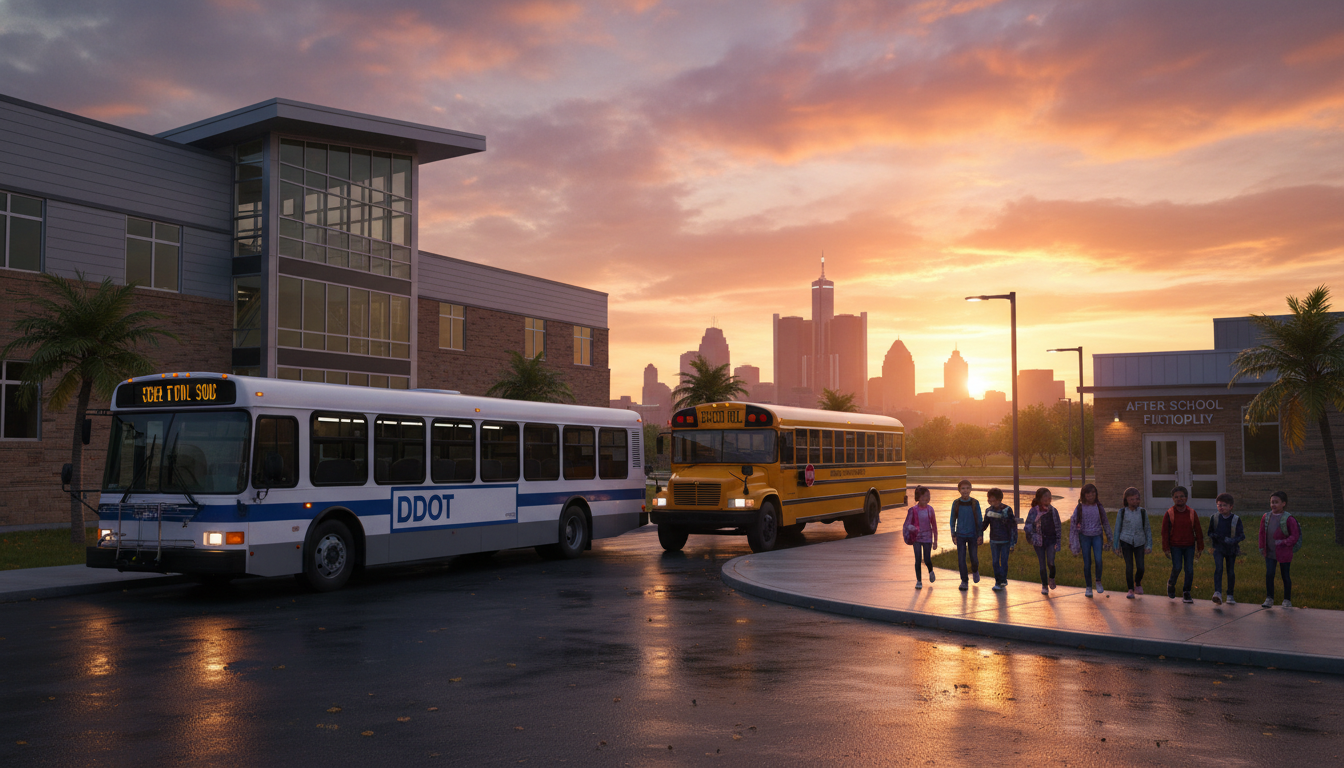
Currently, thousands of Detroit families navigate a complex web of school buses and Detroit Department of Transportation (DDOT) routes. The logistical cost of moving students across a geographically massive city like Detroit is a significant line item in the district’s multi-billion dollar budget. By leveraging city-wide transit partnerships to provide free bus fare for all students, proponents suggest that the district could pivot its internal transportation spending toward academic enrichment and extracurricular activities that have seen sporadic funding in recent years.
The Fiscal Intersection of Transit and Education
According to budget reports from the Detroit Public Schools Community District, transportation remains one of the largest non-instructional expenses. The district serves a population where a high percentage of students live in households without reliable private vehicles, making Detroit schools student transport a lifeline for attendance. However, when the district must maintain its own fleet while also coordinating with municipal transit, the costs often overlap.
In a recent session regarding the City of Detroit transportation strategic plan, local officials noted that a more integrated approach between DDOT and the school district could streamline costs. If the city were to provide a universal free fare program for students, funded perhaps through state transit grants or federal infrastructure dollars, the DPSCD could potentially reduce its reliance on third-party busing contracts. These savings, estimated by some advocates to be in the millions, are being eyed for a specific purpose: the expansion of after-school programs that provide safe havens for youth between 3:00 PM and 6:00 PM.
Impact on Detroit Residents and Families
For the average Detroit parent, the benefit of this shift is twofold. First, the elimination of any remaining transit costs for high schoolers using DDOT provides immediate household relief. Second, the reinvestment into after-school programs addresses a chronic need for childcare and skill-building in neighborhoods ranging from Brightmoor to Jefferson-Chalmers.
“Transportation is often the single biggest barrier to our students participating in sports, music, or robotics,” said a representative from a local education advocacy group during a community forum. By aligning Detroit schools student transport with city resources, the physical barrier is removed, and the financial savings can directly pay for the coaches, tutors, and supplies necessary to keep these programs running. Residents have long called for more robust youth programming to combat the city’s historic challenges with truancy and neighborhood safety.
Historical Context of Student Mobility in Detroit
Detroit’s geography presents a unique challenge for education funding. Unlike more compact urban centers, Detroit’s 139 square miles mean that even a neighborhood school might be several miles away from a student’s home. This “spatial mismatch” has historically forced the district to spend more per pupil on transit than many of its suburban counterparts. Data from the Michigan Department of Education suggests that urban districts in Michigan consistently face higher logistical overhead, which often cannibalizes the “General Fund”—the same pool of money used for extracurricular activities.
In previous decades, Detroit’s after-school landscape was a point of pride, featuring dozens of recreation centers and school-based clubs. However, the city’s 2013 bankruptcy and the subsequent restructuring of the school district led to significant belt-tightening. As the city continues its neighborhood development projects, the focus is shifting back to how municipal infrastructure can support the next generation of Detroiters.
Strategic Reallocation of Education Funding
The concept of “braided funding” is at the heart of this proposal. By using transportation grants to cover bus fares, the district’s general education funding remains untouched by transit needs. This allows for a more focused approach to after-school programs, which have been shown to improve graduation rates and reduce juvenile involvement in the justice system. The goal is to create a seamless day for the student: a free ride to school, a full day of instruction, a subsidized after-school program, and a free ride home.
Local community leaders have pointed to successful models in cities like Seattle and Washington D.C., where student transit passes are provided at no cost to the family or the school district’s core budget. In Detroit, this would require a tripartite agreement between the DPSCD, the City of Detroit, and the Suburban Mobility Authority for Regional Transportation (SMART) to ensure that students living near city borders are equally served.
Challenges and the Path Forward
While the vision of free transit-funded enrichment is compelling, it is not without hurdles. The primary concern among Detroit residents is the reliability of the current DDOT system. Frequent delays and driver shortages have plagued the department, leading some parents to worry that relying on city buses instead of dedicated school buses could impact attendance. For the Detroit schools student transport plan to work, the city must first stabilize its transit workforce.
Looking ahead, the Detroit City Council is expected to review proposals regarding youth transit subsidies in the coming fiscal quarter. Simultaneously, the school board is evaluating its 2025-2026 budget priorities. If these two entities can align their goals, the result could be a historic shift in how Detroit supports its youth—turning transit savings into a foundation for academic excellence. For more on how local policy is shaping the city’s future, visit our section on Detroit government news.
As the discussion continues, the focus remains clear: every dollar saved on a bus seat is a dollar that can be spent on a student’s future. In a city that is reinventing itself at every corner, the intersection of transit and education may be the most important development of all.