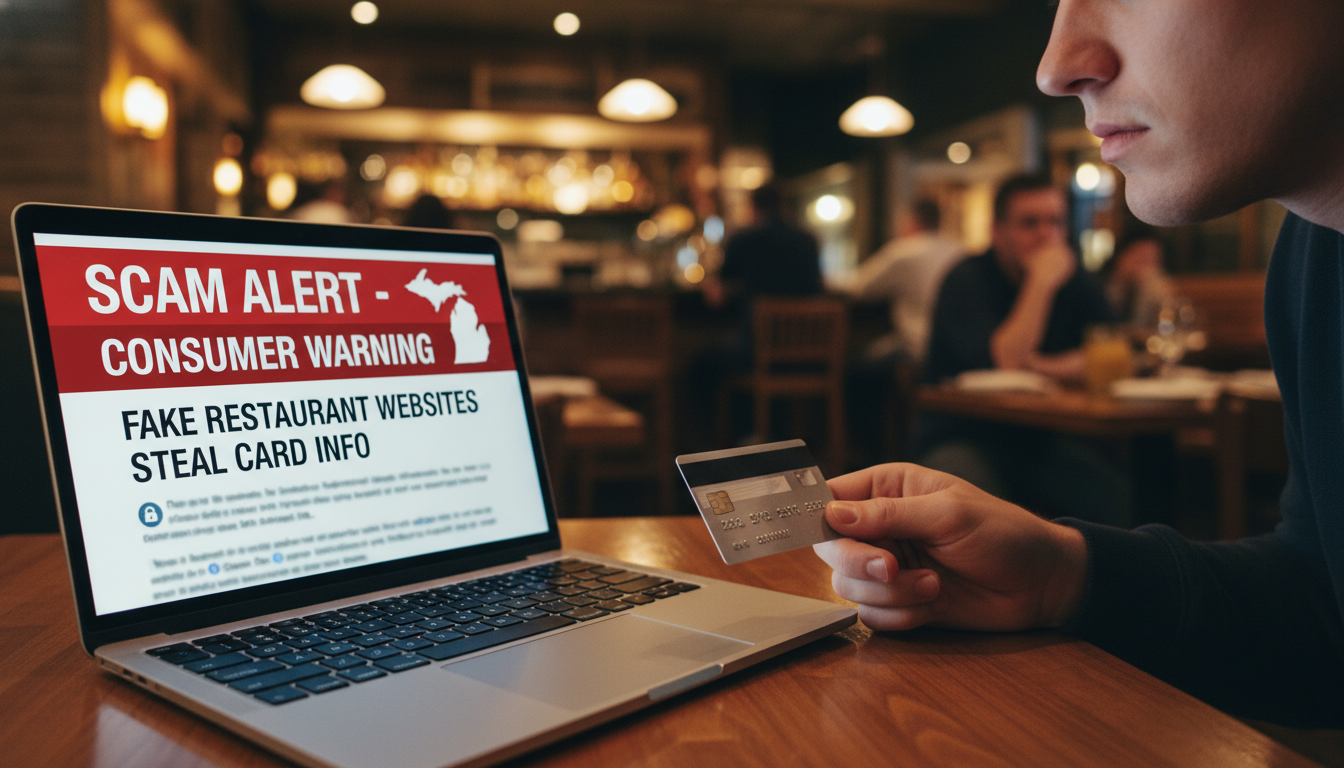
A prominent Michigan restaurant recently discovered its identity had been hijacked in a sophisticated online fraud scheme, prompting a new scam alert in Michigan from consumer protection agencies. The establishment, which typically focuses on farm-to-table dining rather than childcare, found itself at the center of a fraudulent summer camp operation that has already claimed several victims across the Metro Detroit area.
The incident began when the restaurant owner started receiving phone calls from confused parents asking about registration deadlines and dietary restrictions for a ‘Culinary Youth Summer Intensive.’ The problem? The restaurant had never organized such a program. This fraud case highlights a growing trend where legitimate small businesses are used as ‘skins’ for seasonal scams, exploiting the trust local residents have in their neighborhood establishments.
The Mechanics of the Fake Summer Camp Scam
According to the Better Business Bureau (BBB) Serving Eastern Michigan, the scammers created a professional-looking website and social media profiles using the restaurant’s actual address and high-resolution photos of its interior. They advertised an immersive week-long camp for children ages 8-14, promising professional chef instruction and daily meals. The registration fee, set at a ‘discounted’ rate of $450, was required upfront via digital payment apps like Zelle or Venmo.
By the time the restaurant owners became aware of the situation, the fraudulent website had already been active for three weeks. ‘This is a classic case of identity theft targeting the small business sector,’ said a spokesperson for the Michigan Department of Attorney General. ‘Scammers look for businesses with strong local reputations and high community engagement. They then insert themselves as an intermediary, collecting funds for services that will never be rendered.’
Impact on Detroit Residents and Small Businesses
This scam alert in Michigan is particularly concerning because it targets both the financial security of families and the hard-earned reputation of local business owners. For parents in the Detroit area, the loss of $450 represents a significant hit to the household budget, especially during a season when childcare costs are already peaking.
For the restaurant involved, the damage is more than just financial. ‘We work for years to build a name based on quality and trust,’ the owner stated during an interview with local media. ‘To have parents showing up at our door with excited children, only to have to tell them they’ve been defrauded, is heartbreaking. It puts us in a position where we are the ones delivering the bad news for a crime we didn’t commit.’
Beyond the immediate victims, these incidents create a ‘trust tax’ on all local commerce. When residents become wary of online registrations or local business promotions, the entire Detroit economy can feel the cooling effect. This is why staying informed about local business trends in Detroit is essential for both entrepreneurs and consumers.
Background and Data on Michigan Online Fraud
The rise in this specific fraud case is mirrored by broader data regarding digital crimes in the Great Lakes State. Data from the FBI’s Internet Crime Complaint Center (IC3) indicates that Michigan consistently ranks in the top 15 states for total number of victims and total financial loss due to online fraud. In 2023 alone, Michigan residents reported losses exceeding $150 million related to various digital scams.
Small business impersonation is a subset of these crimes that has seen a 20% year-over-year increase, according to the BBB. These scams often coincide with seasonal events, such as summer camps, holiday gift cards, or spring landscaping services. The anonymity of social media advertising allows scammers to target specific ZIP codes, making the offers appear more legitimate to local residents. For more information on community safety, residents are encouraged to view our Community Safety Alerts page.
Official Warnings and How to Protect Yourself
Michigan Attorney General Dana Nessel has frequently issued warnings about the dangers of peer-to-peer payment apps when dealing with unknown entities. ‘If a business or service provider insists on payment through Zelle, Venmo, or cryptocurrency, that is a major red flag,’ a recent bulletin from the Attorney General’s Consumer Protection Team noted. These methods offer very little recourse for victims to recover their money once it has been sent.
To avoid falling victim to similar schemes, the BBB recommends the following steps:
- Verify Directly: Call the business using a phone number found on their official, verified website or Google Business Profile, not the number listed on a social media ad.
- Check the URL: Look for slight misspellings or unusual domain extensions in the website address.
- Research the Organizers: For summer camps, check if they are licensed by the State of Michigan through the Department of Licensing and Regulatory Affairs (LARA).
- Use Credit Cards: When possible, pay for services with a credit card, which offers better fraud protection than debit cards or cash apps.
What Happens Next
The investigation into the fake summer camp scam is ongoing, with local police departments collaborating with state-level cybercrime units to track the origin of the fraudulent website. While the specific site used in this case has been taken down, authorities warn that similar sites often pop up under different names within days of being shut down.
For the restaurant, the focus is now on damage control and community outreach. They have posted their own warnings on social media and are working with the BBB to clear their name. This incident serves as a stark reminder that in the digital age, a business’s reputation is only as secure as its online presence. Residents are urged to report any suspicious activity to the Michigan Attorney General’s office and to share this scam alert in Michigan with friends and family to prevent further financial loss.