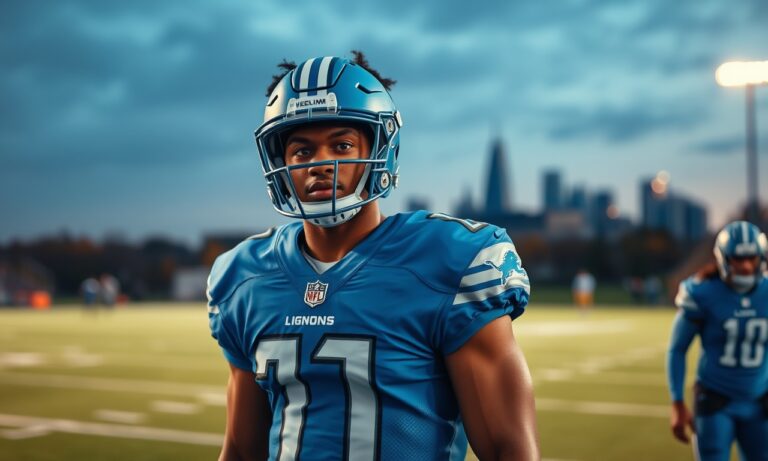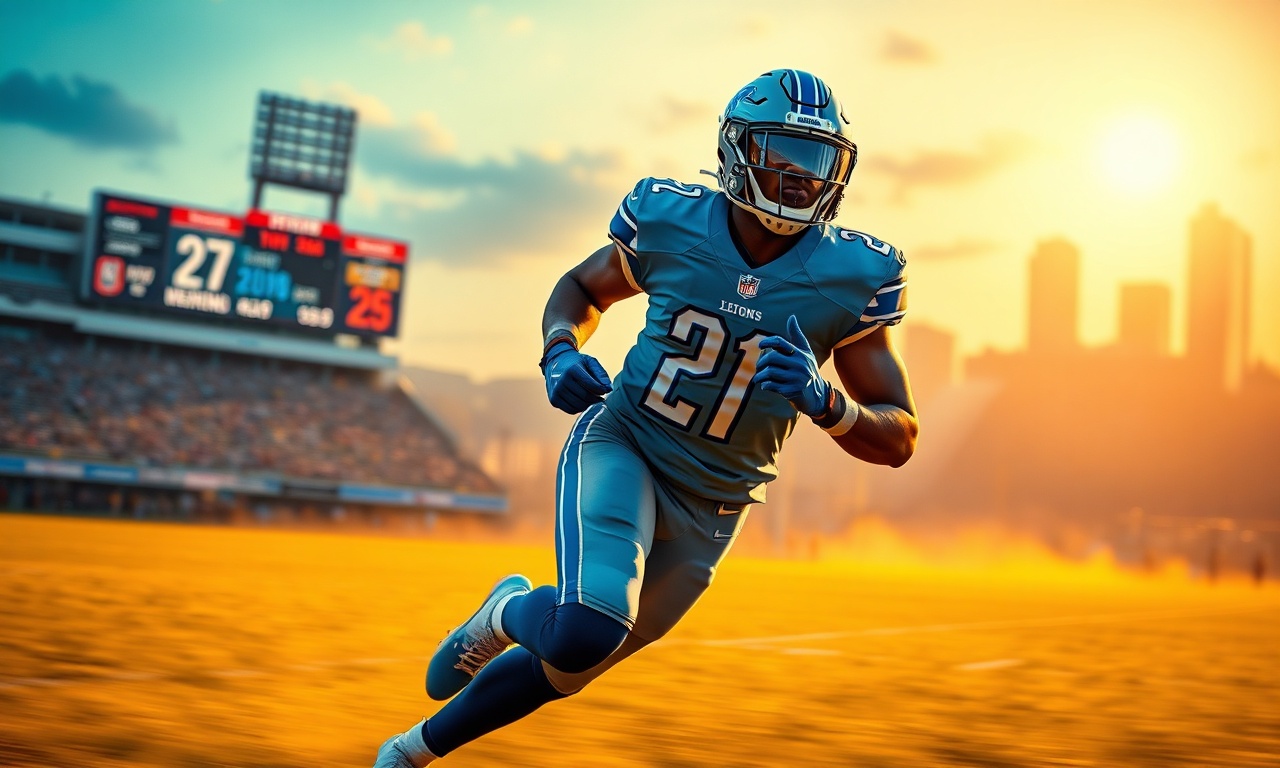
Detroit’s offseason football chatter is heating up again as analysts point to a new Jahmyr Gibbs prediction that would place the Detroit Lions rookie into rare company—if his early production translates into the kind of impact expected for top-tier playmakers. The conversation has spilled beyond the stat sheets, fueling what local fans have come to treat as a barometer for Detroit football momentum: a promising start that can reshape how a team runs, protects the ball and plays with confidence on Sundays.
While predictions are inherently speculative, the latest take highlights what Detroit residents have been watching closely since Gibbs entered the conversation as one of the most dynamic skill players of his class. For a Lions team building consistency, the question is less whether Gibbs can make highlight plays—and more whether he can consistently influence game plans, reduce pressure on the offense and elevate the Lions’ pace when it matters most.
Jahmyr Gibbs prediction and why it resonates in Detroit
The Jahmyr Gibbs prediction making the rounds centers on expected production and role utilization during his rookie season. The logic behind it is straightforward: Detroit’s offensive identity depends on versatility—run looks that don’t tip the pass, and pass protection that doesn’t require constant chip help. In that framework, a back who can run between the tackles, create space on outside angles, and threaten defenses after catching passes becomes more than a complement. He becomes a stabilizing advantage.
According to coverage from Pro Football Reference, historians and evaluators commonly use season-level production benchmarks to compare rookies to past standouts. That method isn’t perfect, but it helps explain why Gibbs’ potential has been discussed in the same breath as elite rookie profiles: teams often remember how rare it is for a new player to combine efficiency with the volume needed to affect outcomes.
Detractors will point out that the NFL has a way of smoothing out early hype. But proponents argue that the Detroit Lions’ offensive design can amplify talent quickly—particularly when a rookie can earn touches in multiple phases of the offense.
Gibbs highlights: what “legendary company” usually means
When analysts refer to “legendary company” in rookie impact talk, they typically mean comparisons to past players who crossed a threshold of all-purpose value. In practice, that can include a mix of rushing attempts, receiving production, and plays that reliably force defenses to adjust. Gibbs highlights in early discussions have focused on the same themes: explosive acceleration in tight spaces, decisive ball-carrying angles, and the ability to turn short routes into yards after the catch.
For the Detroit Lions, those attributes matter because opponents prepare for different kinds of runs. A back who can consistently threaten the edge and the interior forces linebackers to respect both, which can open lanes for other roles in the offense.
Another reason the predictions carry weight locally is that Detroit fans have become used to measuring progress in “feel”—how the team moves the ball, how it protects leads, and whether it sustains drives. A rookie who can deliver big plays on schedule can change the emotional tempo of an entire offense.
Impact on Detroit Residents: more than football headlines
The immediate impact of a high-profile rookie season is, of course, entertainment. But Detroit residents also experience the ripple effects through local business activity and community engagement tied to Lions games.
According to a report from the Sports & Fitness Industry Association, participation and attendance in sports events can influence spending related to gear, food and local hospitality—especially in markets where game days serve as major community moments. In Detroit, where Lions Sundays are woven into neighborhood routines, a breakout rookie often intensifies that effect.
Beyond the stadium atmosphere, Gibbs’ potential also shapes how fans interact with Detroit football news year-round. When a rookie is framed as a possible difference-maker, it increases household interest in training updates, weekly matchups and player usage—content that local outlets and social platforms consume quickly.
That said, the “legendary company” comparison comes with expectations. If Gibbs’ rookie season begins slowly, the same predictions can turn into criticism. For Detroit residents, the best way to interpret the buzz is to separate what a player’s role can allow from what a prediction promises.
Background & data: measuring NFL rookie impact
The NFL’s translation from college production to professional success is never linear, but there are common indicators that analysts track when forming a Gibbs prediction. Those indicators often include:
- Snap and touch consistency: whether the player earns repeated opportunities rather than occasional bursts.
- All-purpose production: rushing plus receiving that creates matchup stress.
- Efficiency and ball security: yards per touch and low turnover rates, which affect coaching trust.
- Scheme fit: how well a player’s skill set matches the offense’s identity.
To ground comparisons, analysts frequently reference historical rookie outcomes and how they correlated with broader team performance. Pro Football Reference is one of the most widely used statistical resources in the sports media ecosystem, offering year-by-year data that supports contextual comparisons—like how often a rookie reached particular all-purpose production ranges.
Still, Detroit-specific reality matters. A Lions offense can’t maximize a rookie’s touches without considering pass protection requirements, third-down usage, and game script. Predictions that look good in theory depend on the team’s ability to keep games from becoming too one-dimensional—something the best teams can do even when injuries or variance affect the weekly plan.
What happens next for the Detroit Lions and Gibbs
For now, Gibbs’ prediction functions as a spotlight: it draws attention to what the Detroit Lions likely want to see in the first stretch of his rookie season. The most meaningful tests won’t be limited to highlight-reel runs. Instead, they will show up in routine play execution—how quickly he processes defensive alignments, how often he stays involved when the offense shifts to different down-and-distance situations, and whether he can produce across a full range of game scripts.
Detroit football news fans should also watch for role clarity. If Gibbs highlights continue to emerge while his involvement expands gradually, that’s typically a sign the coaching staff trusts him with more than a gimmick-like workload. Conversely, if his touches remain narrow despite strong moments, it may indicate that the Lions are prioritizing other offseason investments or adjusting to a deeper backfield.
Whatever the final stat line ends up being, the core question stays the same for residents watching from living rooms and bars across the city: can the Detroit Lions turn a promising rookie into a sustainable piece of their identity?
This is a developing story as the season approaches. Predictions should be viewed as outlooks, not guarantees.