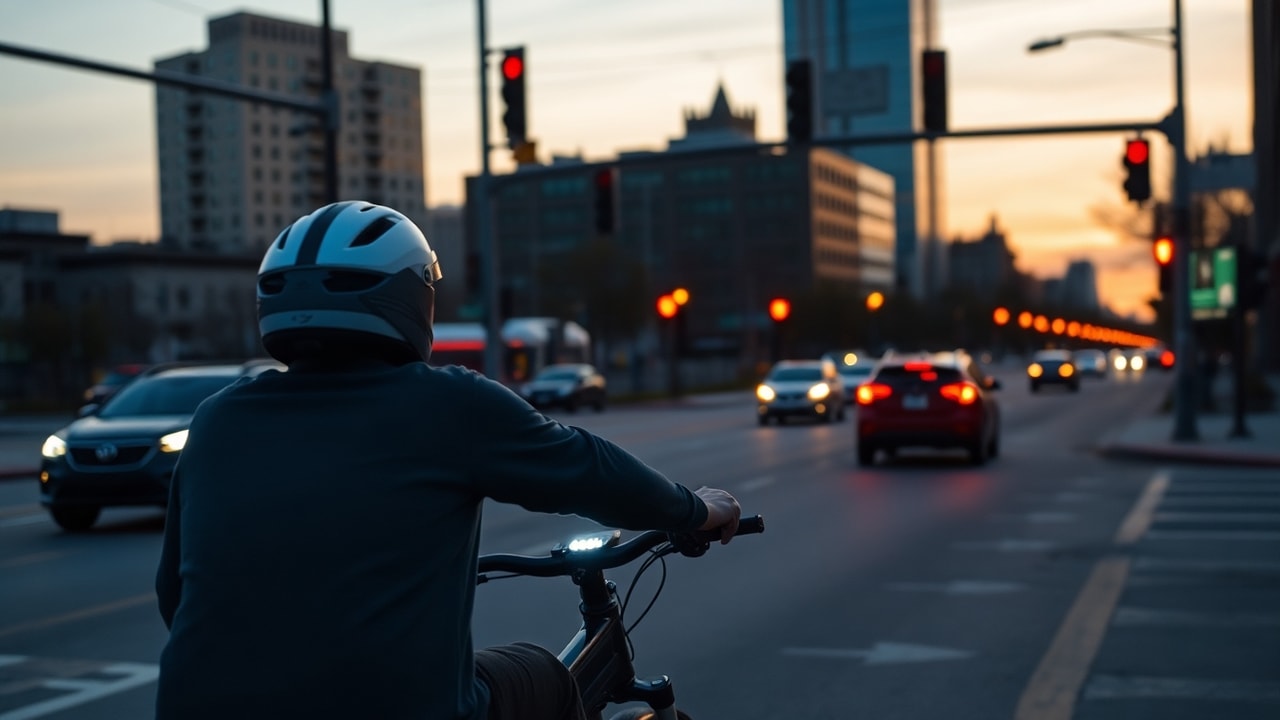
Detroit officials are stepping up Detroit e-bike safety efforts after a deadly crash that has renewed scrutiny of how cyclists, drivers and pedestrians share roadways across Metro Detroit.
The city’s announcement comes as more residents use pedal-assist bicycles for commuting and errands—often at higher speeds than traditional bikes—and as safety advocates urge clearer rules, better visibility, and consistent enforcement near busy intersections. While officials have not released details about the specific crash beyond confirming it was fatal, the response is focused on improving education and making streets safer for cyclists.
City and regional partners roll out new safety messaging
According to the City of Detroit, the new push centers on targeted bike safety awareness campaigns and outreach aimed at riders and motorists. The city said it plans to coordinate communications through local channels, highlighting key precautions such as wearing helmets, using lights at night, and obeying signals—while also reminding drivers to maintain safe passing distances and to watch for cyclists at intersections.
Detroit’s approach also includes coordination with regional traffic-safety efforts. Wayne State University and other local research and prevention groups have long emphasized that cyclists’ safety improves when rider training and infrastructure improvements are paired with public messaging, particularly in dense corridors where conflict points multiply.
Advocates say the city’s focus on both sides of the road reflects lessons from prior transportation-safety work: crashes involving bicycles are rarely “one mistake” incidents, and prevention depends on predictable behavior from everyone sharing traffic.
What Detroit’s e-bike safety push emphasizes
Officials and partner organizations are pointing residents to practical e-bike safety tips that can be applied immediately:
- Wear a helmet and ensure it fits properly; riders are more vulnerable on e-bikes because pedal assist can increase speed quickly.
- Use lights and reflectors in low visibility conditions, including the front white light and rear red reflectors required in many jurisdictions.
- Obey traffic signals and lane markings, especially at intersections where turning vehicles can collide with cyclists.
- Ride defensively, using hand signals and maintaining a safe following distance—particularly in areas with frequent lane changes.
- Know your e-bike’s speed and braking; some models accelerate faster than riders expect and may require more time and space to stop.
In public materials, Detroit’s messaging also encourages riders to avoid distractions while crossing busy streets and to stay alert when approaching driveways, busier bus stops, and construction zones.
Impact on Detroit residents
For Detroit households, Detroit e-bike safety is increasingly part of the transportation conversation because more residents are using two-wheel mobility to reduce costs and avoid congestion. E-bikes can also make it easier for older riders or people with limited time to get to work, school, and local appointments—when trips are shorter and streets are safe.
But the risk is higher where infrastructure is inconsistent or where drivers may not anticipate cyclists at speed. Public-health and traffic-safety advocates have repeatedly noted that cyclist injuries can be severe even at moderate speeds, and that preventative steps—helmet use, visible lighting, and rules at intersections—are among the most effective measures available.
Local riders and nearby residents may also see changes in how streets are monitored and how safety education is delivered. City officials said the focus will include better outreach in high-traffic areas, and that partners will help distribute information through community channels.
“When we talk about bike safety awareness, we’re talking about community behavior,” a transportation-safety advocate with a local nonprofit said in previous coverage of Metro Detroit efforts. “Education alone isn’t a shield in every crash—but it changes how people move through the same spaces.”
Background & data on e-bike risks
National and regional data show that e-bikes are now a meaningful share of bicycle injuries and emergency calls in multiple U.S. cities. In Michigan, the challenge is that roads designed primarily for cars often create conflict points for cyclists—especially at intersections, where right-hook and turning crashes can occur.
According to the National Highway Traffic Safety Administration (NHTSA), roadway crashes involving vulnerable users remain a major public-safety concern, and better visibility, clear expectations for behavior, and targeted enforcement can reduce severe outcomes. NHTSA has also emphasized that rider protections and traffic controls matter most when they help drivers and cyclists predict each other’s movements.
At the same time, the legal and practical realities of e-bikes vary by speed class and how riders use them. That’s one reason safety communications often focus on “shared road” behavior—reminding cyclists to follow the same rules as other vehicles when operating on public streets and reminding drivers to treat e-bikes as legitimate traffic users.
Metro Detroit’s mix of commercial corridors, neighborhood roads, and major arterials can make those expectations harder to maintain. As e-bike ridership rises, local governments often face pressure to match education with infrastructure improvements such as safer crossings and protected bike lanes where feasible.
What happens next for Detroit cycling safety
Detroit’s announcement does not mark an immediate overhaul of every corridor, but officials said the next steps focus on sustained messaging and coordination. That includes continuing community outreach and working with partners to distribute e-bike safety tips before peak riding periods.
City leaders also indicated that they will review where bike safety messaging should be prioritized based on crash patterns and public feedback from riders. The goal is to target locations where conflict risk is elevated—such as areas with frequent turning movements, limited sightlines, or heavy nighttime activity.
Meanwhile, public-safety stakeholders say Detroit residents should treat safety as a two-part responsibility. Riders should assume drivers may not see them in time, while motorists should remember that cyclists—especially on e-bikes—can move quickly and may appear suddenly at the edge of a lane.
Local riders urged to take action now
With the city’s campaign underway, Detroit residents who use e-bikes are encouraged to take a quick safety check before heading out: ensure lights work, brakes respond consistently, and the rider has a helmet that provides proper coverage. Riders should also practice safe starts and stops so speed changes don’t surprise them in traffic.
For drivers, the same principle applies: check mirrors and blind spots, slow down near intersections, and increase attention around cyclists—particularly during evenings and in bad weather when reflective visibility drops.
As Detroit expands its safety messaging, the city and its partners are effectively setting a standard for the next phase of Detroit cycling safety: prevention that starts with daily choices, supported by clearer communication and an ongoing look at where the city can reduce risk on its streets.