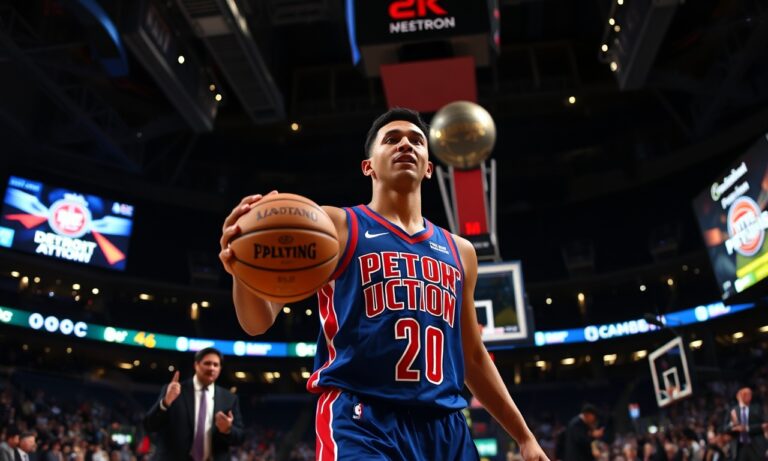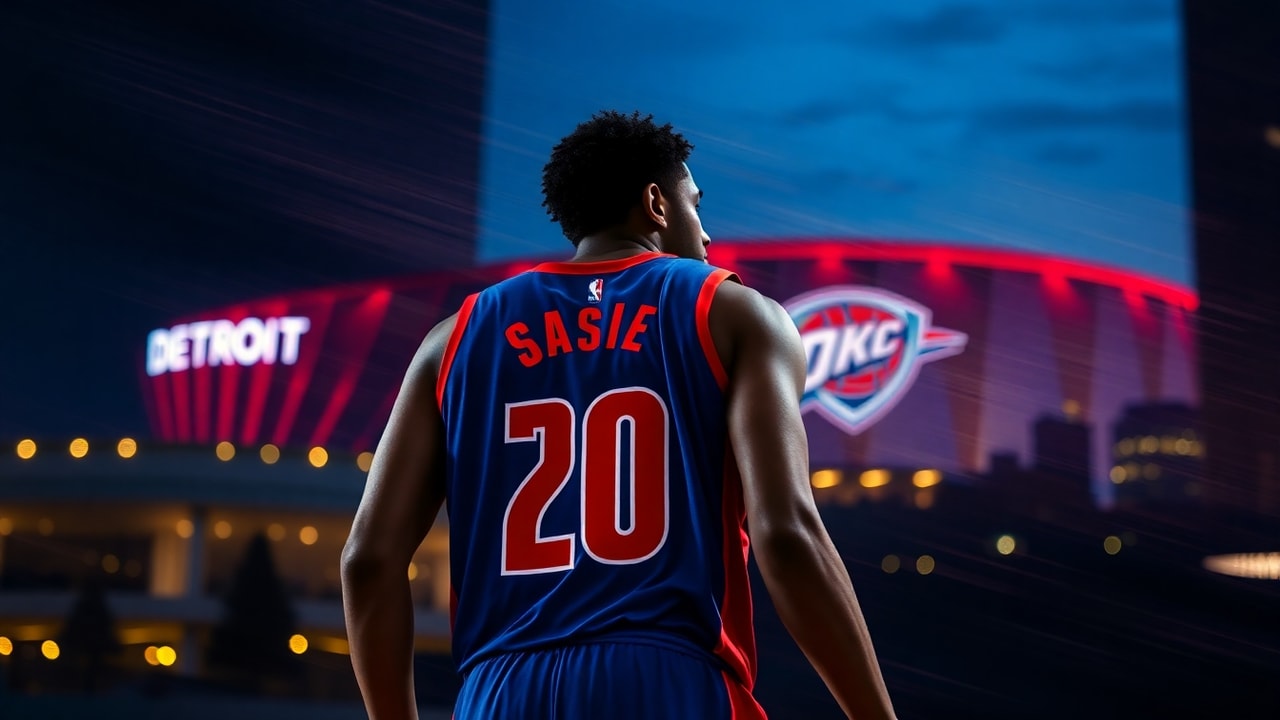
Trade buzz swirling around the Detroit Pistons is pointing to a potential Isaiah Joe trade that could ripple through Detroit’s offseason plans. While the NBA rumors have not been confirmed by team officials, league sources and beat reporting have increasingly suggested that the Detroit roster moves Pistons fans have waited on could accelerate quickly, with the OKC Thunder rumors often mentioned in the same breath as Detroit’s pursuit of more immediate shooting and lineup flexibility.
For Detroit, any meaningful addition during the 2026 offseason would carry more than basketball optics. The Pistons’ cap management, roster construction, and on-court identity also influence ticket demand, local sponsorship activity, and the broader entertainment footprint around Little Caesars Arena. And because the Pistons have leaned into acquiring players who can space the floor and play roles, a move involving a guard-forward hybrid like Joe would fit an obvious strategic theme—if it happens.
What the Isaiah Joe trade chatter is centered on
At the center of the discussion is Isaiah Joe, a wing/guard who has developed a reputation as a reliable outside shooter. In NBA roster-building terms, that skill set is often valued because it can reshape matchups and reduce defensive pressure on the ball. According to NBA transaction analysis routinely tracked by Basketball-Reference, Joe has produced as a shooter in contexts where opponents are forced to account for spacing. While that does not guarantee a new Pistons uniform, it helps explain why Detroit would be linked to a player of his profile.
On the Pistons side, the Detroit roster moves conversation has similarly rotated around balancing development with the need to win more games in the near term. According to a Detroit sports-business perspective outlined by Sports Business Journal coverage of NBA team operations, teams in rebuild-to-retool phases often seek role players who can contribute immediately without derailing long-term lineup goals.
Why OKC Thunder rumors are entering the picture
Trade chatter frequently gains traction when it connects two teams with complementary needs. The OKC Thunder rumors element comes from Oklahoma City’s ongoing tendency to compete while also managing a deep asset pipeline. Thunder roster construction—built around shooting, athleticism, and interchangeable lineup pieces—has made it a frequent participant in offseason negotiation speculation across multiple reporting outlets.
In a best-case scenario for Detroit, an Isaiah Joe trade would provide a plug-and-play shooting role that helps the Pistons’ rotation. In a less favorable scenario, the chatter could still produce movement indirectly—such as Detroit swapping one asset for another or using the possibility of a specific target to improve leverage in talks.
How Detroit roster construction could change
The key question for the Detroit Pistons is what a Joe-centric acquisition would mean for playing time and roster balance. A shooter with Joe’s reputation can alter offensive sets without requiring the rest of the team to relearn its core actions. That matters for Detroit’s development timeline because it can create clearer lanes for ball handlers, reduce help defense, and potentially open opportunities for cutters and post players.
From a lineup perspective, Detroit typically benefits when it can deploy multiple shooters on the floor at once. If Joe joins the rotation, Pistons coaching could explore more spacing-heavy lineups—particularly in late-game situations where the margin often narrows and opponents tighten defensive coverage. At the same time, Detroit still needs to protect its identity on defense and avoid turning the lineup into a one-dimensional shooting plan.
League-wide, the NBA has also become more results-driven around three-point shooting efficiency and shot creation. That trend has been reflected in annual league analytics reporting from outlets such as NBA.com/stats, which tracks shooting categories and lineup impacts. For Detroit, that means adding a proven perimeter threat isn’t just a feel-good storyline—it can affect possession-by-possession decision-making.
Impact on Detroit Residents
Even for residents who don’t follow every transaction report, roster moves can shape what it feels like to live in a sports city. If a move like an Isaiah Joe trade leads to a more consistent rotation, the Pistons’ home product could become more compelling. Better in-game competitiveness tends to support higher attendance, more demand for premium seating, and increased local spending on game-day food, transit, and parking.
According to the U.S. Census Bureau, household expenditures on recreation and entertainment are tied to economic conditions and consumer confidence—factors that are influenced by whether a major local attraction draws crowds. In practical terms, Detroit-area businesses near Little Caesars Arena and along major corridors can see measurable demand swings when the team’s performance stabilizes.
There’s also a community dimension. Professional sports teams often partner with local nonprofits and youth programs, and roster stability can strengthen those efforts by helping maintain consistent programming and messaging. If Detroit uses the 2026 offseason to bring in a player who fits a clearly defined role, it can make it easier to plan offseason events and community activations around a more coherent basketball identity.
Still, it’s important to separate impact from certainty. Trade rumors are not transactions, and not every rumored deal improves the roster. Detroit residents will likely feel the most immediate effects only if the Pistons confirm a deal and then demonstrate on-court chemistry quickly enough for it to matter in standings.
Background & Data: Why Detroit’s offseason plan matters
NBA front offices manage multiple timelines at once: player development, cap constraints, draft and second-round asset value, and the readiness of prospects to contribute. For the Pistons, the stakes are amplified by the need to support a culture of growth while still creating enough competitiveness to pull attention and build momentum.
To put Detroit’s trade-room pressure in context, it helps to look at how the NBA’s collective bargaining landscape shapes team behavior. The league’s salary rules and roster restrictions are major determinants of when teams can move certain contracts and how quickly they can reshape rotations. While fans might focus on a specific target, teams often act based on financial flexibility and the cost of fitting a player into available roster slots.
Additionally, Detroit Auto & Business and broader local media coverage have long highlighted that professional sports teams operate within a complex ecosystem that includes regional tourism, local advertising, and community partnerships. Even a single roster shift can affect local perception—particularly among families choosing where to spend their leisure budget.
What happens next for Pistons fans
If the Isaiah Joe trade talk is legitimate, the next steps would likely come in stages: informal conversations between front offices, scouting alignment around specific players, and then the difficult part—matching value on both sides so the deal is feasible under NBA salary and roster constraints.
Because trade windows and offseason negotiating timelines vary, Detroit residents shouldn’t expect immediate confirmation. However, the presence of repeated NBA rumors connected to the same player suggests that something may be cooking—either a direct move, or at minimum Detroit testing the market to understand what assets can translate into immediate spacing.
Tracking the signal
Fans can watch for practical indicators: beat reporters citing specific teams in discussions, public comments about roster priorities by Detroit leadership, and any early indications that the Pistons are positioning themselves around a certain type of player. If Oklahoma City discussions continue to be tied to Detroit, the odds of a realignment increase—especially if both organizations can agree on role expectations and timeline fit.
For Detroit, the upside of a move like this is straightforward: more effective offense, cleaner rotations, and a lineup that can keep pace with modern NBA defenses. The downside, as with any trade, is that roster changes can take time to translate into consistent performance.
Until a deal is officially reported and confirmed, all Detroit residents can do is monitor the noise and wait for the facts. But if the Detroit Pistons are truly preparing for a major Detroit roster moves swing during the 2026 offseason, an Isaiah Joe trade scenario is one of the rumors that fits both the basketball and the business logic of what Detroit has been signaling it wants: spacing, predictability in half-court sets, and enough roster flexibility to build meaningful habits for the next season.