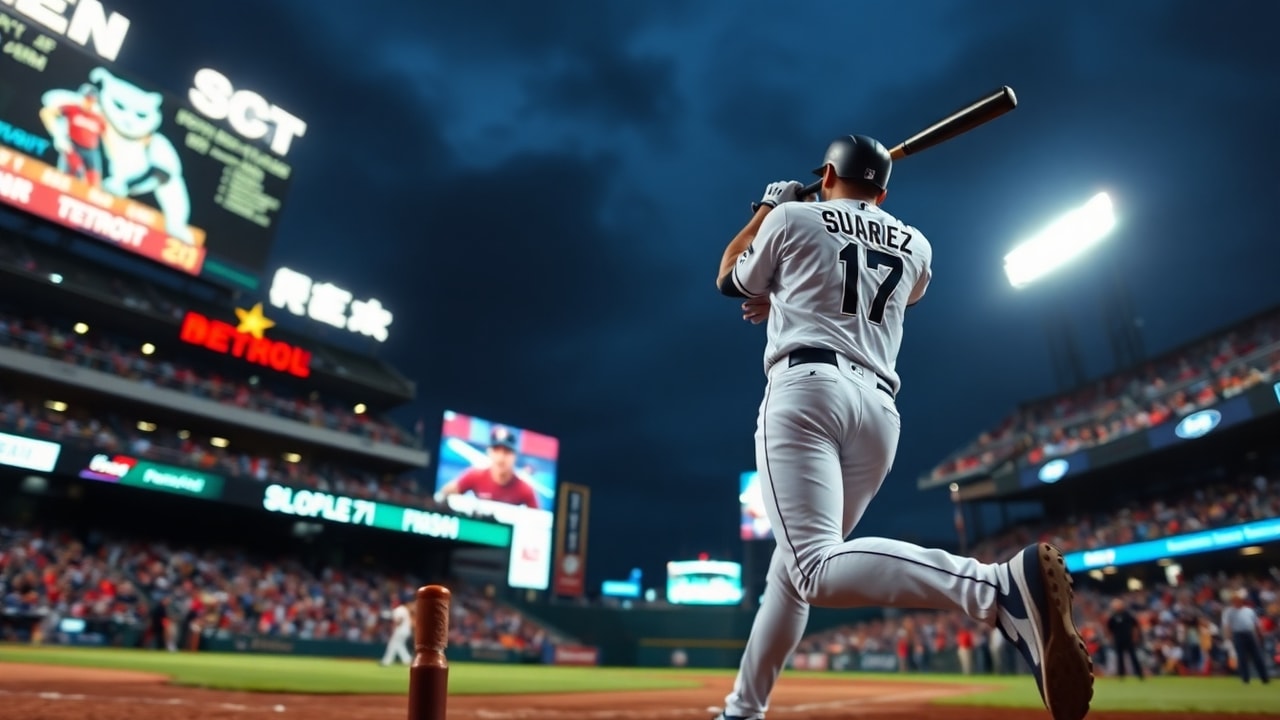
With the roar of Detroit baseball in the background and a pivotal swing under the bright lights, Eugenio Suárez powered the Cincinnati Reds past the Pittsburgh Pirates on the road, launching a 3-run home run that helped set the tone early for the game. The blast — and the inning that followed it — delivered one of the night’s clearest turning points at the ballpark, a reminder of how quickly a single pitch can reshape momentum in Major League Baseball.
Suárez’s homer provided the kind of spark Detroit fans have come to expect when marquee hitters find the strike zone and the local atmosphere meets big-league stakes. The Reds vs Pirates matchup drew attention well beyond the stands, with MLB highlights rapidly circulating after Suárez connected, giving residents a fresh, Detroit-linked talking point tied to the city’s broader baseball conversation.
Suárez’s 3-run home run sets the tone in Reds vs Pirates
In a game defined by pitch-by-pitch leverage, Eugenio Suárez’s 3-run home run turned the scoreboard in Cincinnati’s favor at a moment when both clubs were measuring each other. While baseball momentum doesn’t always last inning to inning, the impact of Suárez’s swing was immediate: it extended the Reds’ margin and shifted the Pirates’ approach from trying to secure small advantages to managing the damage from the power threat.
For Reds supporters, Suárez’s at-bat offered a familiar blend of timing and intent — the kind of contact that changes how pitchers sequence their offerings for the next batter or two. For Pirates players, it meant regrouping quickly and re-focusing on limiting high-leverage damage.
Across the diamond, the rest of the game unfolded in the shadow of that swing. Each subsequent inning carried the question of whether Cincinnati’s early cushion would hold and whether Pittsburgh could counter with its own pressure at the plate. Ultimately, Suárez’s homer became the defining visual in the Reds game recap, frequently highlighted in postgame clips and recaps.
Impact on Detroit Residents: Why a road game still feels local
While the Reds and Pirates are not local Detroit teams, Detroit residents still feel the resonance of MLB moments — especially when big hits play out in the city’s sports media ecosystem. Detroit is a market shaped by tradition, and major-league highlights routinely reach fans through local sports talk, regional broadcasts, and digital news cycles. A notable home run like Suárez’s quickly becomes part of that shared conversation.
For fans who follow baseball year-round, moments from games across MLB can influence everything from fantasy lineups to who scouts for next week’s matchups. Even for those who don’t attend every game in person, a 3-run home run is the kind of event that makes it into group chats, local sports forums, and streaming highlight packages watched on phones during commutes or at home.
Detroit’s sports culture is also tied to how communities engage with live events. The Detroit Regional Convention Facility Authority has emphasized the importance of convention and event activity to the local economy, and that framework helps explain why sports viewership can matter beyond the stadium itself. According to the authority’s public materials on regional event impacts, well-attended sports and entertainment programming can contribute to visitor spending in surrounding areas — a principle that resonates even for games consumed digitally, where attention still drives local interest.
And for local youth athletes and families, MLB highlights are more than entertainment; they’re a tool for learning. Coaches often use professional clips to illustrate pitch recognition, bat path, and situational hitting — especially when the clip includes a clear “impact moment” like a multi-run homer.
Background & Data: Detroit’s connection to national sports attention
Detroit has long been a hub for big-league fandom, and national broadcasts are central to how residents track the season. The city’s attention to MLB is reflected in how major moments are indexed online and spread quickly through sports networks and mobile news alerts.
At the same time, Detroit’s sports ecosystem is shaped by consumer behavior and market access. Data from the U.S. Bureau of Labor Statistics shows that time spent on entertainment and media is a consistent part of household budgets, and that dynamic supports the broader distribution of nationally televised sports highlights. In practical terms, that means when MLB highlights trend — whether for a playoff-like swing or a midseason turning point — Detroit audiences are often already primed to watch, share, and discuss.
For editors and publishers, the result is clear: an event that happens on the field travels quickly into local feeds. The Reds vs Pirates matchup — anchored by Eugenio Suárez’s 3-run home run — became the kind of clip that performs well in search and discovery, offering a concise narrative that readers can understand immediately.
Detroit media outlets also rely on accurate, timely summaries when reporting on national games. That’s why the focus typically stays on what occurred, why it mattered, and how it fits into the season’s larger picture — not on exaggeration.
What the swing signaled for both teams
Beyond the scoreboard, Suárez’s home run carried tactical implications. Power threats change how pitchers defend the strike zone: when a hitter can turn a mistake into a multi-run swing, the margin for working high, leaving pitches over the heart of the plate, or relying on predictability shrinks.
For Cincinnati, the homer reinforced the importance of getting timely production against quality pitching. For Pittsburgh, it underscored the need to respond without giving up additional runners after the big hit — a challenge that often determines outcomes when bullpens get tested in later innings.
What Happens Next
After a night like this, attention shifts quickly to the next matchup and the adjustments that follow a high-impact at-bat. For the Reds, the question is whether Suárez’s power translates into sustained run production — especially against pitchers who may try to change pitch types or locations to neutralize him. For the Pirates, the focus turns to tightening approach and preventing a repeat of the sequencing that led to the 3-run home run.
From a Detroit perspective, the next development will likely be how fast this moment continues to surface in MLB highlights and regional sports coverage. Readers can expect follow-up recaps that connect the game’s turning point to broader season trends — including how similar swings have affected run expectancy across the league.
In the meantime, Suárez’s decisive blast remains the clearest takeaway from the Reds vs Pirates matchup in Detroit’s digital sports neighborhood: a single swing, a multi-run payoff, and a night that will be replayed long after the final out.