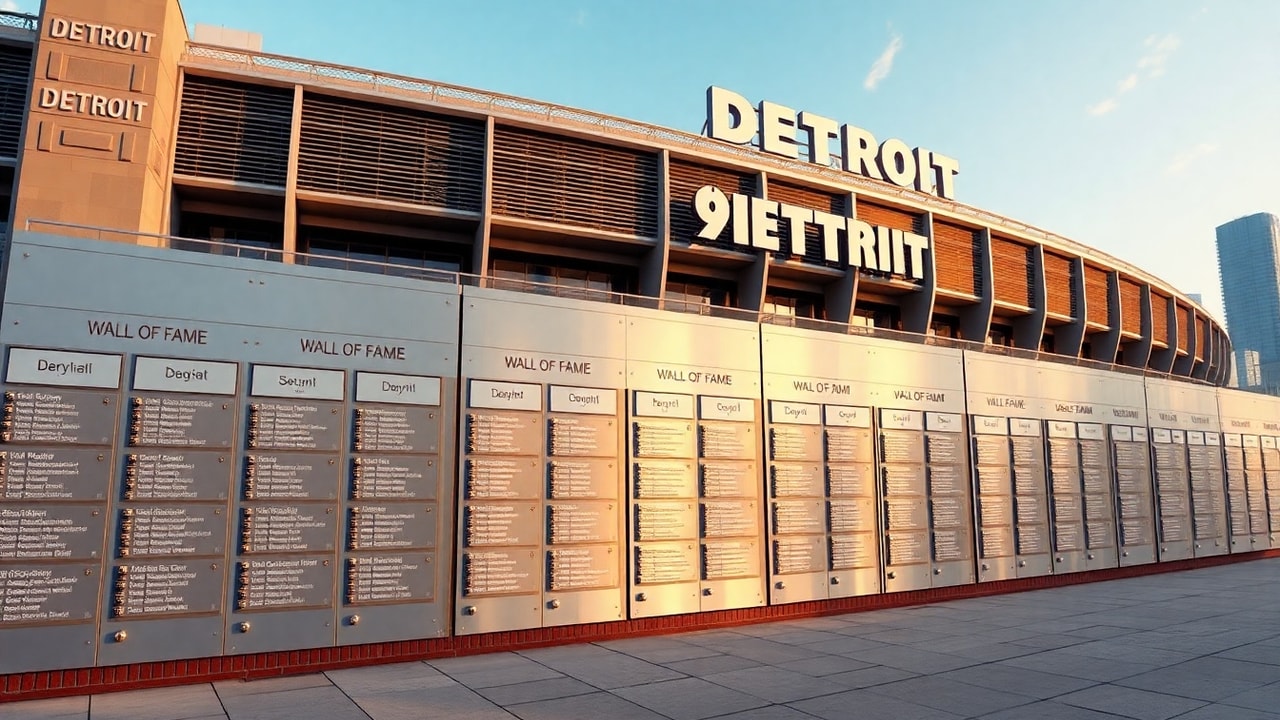
In a decision that underscores how the NFL’s ties to Detroit communities are evolving, the Detroit Bills stadium project’s organizers said they have rejected O.J. Simpson for inclusion in a proposed Wall of Fame tied to the venue. The move comes as the team works to finalize long-term honors for players and figures associated with the franchise, while balancing public sentiment and legal legacy concerns.
The Wall of Fame proposal, which is being discussed alongside Bills stadium plans for a new-era facility, has been a focal point for community conversations about whose contributions should be celebrated at stadium-adjacent public spaces—especially names connected to high-profile national cases.
Wall of Fame decision excludes O.J. Simpson
According to statements provided by the organization overseeing the stadium project, the team’s Wall of Fame decision process considered Simpson’s sports legacy but concluded that his broader public record makes him ineligible for the honors. Officials said the decision reflects criteria the organization has adopted for recognizing individuals in a way that is consistent with the team’s community standards and the public nature of the stadium setting.
“We recognize the responsibility that comes with putting names on a Wall of Fame in a major public venue,” said a representative of the organizing group, adding that the selection framework emphasizes both athletic achievement and alignment with the values the team intends to represent in Detroit. The statement was shared through the organization’s stadium-related communications channels.
While the team did not detail every step of its internal review, officials indicated that the final lineup will prioritize people whose recognition can be supported without ongoing controversy that could distract from community events and game-day operations.
What this means for Detroit sports headlines
The decision has quickly become part of wider Detroit sports headlines, reflecting how stadium development is often more than construction—it’s also about identity, symbolism, and the local narrative that businesses, fans, and civic leaders expect from a new facility.
Detroit residents who follow local sports say the Wall of Fame is likely to be interpreted as a statement about the kind of culture the stadium will cultivate for decades. The Wall of Fame could function as a landmark for visitors, a backdrop for photos, and a public-facing marker of who the franchise believes belongs in the city’s sports story.
“Stadium plans are not just about seats and schedules; they’re about what a venue means to people,” said one Detroit-area community advocate who tracks sports and civic development. The advocate noted that public recognition has real-world effects, including how families and sponsors perceive a project’s approach to shared values.
Impact on Detroit Residents
Because the Detroit region continues to weigh major development projects, decisions about naming and honoring individuals can influence perceptions of trust and inclusivity—two factors that often affect whether residents feel stadium projects deliver long-term value beyond the scoreboard.
For many Detroit residents, a stadium is also a civic space. A Wall of Fame that draws negative attention can create friction around attendance, youth programming tied to the venue, and partnerships with schools and community groups.
On the other hand, proponents argue that excluding divisive figures can protect the focus on sports, community events, and civic partnerships.
Local economic development can also be indirectly affected. When venues successfully align with community expectations, they often see stronger engagement from local media, sponsors, and regional businesses located near the stadium corridor. That engagement matters for foot traffic patterns, event-day spending, and the broader ecosystem of vendors and service providers.
Still, the relationship between O.J. Simpson ban headlines and stadium outcomes is not straightforward—construction timelines, public infrastructure, and lease terms drive most measurable costs and benefits. But symbolism shapes sentiment, and sentiment influences whether residents support the project’s next steps.
Background: how Wall of Fame standards are usually set
Wall of Fame and similar recognition programs tend to follow structured criteria, often developed by a franchise committee and reviewed for consistency with franchise history and community guidelines. In practice, teams also consider how names will be perceived by fans, corporate partners, and local leaders who may rely on the stadium to host events beyond football.
City officials and outside observers have long emphasized that public-facing development projects in Detroit must demonstrate credibility and community alignment. The city has previously discussed how major redevelopment initiatives should connect with public benefits, including accessibility and neighborhood impact, though each stadium proposal can involve different governance and agreements.
According to information compiled by the U.S. Census Bureau, Detroit’s population demographics continue to evolve, and the city’s communities include a broad range of residents who engage with professional sports differently. That diversity tends to raise the stakes for teams trying to create a stadium environment that feels welcoming.
“Major public spaces in Detroit can become symbols for what residents hope the city is becoming,” a local housing and civic-planning researcher said in a separate discussion of development priorities. The researcher pointed to the way public narratives around redevelopment can affect trust in large projects.
Detroit context: stadium development and public scrutiny
Detroit stadium projects exist under intense scrutiny because they intersect with public investment debates, transportation planning, and long-term neighborhood changes. Residents often want clarity on how stadium dollars connect to local benefits, including jobs, contracts, and infrastructure improvements.
Even when a decision is limited to honor boards or naming elements, it can become another data point in the broader conversation about whether stadium authorities are reflecting community expectations.
In this case, the latest update links the Detroit Bills stadium initiative to a high-profile test: whether the franchise can honor its past while setting boundaries around present-day controversy.
What happens next for Bills stadium plans
The organization said further details about the Wall of Fame will be released as the stadium project advances, including final criteria, dates for announcements, and how the team will engage with stakeholders. Officials also indicated that the final slate will be reviewed to ensure it aligns with the franchise’s standards and Detroit’s broader public expectations.
For Detroit fans, this means the conversation will likely continue—both online and at community forums—about which figures represent the franchise’s identity and whether the Wall of Fame should focus strictly on on-field achievements or broader off-field considerations.
Meanwhile, stadium timelines remain tied to construction milestones, permits, and infrastructure coordination. The Wall of Fame decision is one component of a much larger project, but it may set a tone for how the team will handle future community-facing choices.
Looking ahead: a shared Detroit standard
As the NFL’s relationship to Detroit continues to develop, the decision to exclude O.J. Simpson from the proposed Wall of Fame signals that the Wall of Fame decision will be treated as more than a marketing exercise. It will be judged as part of how the new Detroit Bills stadium plans reflect public values, local expectations, and the legacy the franchise chooses to elevate.
For residents tracking NFL Detroit news, the next updates to come will likely focus on both the venue’s physical timeline and the symbolic choices that determine how the stadium’s public spaces are shaped—name by name.