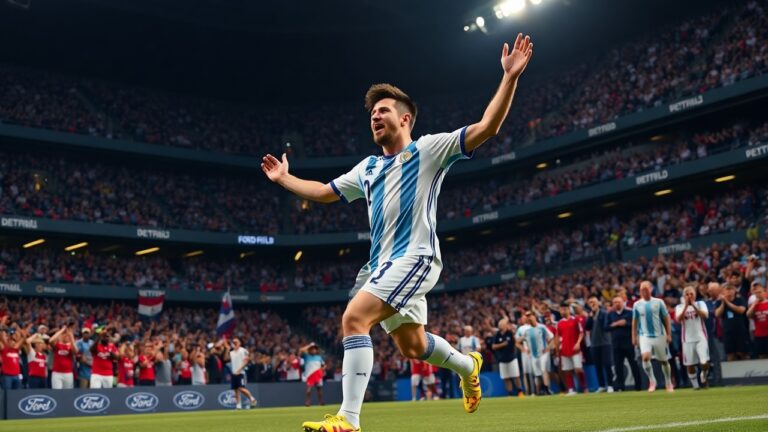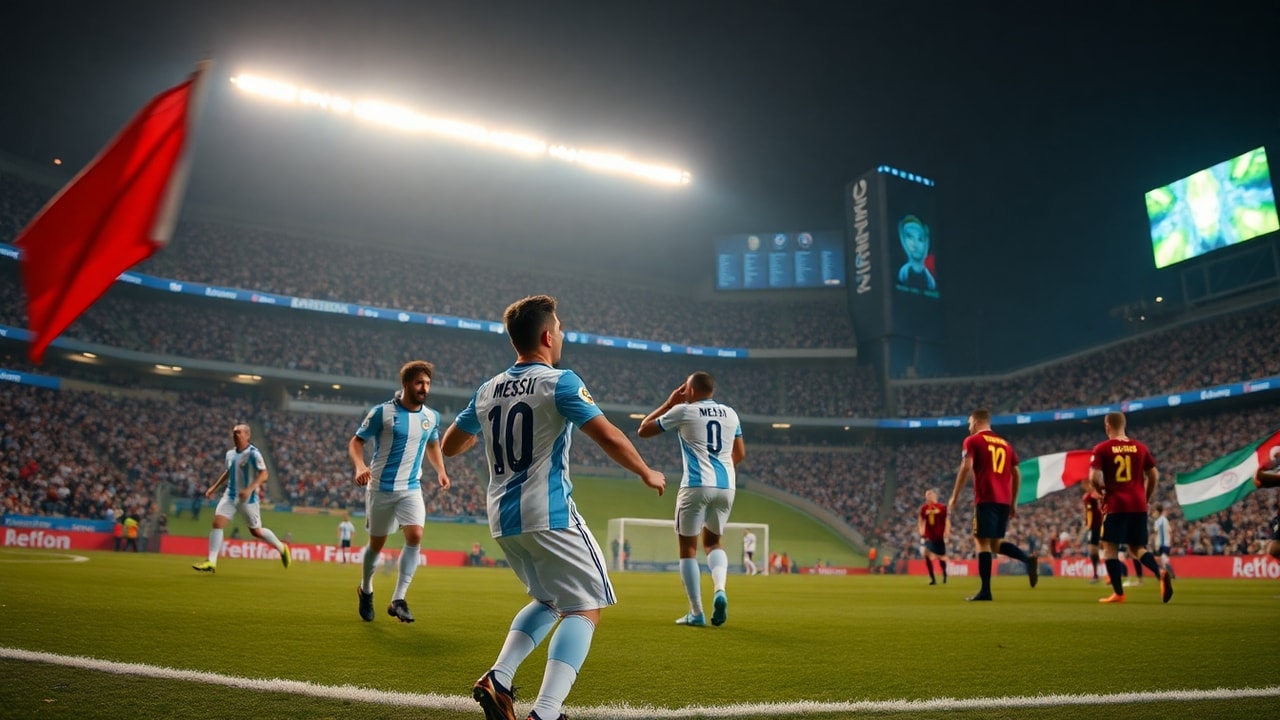
DETROIT — Lionel Messi Detroit turned into a global moment Thursday night as Argentina defeated Jordan in a World Cup match held in the city, creating new World Cup history for the Argentine captain and giving Detroit sports fans a headline they won’t forget.
The match at Ford Field drew a packed crowd of soccer supporters and visiting fans, and the result carried significance beyond the scoreline. For Detroit’s downtown district, it was also another example of how major international events are reshaping what “local sports headlines” can look like—bringing a worldwide audience to a stadium best known for American football and big league American sports.
Messi’s milestone and the significance of Argentina vs Jordan
Argentina’s victory over Jordan marked a historic step in the World Cup storyline for Messi, reinforcing his place among the tournament’s defining figures. The game was tightly contested early, with Jordan looking to stay compact and counter after turnovers, while Argentina pressed for control in midfield and used quick transitions to test Jordan’s defensive shape.
Argentina ultimately made key plays at the moments that decide World Cup matches—turning sustained pressure into chances and converting at least one of the high-leverage opportunities into the lead. Messi’s involvement stretched across multiple phases of play: setting the tempo, creating angles for teammates, and drawing defenders into decisions that opened space for Argentina’s attackers.
“World Cups are about fine margins, and tonight showed the value of experience,” a soccer analyst from The Athletic said in coverage of the match, pointing to how Argentina managed pressure in the final stages.
Detroit’s fans saw a familiar narrative—elite talent delivering under spotlight—paired with the kind of tournament pressure that makes World Cup nights different from regular-season matches. In the stands, supporters repeatedly responded to Messi’s movement off the ball and his ability to influence play without always needing to be the direct scorer.
Detroit sports headlines: what a World Cup night looks like downtown
From a city standpoint, the Lionel Messi Detroit connection had an immediate ripple effect downtown. Detroit’s hospitality sector—restaurants, bars, hotels, and transit—typically sees noticeable changes on international event nights, especially when the match is paired with fan travel from outside the region.
“Events like this concentrate visitors into a defined area and time window,” said a representative for the Detroit Sports Commission, noting that major match days can help local partners coordinate staffing, public safety, and customer service for visiting crowds.
For residents who do not follow international soccer daily, the game still mattered: it showcased Detroit’s ability to host a global audience and reinforced the city’s role as a destination for large-scale entertainment. Downtown Detroit has increasingly positioned itself around major venues and event-driven foot traffic, and the World Cup match fit that pattern.
Impact on Detroit Residents
The Lionel Messi Detroit moment wasn’t only for traveling fans. It also affected day-to-day life for Detroiters living nearby and for commuters moving through the city during match hours.
According to data from the U.S. Census Bureau, tourism and event-related activity can influence short-term local spending, particularly in metro areas with major stadiums and convention infrastructure. While the World Cup itself is a global competition, the local impact can appear as higher demand for dining, rides, and late-night services.
For residents, the practical concerns are usually the same on big sports nights: traffic patterns, parking availability, and crowding around transit corridors. The Detroit Police Department often coordinates with venue security during large events, and the city’s approach to crowd management and public safety is designed to reduce risk while keeping traffic moving.
“Detroit planners expect significant crowd movement on event nights and build coordination plans well in advance,” said a spokesperson with the City of Detroit’s events and operations teams, emphasizing interagency coordination for traffic, accessibility, and public information.
There’s also the cultural impact. Detroit’s neighborhoods have deep soccer ties, from long-standing immigrant communities to newer youth programs. A World Cup match featuring Messi can serve as a catalyst for younger players and local youth organizations—sparking interest in training and grassroots participation.
Background & Data: Detroit’s role in hosting international sports
Detroit has steadily pursued high-profile sports and entertainment opportunities, aiming to translate venue infrastructure into economic and cultural benefits. The city’s stadium footprint—along with adjacent districts—creates the conditions for hosting international competitions, where global media attention is part of the deal.
International events can also bring a temporary surge of spending through restaurants and retailers. The U.S. Bureau of Labor Statistics notes that employment and service-sector demand often fluctuate with major events, which can influence hiring, hours, and overtime needs for local vendors and contractors.
In this match, the Lionel Messi Detroit connection functioned as both a sports story and a local headline. Detroit residents were watching a globally televised competition, but they were also seeing the city’s event economy at work—how downtown infrastructure supports visitors and how local partners prepare for higher demand.
Why Argentina vs Jordan mattered beyond the scoreboard
Argentina vs Jordan was not just a matchup of talent; it was a test of tournament rhythm. World Cup matches tend to compress tactics into short sequences—recoveries, set-piece situations, and the ability to shift formation when momentum changes. Argentina used its experience to keep Jordan from settling, while Jordan sought to disrupt passing lanes and exploit counterattacking opportunities.
For Messi, the night carried added meaning in the World Cup history narrative, reinforcing his role as a driver of pressure and a coordinator of attacking phases even when the game becomes physical. Detroit’s match experience made that story feel immediate—fans could see the details: body positioning, tempo changes, and quick decisions that separate elite international sides.
What Happens Next
With the result, Argentina’s path in the tournament takes shape around the momentum created by the win over Jordan. For Jordan, the focus will shift quickly to recovery and tactical adjustments—World Cup teams typically review match film within days and refine set-piece plans, pressing triggers, and defensive line behavior.
For Detroit and the region, the aftereffects will continue for weeks in local coverage and community conversation. A Lionel Messi Detroit headline tends to linger because it connects a single moment—global sports history—to a specific place that many residents know: downtown, the stadium, the streets around them.
Organizers will also evaluate logistics for future events, including crowd flow, transit coordination, and how vendors managed demand. Those operational lessons matter as Detroit continues to compete for major matches and concerts in the sports-entertainment calendar.
As the World Cup advances, the next chapters will belong to teams still chasing their own milestones. But Thursday night’s match will remain a reference point for Detroit residents—proof that when Lionel Messi takes the spotlight, the city’s downtown becomes part of a worldwide story.