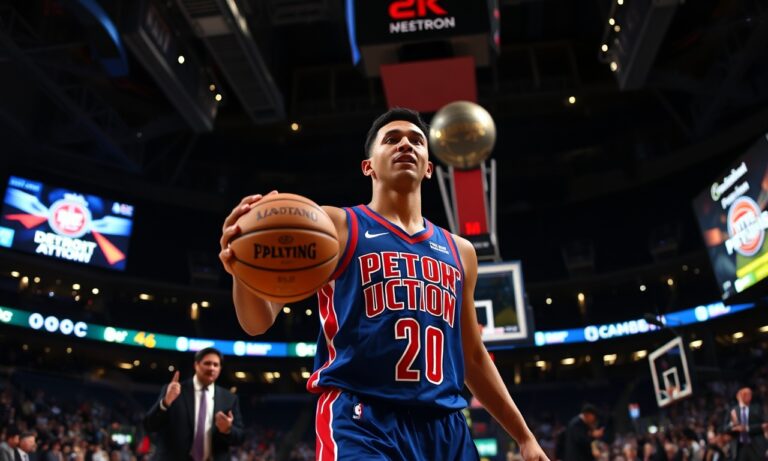
Detroit basketball news is again being driven by NBA trade rumors, with multiple outlets floating the idea that the Detroit Pistons could be involved in an Anthony Davis trade while the league continues to swirl around LeBron James recruitment speculation. The reports arrive at a moment when the Pistons are trying to accelerate their rebuild, and when Detroit fans are watching how every major move elsewhere could reshape the competitive landscape in the Eastern Conference.
The newest chatter centers on whether Detroit’s front office could pursue a “win-now” or “stars-now” path by targeting an elite-level player—especially a defensive anchor and offensive weapon like Davis—rather than relying solely on development and draft capital. While no deal has been reported to be imminent, the mere possibility has added intrigue to what otherwise has been a relatively quiet stretch for Pistons roster news.
Main Section
According to The Athletic, trade conversations around established stars remain active as teams evaluate both on-court needs and contract realities. While the outlet did not announce a specific Detroit framework, it described the competitive pressure around contending teams to improve before the playoffs and around non-contenders to make strategic choices about asset allocation.
In parallel, ESPN has continued to track broader league discussions that include players tied to the Los Angeles Lakers’ orbit as well as teams maneuvering for flexibility. ESPN’s NBA reporting has frequently emphasized that trade rumors can gain traction when multiple clubs share similar timelines—such as when a star’s current situation, a coach’s expectations, or a roster’s defensive deficiencies point toward movement.
Against that backdrop, Detroit’s connection to an Anthony Davis trade remains speculative, but the structure of Detroit’s roster makes the rumor at least plausible from a basketball standpoint. Davis would address a recurring need for teams competing in the modern NBA: rim protection, size that can survive switch-heavy lineups, and a high-impact playmaker who can pressure opposing defenses without requiring the ball in his hands on every possession.
Why this rumor is gaining attention in Detroit
For Pistons fans, the story isn’t just about star power. It’s about what a Davis-caliber player could change in the short term—especially in games against playoff-caliber teams where defensive execution and late-game shot quality are often the difference.
Detroit also has to think beyond the headline. Even if the Pistons had the interest in a high-end acquisition, the practical question is whether the required trade package aligns with what Detroit is willing to give up, and whether the club could still protect its long-term cap flexibility. That tension—between immediate improvement and long-range planning—is a theme that has played out across NBA trade cycles and is reflected in how teams like the Warriors trade talks have periodically influenced league-wide rumor momentum.
Historically, when one marquee franchise signals interest in retooling or changing course, it can ripple outward. If a team with a star on the board begins exploring options, other clubs may adjust their own timelines. That dynamic is part of what makes NBA rumors particularly sticky: even unconfirmed “linked” discussions can shift the value of draft picks, player roles, and salary-matching decisions across multiple teams.
Impact on Detroit Residents
Even for residents who don’t follow every trade detail, the outcome of Pistons roster decisions can affect the wider local sports economy. Professional basketball—like other major-league sports—drives patronage for hospitality and transportation, and it can influence how often fans attend games downtown or in surrounding neighborhoods.
Detroit’s local economy remains sensitive to event-driven demand. Data from the U.S. Bureau of Labor Statistics has shown that employment in leisure and hospitality can fluctuate with consumer spending patterns, which often include spending around local sports and entertainment events. When teams play better or generate more interest through high-profile matchups, attendance and game-night activity can rise, benefiting restaurants, parking businesses, and nearby retail.
At the same time, if Detroit’s approach is to pursue a major trade, the choices could have second-order effects. High-salary roster moves can limit near-term flexibility, potentially influencing how the Pistons invest in coaching, player development, and depth. That matters for Detroit fans because it can translate into longer-term competitiveness—either by compressing the rebuild timeline or by creating pressure to maintain a certain level of performance.
There is also a social component. The Pistons have long been involved in community programming and youth basketball initiatives, and sustaining those efforts is easier when the club’s broader operations—ticket revenue, sponsorship interest, and team performance—remain stable. While the organization’s specific commitments aren’t dependent on any one trade, star-level results can still affect how much attention and funding the team can attract for offseason programming.
Background & Data
To understand why an Anthony Davis trade rumor would surface in Detroit, it helps to look at how NBA roster building works today. Teams now frequently balance two priorities: acquiring high-impact talent and maintaining enough roster depth to withstand injuries, rest schedules, and the long grind of a full season.
Detroit’s path in recent years has emphasized development. Yet the NBA’s economics mean rebuilding teams can sometimes benefit from bold moves if they identify a window to raise their floor immediately. Davis’s profile—protecting the paint, extending the defense with size and athleticism, and contributing as a high-level scorer—would not just improve results on the scoreboard; it could also change how Detroit allocates minutes across its rotation and how it deploys younger players around a reliable defensive backbone.
Meanwhile, LeBron James recruitment speculation continues to act as a catalyst for rumor cycles. Major stars who are evaluating their own situations often change the attention of other teams, since clubs make decisions based on where talent could move next. That’s part of why Detroit’s name can appear in discussions even when the Pistons are not the primary destination in every report.
Finally, league-wide movement can be influenced by the same strategic math that has fueled other rumor clusters, including Warriors trade talks. When teams across the conference explore the availability of certain players, it reshapes the market for both established stars and role players. That, in turn, can make previously unlikely connections—like Detroit and Anthony Davis—appear more realistic to observers looking at the full landscape.
What Happens Next
For Detroit residents hoping for clarity, the key is to watch for signals that go beyond social media speculation. In NBA reporting, legitimate momentum typically shows up through team-specific statements, credible beat writers’ reporting, and concrete salary-cap or asset-related details that suggest a club has engaged in real negotiations.
In the coming weeks, Pistons fans may see more discussion about roster priorities—particularly whether Detroit’s front office will prioritize defense, shooting, or playmaking as it considers how to complete the roster around its current core. If the NBA rumor economy continues to point toward a potential stars-and-leverage market, Detroit could be mentioned more frequently in trade frameworks.
However, until a deal is formally announced or credible reporting confirms advanced talks, the Davis-linked narrative should be treated as just that: a rumor, not a plan. Detroit basketball news often accelerates quickly when the league approaches major decision points, but the real test will come when the Pistons’ actions—through trade announcements, roster adjustments, or public personnel guidance—make their intentions unmistakable.
For now, the buzz is enough to keep fans talking. The Pistons, like every other team, are looking for a competitive edge. Whether the path leads through an Anthony Davis trade or another strategy, Detroit’s offseason decisions will determine how quickly the rebuild can transform into consistent contention.