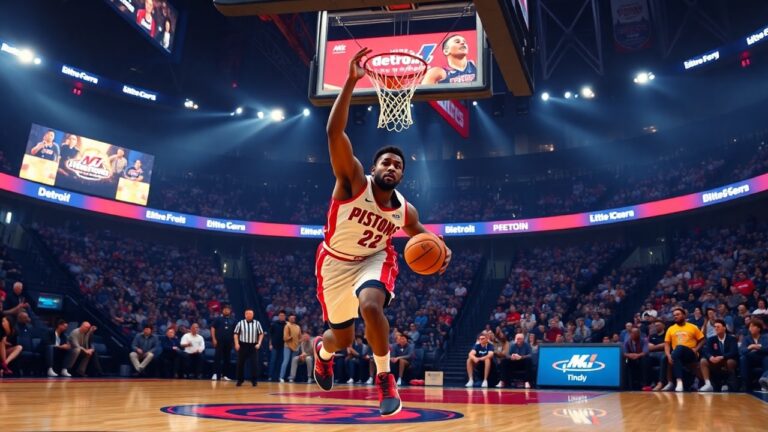
The Detroit Pistons’ Jalen Duren has become one of the NBA’s most discussed big men as Duren trade talks gather steam and rival contenders address their frontcourt needs. With offseason moves reshaping the center market, league chatter has intensified around whether Detroit will keep building around its young core—or leverage interest to accelerate roster upgrades.
At the same time, Detroit’s status in the standings means any shift in the wider market can affect how quickly decisions get made. According to basketball analytics outlet Basketball-Reference, roster construction and minutes distribution often dictate how team spending and roster moves flow once rotation players are set. That dynamic is unfolding now, as teams with playoff expectations look to secure size, rim protection and reliable interior offense for the months ahead.
Pistons’ Duren trade talks intensify amid broader center market demand
Detroit fans have watched Duren develop into a defensive presence in the paint, but the Pistons’ frontcourt planning is also being scrutinized through a trade lens. Industry reporting has pointed to a league-wide surge in interest in centers who can defend the basket, finish at the rim and stay on the floor defensively—qualities that keep Duren in the spotlight.
League transactions and contract activity matter because they shape what teams can offer, including draft compensation and salary-matching options. Data from Spotrac has regularly been used by NBA followers to track contract structures and trade matching constraints, and that matters for Detroit’s decision-making when potential trade partners begin tightening their rosters.
While Detroit has not publicly confirmed a trade, the current wave of NBA rumors has centered on how Duren’s value fits into teams’ immediate competitive windows. If contenders believe they’re one interior piece away from improving their postseason ceiling, they tend to move before market options shrink.
Lakers sign center, Celtics sign center: pressure rises for the rest of the league
As the Pistons consider their options, two marquee names in the league’s rumor cycle—the Lakers and the Celtics—have been tied to moves aimed at shoring up the frontcourt. When teams at the top of the standings add a center-oriented piece, it can raise expectations across the rest of the conference: opponents adjust, rotations change, and the remaining center options become more scarce.
That scarcity is more than a basketball storyline. For Detroit, it affects what trade partners are willing to pay. If a team like the Celtics targets size to improve interior defense and rebounding, other clubs looking for similar traits may have to either overpay for the remaining players on the market or pivot to different targets.
In practical terms, Detroit’s leverage can rise or fall depending on how quickly other teams lock in their center roles. If enough rivals fill those needs, Duren trade talks may cool. If they don’t, Detroit could see a stronger market—particularly from teams searching for a young center who can contribute both defensively and in transition.
Why Detroit residents should care about Duren trade talks
In Detroit, Pistons roster decisions are rarely just about the next game. They carry downstream effects—ticket demand, local sports media coverage, community engagement programming and even how businesses around venues plan for game-night traffic.
Fan experience and attendance: Detroit’s arena atmosphere changes when the product on the floor looks stable and forward-moving. If Duren remains part of the plan, Detroit can market a coherent youth core. If he becomes trade-eligible in deals centered on winning-now assets, the Pistons’ on-court identity may pivot quickly, affecting how quickly fans adapt expectations for the season.
Local sports economy: While the Pistons are an entertainment brand, their performance influences the broader game-day ecosystem. In Detroit, local hospitality operators—from restaurants to bars near Little Caesars Arena—often benefit from consistent crowds. More broadly, a team that feels like it has a clear direction tends to sustain media interest, which can help drive awareness among new and occasional visitors.
Roster stability and development: Duren’s presence is tied to the Pistons’ developmental timeline. Keeping a young rim defender can support a longer-term plan for shot selection, defensive schemes and transition opportunities. If Detroit trades him, new players would have to integrate into the same style, potentially altering learning curves for the next rotation.
Background & data: how NBA roster economics shapes Detroit’s options
NBA front offices weigh multiple constraints at once, including salary structure, roster spots and timeline alignment. Publicly available contract-tracking and analytical resources frequently highlight that teams under different cap situations have different levels of flexibility when negotiating trades.
According to NBA.com coverage of team-building strategies, front offices often prioritize positional fit and defensive impact when constructing playoff-capable rotations. In today’s league, centers who can protect the rim and switch on the perimeter have become increasingly valuable because many teams play at faster tempos and emphasize space-and-swing offenses. That valuation helps explain why Duren trade talks can remain active even when the Pistons are not openly signaling a rebuild or a major shakeup.
For Detroit specifically, the stakes are clear: the Pistons can’t ignore the market simply because they’re working through their own roster timeline. When top teams use the offseason to lock in interior depth, it can change what other clubs need and, in turn, change how aggressively they pursue available players.
It’s also a reminder that the center market isn’t static. Even if a team doesn’t complete a trade immediately, the perception that certain players are available can influence how other deals are structured—such as whether teams offer more in draft compensation or whether they shift to different salary matching approaches.
What happens next for the Pistons and Jalen Duren
The next steps in the Duren trade talks likely hinge on a few key factors: how quickly the Lakers and Celtics finalize their frontcourt depth, whether other playoff-caliber teams continue to explore center upgrades, and how Detroit’s internal evaluation weighs Duren’s development against the potential return in a trade.
There’s also a practical timing element. Once teams feel they’ve secured their must-have roles, trade momentum typically slows unless there’s an urgent need elsewhere. If Detroit waits too long, it could miss the window when teams are still actively comparing options and preparing for the start of the season.
For Pistons fans, the most immediate question is what Detroit decides about its young centerpiece and how quickly the club can translate market interest into a strategy that fits the Pistons’ long-term goals.
Bottom line
As Lakers sign center and Celtics sign center reports reshape expectations across the league, the Pistons’ Jalen Duren remains a focal point in NBA rumors and Duren trade talks. For Detroit residents, the outcome matters because it affects team identity, fan engagement and the local sports economy tied to game-day interest. Whether Duren stays in the Motor City or becomes the centerpiece of a trade, the decision will reflect how Detroit intends to navigate a fast-moving, competitive center market.