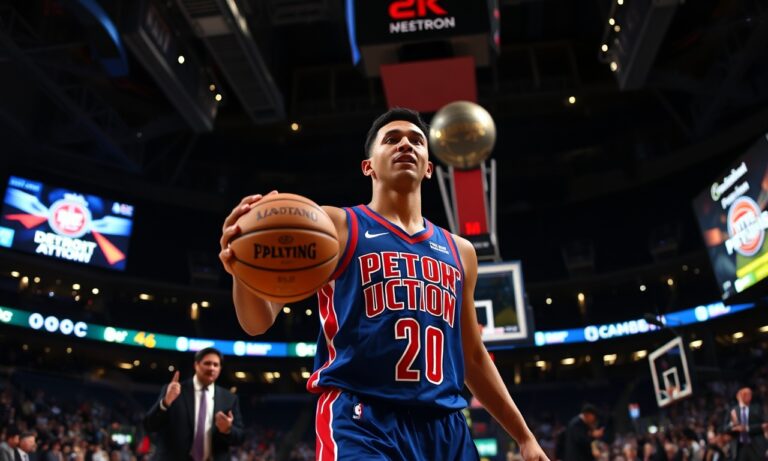
The Detroit Pistons’ latest roster shakeup is already prompting Detroit rumors about what comes next, with multiple reports suggesting two key players could be on the move following the team’s John Collins deal. The expectation, according to industry reporting and offseason market analysis, is that Detroit will use additional flexibility to reshape its frontcourt depth and tighten its rotation as the NBA offseason accelerates.
While the Pistons have not confirmed any departures, the timing of the John Collins deal has changed how league insiders view Detroit’s immediate needs: scoring inside, spacing for a developing core, and cap flexibility heading into the summer. For Pistons fans across metro Detroit—from longtime season ticket holders to casual viewers following the team’s young talent—the question now is which players will be asked to find new homes as Detroit pursues its next competitive look.
Main Section
Multiple NBA reporters have pointed to a likely chain reaction after the Pistons’ acquisition of John Collins, a forward known for his efficiency near the rim and ability to stretch the floor. In Detroit, the deal’s ripple effect is being discussed as the organization balances two competing priorities: building long-term roster chemistry while remaining agile for future trades or signings.
According to ESPN NBA insider reporting, teams often avoid carrying overlapping skill sets when new players are added—especially when the incoming player fills a role already targeted by other roster moves. Analysts have also noted that the NBA offseason commonly produces a “second wave” of activity after the first significant acquisition is finalized.
Separately, The Athletic has framed the Pistons’ roster decisions in terms of lineup construction and financial maneuvering, emphasizing that players who don’t fit evolving rotation patterns frequently become trade candidates once a team clarifies its longer-term plan.
Which two players are most at risk?
Detroit rumors surrounding player departures are centering on two areas: frontcourt minutes and bench scoring matchups. Sources close to league roster evaluation—speaking in terms of fit and workload rather than specific contract language—have suggested that one player could be considered surplus in the rotation at the forward spot, while another could be squeezed by changes to the team’s offensive spacing and rebound distribution.
Because the NBA’s offseason is fluid and roster statuses can change quickly, fans should treat these expectations as market projections rather than confirmed transactions. However, the common theme across Pistons offseason coverage is that once a team adds a player like Collins, it tends to revisit who is best positioned for meaningful minutes in the new rotation.
In practice, that means Detroit may look to move a player who:
- is less likely to see consistent minutes after lineup adjustments;
- can be packaged to receive salary relief, a younger prospect, or future draft flexibility;
- has a contract structure that makes a trade feasible under the NBA’s offseason rules.
For Detroit residents watching closely, this is where the local fan experience matters: a roster shift can influence ticket demand, game-day energy, and the broader narrative around whether the Pistons are in “build” mode or transitioning toward a more structured competitive window.
Impact on Detroit Residents
Even though NBA transactions occur far from city hall, the business and community ripple effects can be felt locally. The Pistons are part of Detroit’s entertainment economy, drawing visitors and sustaining jobs tied to arenas, hospitality, and event logistics. When the team’s product changes—whether through new acquisitions or player departures—it can affect how fans engage with games and related local spending.
According to data compiled by the U.S. Bureau of Economic Analysis, the broader entertainment and recreation sector contributes to regional employment and spending in metro areas. While BEA statistics don’t track individual roster moves, they show why Detroit’s sports ecosystem can matter economically—especially when a team’s offseason messaging influences fan interest and attendance patterns.
Detroit residents may also notice how roster changes affect local media coverage and community programming connected to the Pistons brand. Trade speculation can shape what players participate in offseason outreach and what positions are emphasized during summer development programs.
For fans of the Pistons’ younger core, the prospect of two additional roster departures could bring opportunity for others to claim bigger roles. However, it could also mean that some fan-favorite veterans see fewer minutes, which tends to raise questions about continuity and development plans.
Background & Data
The NBA’s summer market often operates like a domino effect. A major addition such as the John Collins deal can change roster math—minutes distribution, positional overlap, and salary flexibility—making subsequent moves more likely. In Detroit, that’s particularly relevant because the Pistons’ roster has been under constant evaluation as the organization targets long-term growth rather than quick fixes.
From a league-wide standpoint, the NBA’s salary and roster rules guide what trades are feasible. When a team makes a move that alters its salary structure, it commonly triggers reassessment of who is best positioned to remain through the season. NBA offseason trade patterns typically accelerate after an initial acquisition clarifies team needs.
It’s also worth noting that Detroit is not making these decisions in isolation. The Pistons compete in a conference shaped by teams that continuously adjust—adding shooters, retooling defensive schemes, and shifting frontcourt usage. That competitive reality increases pressure on teams to finalize their rotations early enough to build cohesion during training camp.
What Happens Next
Over the coming weeks, the most telling signals will come from how the Pistons talk about their rotation and what roles they emphasize for the forward group after the John Collins deal. Detroit rumors usually gain credibility when they align with broader organizational themes—like the team’s willingness to prioritize spacing, develop certain players, or create minutes for emerging prospects.
For residents in metro Detroit, the practical takeaway is to watch for:
- updates to depth chart expectations during offseason workouts;
- changes in how Detroit’s frontcourt and bench minutes are discussed by local beat writers;
- public contract and trade-market signals that suggest particular players are more movable than others.
Until any transactions are confirmed, the safest conclusion is that Detroit is actively positioning itself for the next phase of roster construction. If two key players do depart as expected, it would reflect a broader offseason logic: once a team lands a piece like John Collins, Detroit may decide that maintaining a smaller, more coherent rotation better supports development and competitive flexibility.
As NBA offseason activity continues, Pistons fans will be looking for clarity—both on the court and in the front office’s plan—for how the team intends to turn its latest move into sustained progress.