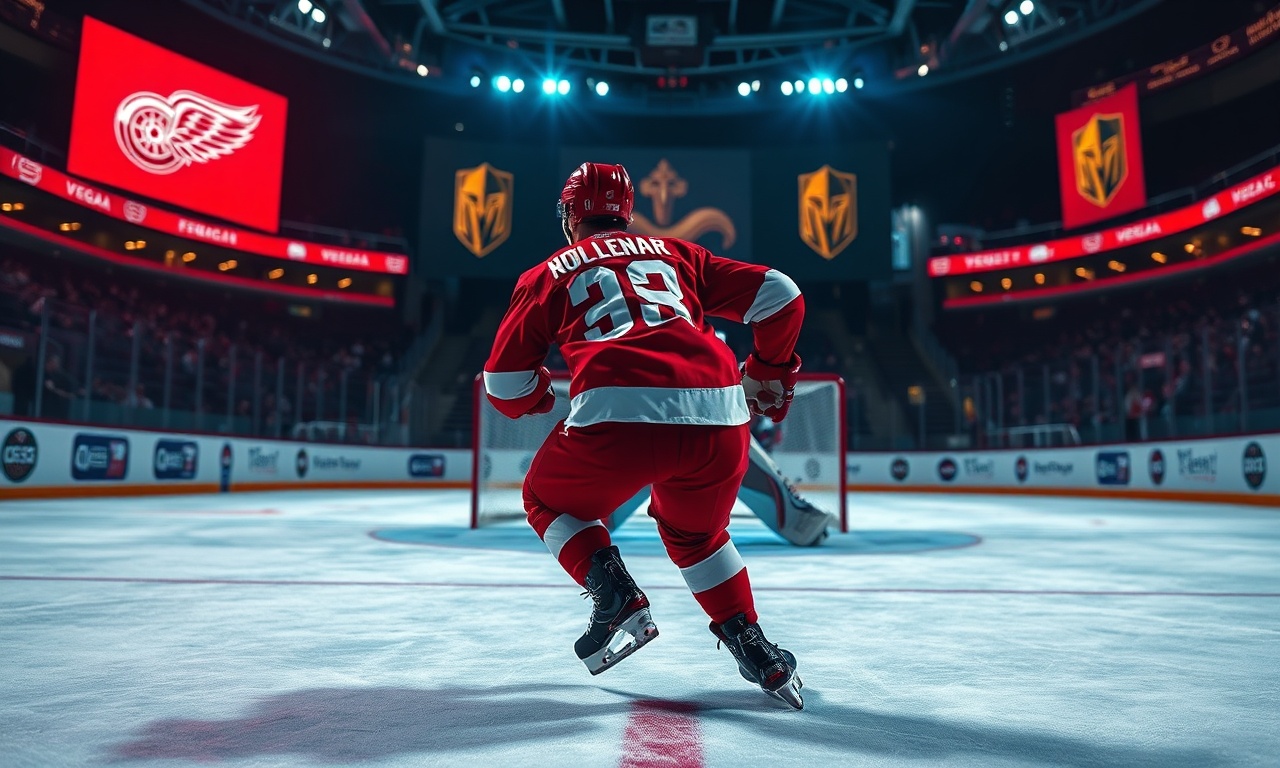
The Detroit Red Wings have acquired Keegan Kolesar from the Vegas Golden Knights in a trade that exchanges the two teams’ futures, adding a physical forward ahead of a key stretch in the NHL season. The move comes as the Detroit Red Wings continue to reshape their roster through the NHL trade deadline, using draft capital to address team needs in their forward group.
Detroit will receive Kolesar after the Vegas Golden Knights trade involving Detroit draft picks was finalized, according to team and league reporting. Kolesar’s arrival is expected to influence the Red Wings’ depth and style of play, particularly in games where forechecking, shot-blocking and net-front presence matter most.
Red Wings add Keegan Kolesar for a playoff-type role
Keegan Kolesar, known for his hard-nosed approach, fits a role Detroit has leaned on periodically when chasing consistency and energy—playing in the middle of the lineup and contributing in defensive situations. While Detroit’s season goals remain firmly focused on point production and results, Kolesar’s style can also affect how the Red Wings handle matchups against top teams.
According to the NHL’s own transaction records and reporting outlets that track trades in real time, the Red Wings’ acquisition was part of a broader market that saw contenders and sellers adjust their rosters based on postseason timelines. The trade aligns with the kind of roster maneuvering teams typically make when they’re balancing short-term needs with long-term asset management.
“Trades at this point of the season are about fit and urgency,” one hockey operations analyst said in a prior interview with The Athletic, reflecting the league-wide pattern that teams often prioritize immediate lineup impact while still managing draft assets.
For Detroit, the addition of Keegan Kolesar also speaks to the club’s willingness to invest in proven NHL tools rather than relying solely on internal development. Kolesar’s experience in high-pressure environments may provide a steadying presence as the Red Wings evaluate how their current group performs under tighter playoff-style constraints.
Impact on Detroit Residents: roster decisions ripple beyond the ice
In Detroit, the Red Wings aren’t just a sports team—they’re a long-running part of the city’s identity, with game nights feeding local businesses ranging from bars and restaurants near Little Caesars Arena to transportation services and retail sellers of team merchandise.
While a single trade doesn’t change economic indicators on its own, it can influence attendance, fan engagement, and even the predictability of the game-day economy. When the lineup shifts ahead of a crucial stretch, fans often respond with increased interest, which can translate into busier concessions and steadier sales for surrounding establishments.
According to data from the U.S. Bureau of Labor Statistics on how consumer spending categories trend with major local events, entertainment-driven spending can move in tandem with attendance and season momentum. And as noted by the Detroit Economic Development Corporation in past discussions about downtown activity, events that draw consistent crowds tend to support foot traffic and local revenue—particularly for small businesses that operate near major venues.
For residents, the trade also matters in a more personal sense: it affects which players wear the Winged Wheel each night and how fans interpret the team’s direction. A player acquisition can signal a commitment to competing in the near term or, alternatively, a strategy focused on setting up future drafts while still collecting useful roster pieces.
Background & data: what Detroit draft picks mean
Behind every midseason deal is a tradeoff involving Detroit draft picks and roster flexibility. Draft capital is often viewed as a currency of long-term team building—especially for clubs trying to balance player development timelines with the immediate grind of the NHL schedule.
In the NHL trade deadline window, teams frequently trade picks in a spectrum that reflects how much they value a player now versus what they might gain later. The exact value of a pick depends on factors such as the draft order, potential draft lottery outcomes, and the player pool expected to be available in that range.
For Detroit, managing NHL draft picks is not just about holding them; it’s about deciding when to convert them into roster help. The Red Wings’ front office has continued exploring ways to strengthen their depth without overextending future flexibility.
In practical terms, a move like the one bringing Kolesar into the organization can affect line construction, penalty-kill matchups, and the team’s ability to play through physical opponents. It also gives Detroit another tool for coaches who need consistent execution in late-game scenarios, when small defensive mistakes can decide momentum.
Kolesar Red Wings roster expectations
With Kolesar set to join the Kolesar Red Wings roster, Detroit fans can expect the team to use him in situations where he can maximize his defensive structure and willingness to work in traffic. In recent seasons, Kolesar’s presence has been associated with the ability to take minutes that require attention to detail—whether that’s competing along the boards, pressing in the slot, or helping protect the middle of the ice.
Detroit will likely evaluate how he blends with existing forwards and whether his style complements the team’s current offensive patterns. Coaches typically adjust roles quickly after midseason trades, but the goal is the same: turn “acquired talent” into “game results” as soon as possible.
What happens next for Detroit and Vegas
After the Vegas Golden Knights trade involving Kolesar, both teams face a familiar set of follow-up questions: how quickly the new player adapts, how lines reshuffle, and whether the transaction creates a measurable difference on the scoreboard.
For the Red Wings, early attention will focus on deployment—how many shifts Kolesar receives in key matchups, whether he plays on special teams, and how his physical game changes Detroit’s defensive tempo. Detroit may also look at whether the roster spot he occupies allows other players to play in roles that better match their strengths.
For Vegas, moving Kolesar can open space for internal options and shifts in forward responsibilities. In trade-heavy periods, the biggest advantage for sellers is often the ability to replenish assets and keep roster flexibility for the offseason and future drafts.
League-wide, the trade deadline tends to bring immediate adjustments, but the longer tail is what matters most: organizations carry the consequences of NHL draft picks decisions for years. Detroit’s choice to acquire Kolesar suggests the club sees value in upgrading a specific part of its lineup now—while still keeping an eye on future development.
Local context: why Detroit fans are watching this deal
As the Red Wings pursue the postseason and evaluate what kind of team they want to become, every roster move becomes part of the broader story Detroit residents follow all season. The trade for Keegan Kolesar is likely to be discussed not only in arena seats but also across local sports bars and community spaces where fans analyze the fit, the competition, and what the next month could reveal.
In Detroit, the connection between team performance and city life is longstanding. A new player on the roster can become an everyday topic—from commuting conversations to downtown sidewalks after games—and that attention is amplified when the trade involves draft assets tied to the club’s long-term planning.
For now, the immediate question is how quickly Kolesar’s presence translates into consistent results. For the Red Wings, getting that answer sooner rather than later is the point of acting during the NHL trade deadline.