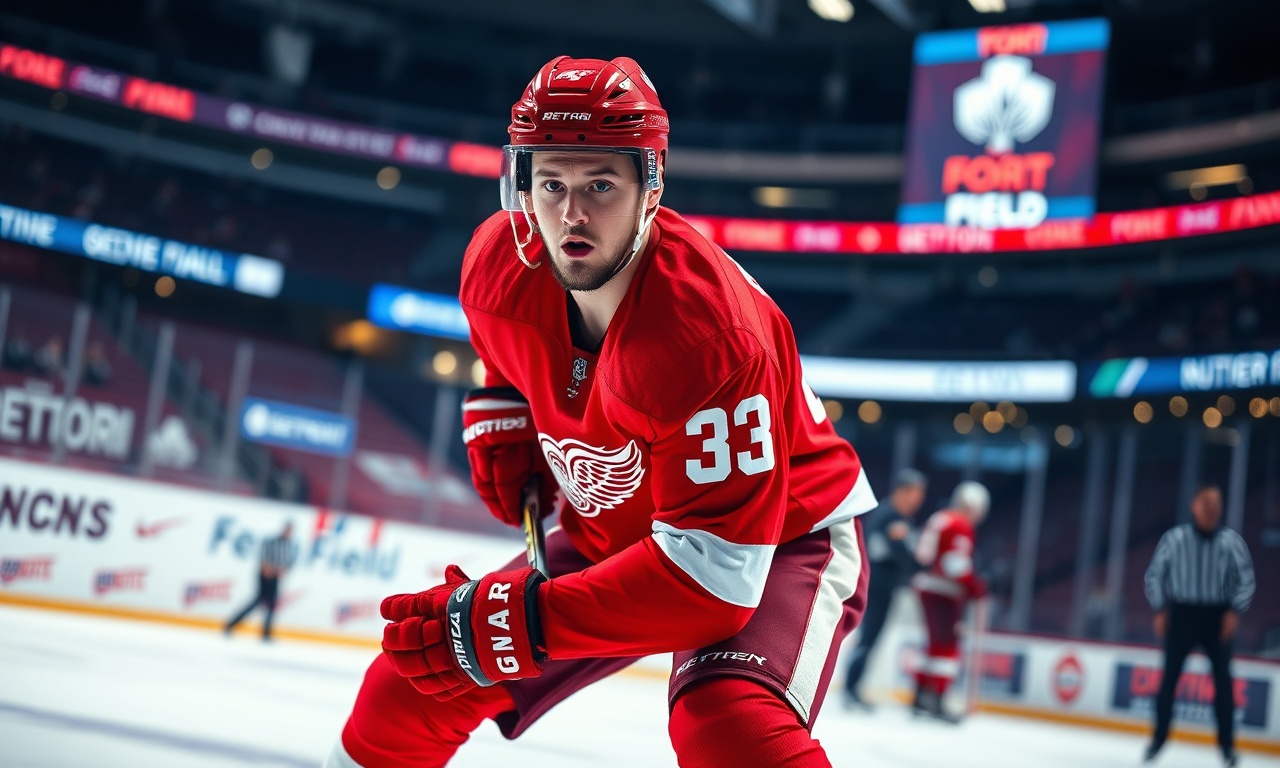
The Detroit Red Wings have signed defenseman Jacob Bryson to a 1-year contract, adding depth and continued NHL experience to a roster that has focused heavily on building a mix of veteran stability and developing talent. The move, part of the team’s ongoing NHL signings, comes as Detroit’s front office looks to remain competitive while shaping its Red Wings roster for the seasons ahead.
While the team has emphasized performance and roster flexibility, the Bryson signing underscores a broader strategy that Detroit hockey fans know well: plug-in capable defenders, support a long-term core, and keep the system moving through every stage of a season. The contract also adds another name to a crowded defensive competition, where minutes can shift quickly depending on injuries, matchups, and coaching decisions.
What the Jacob Bryson 1-year contract means for the Red Wings roster
According to an announcement from the Detroit Red Wings, the organization has agreed to terms with Bryson on a one-year deal, giving the club another option on the blue line for the 2024-25 campaign. For a team managing both performance demands and cap considerations, short-term contracts like this are often used to maintain depth without foreclosing future flexibility.
From a roster standpoint, the addition is best understood as an insurance-and-development move. A defenseman on a 1-year contract can help cover gaps when the team needs more stability in certain game states, such as protecting leads late in the third period or handling the pace against stronger forechecking teams. At the same time, it provides coaches with a defined evaluation window: how Bryson fits the team’s defensive structure, skater usage, and special-teams plans.
Detroit head coaches typically value defenders who can adapt quickly to system expectations, and the Bryson signing reflects that priority. Detroit hockey news observers have noted that roster spots often hinge on both defensive execution and puck management, especially when the Red Wings want to transition efficiently into offensive opportunities.
Local impact: keeping Detroit hockey momentum going
In Detroit, NHL roster changes rarely stay confined to the rink. The Red Wings are a longtime pillar of local sports culture, and updates to the Red Wings roster can influence ticket demand, fan engagement, and the rhythm of downtown-area businesses around game nights.
According to the U.S. Bureau of Labor Statistics, employment in leisure and hospitality industries is closely tied to consumer spending patterns and local events. That matters for Detroit residents because a full home schedule can support work hours in sectors such as event staffing, food services, and transportation—particularly when fan interest is buoyed by credible roster improvements.
Detroit also experiences a ripple effect through community hockey initiatives. When the Red Wings add players with NHL experience, it strengthens the organization’s credibility in local youth development programs and public-facing community events where players and coaches participate. While Bryson’s signing is a professional business decision for the club, its presence can still translate into more visibility for hockey programming across the metro area.
Background & data: why one-year contracts matter in NHL signings
NHL contracts don’t exist in a vacuum. For general managers, the balance between competitiveness and financial flexibility is a constant calculation. Short-term deals are one of the most common tools teams use to manage salary structure while still pursuing immediate on-ice needs.
Data from CapFriendly, a widely used tracker of NHL contracts and salary-cap details, has shown how frequently one-year agreements appear across the league, particularly for depth players and role defenders. The logic is straightforward: a one-year contract can provide a team with performance-related upside, while allowing players to either establish themselves for a longer deal or earn a more favorable contract after a season of NHL-ready production.
For Detroit, a club that continues to evaluate line combinations and defensive pairings, the Bryson signing also fits the realities of NHL roster management—injuries, call-ups, and shifting matchups are normal over an 82-game schedule. By adding a defender under a 1-year contract, the Red Wings preserve options for later moves while ensuring they have coverage for common season demands.
How Detroit will likely use Bryson
Coaches typically deploy new defenders based on the team’s immediate needs, including defensive-zone coverage responsibilities, transition support, and their ability to play within the team’s existing systems. For Jacob Bryson, the practical question is where he will be most effective in Detroit’s rotation—whether that means stabilizing a bottom-pair role, competing for higher leverage minutes, or contributing in specific matchups.
Special teams can also be a determining factor. Even if a player is not projected to be a first-unit option, penalty kill and certain power-play alignment responsibilities can create an opening. In modern NHL play, defensive contributions are measured in more than just physical play; teams look at positioning discipline, shot-blocking lanes, and the ability to exit the defensive zone without surrendering high-danger chances.
Competition on the blue line
The Red Wings roster already has multiple players competing for defensive roles, and the Bryson signing adds another piece to that competition. In a season where coaching staff may adjust pairings frequently, a defender who can reliably execute assignments has a path to more consistent minutes.
What happens next
Bryson’s 1-year contract sets up an immediate evaluation timeline. For Detroit hockey news watchers, the key developments to track will be his performance in practice, his readiness once regular-season games begin, and how quickly he earns trust in both even-strength and special-teams scenarios.
The team’s response over the next several weeks—pairing decisions, game-by-game usage, and any subsequent roster moves—will also help determine whether the signing becomes a long-term fixture or remains a flexible stopgap. Either way, the move provides Detroit with another depth defender under NHL contract terms, aligning with the organization’s broader goals around roster stability and on-ice readiness.
For fans in Detroit, the signing is more than an administrative update. It’s a sign that the club is actively managing its Red Wings roster as the season approaches, making sure it has enough options to navigate the challenges that come with a demanding schedule.