Detroit’s entrepreneurial landscape is undergoing a profound transformation as the city transitions from a heavy industrial reliance toward a diverse ecosystem of startups and neighborhood-level retail. According to data recently released by the Detroit Economic Growth Corporation (DEGC), the city has seen a consistent uptick in new business registrations, signaling a robust recovery and a shift in how the local economy functions. This surge is particularly evident in the city’s commercial corridors, where once-vacant storefronts are being revitalized by a new generation of founders.
The Evolution of Small Business Detroit
For decades, Detroit’s economic narrative was tied almost exclusively to the automotive industry. However, recent trends indicate that the small business Detroit sector is becoming a primary driver of employment and neighborhood stabilization. The DEGC’s flagship program, Motor City Match, has been a critical catalyst in this shift. Since its inception, the program has awarded millions in grants to help entrepreneurs bridge the gap between business planning and opening physical locations.
As reported by city officials, these investments have led to hundreds of new brick-and-mortar establishments, ranging from specialized tech firms to community-centered coffee shops. This diversification is seen as a safeguard against the cyclical nature of the manufacturing sector. By fostering a high-density environment of small enterprises, Detroit is creating a more resilient economic base that can withstand national market fluctuations.
Data-Driven Growth and Neighborhood Investment
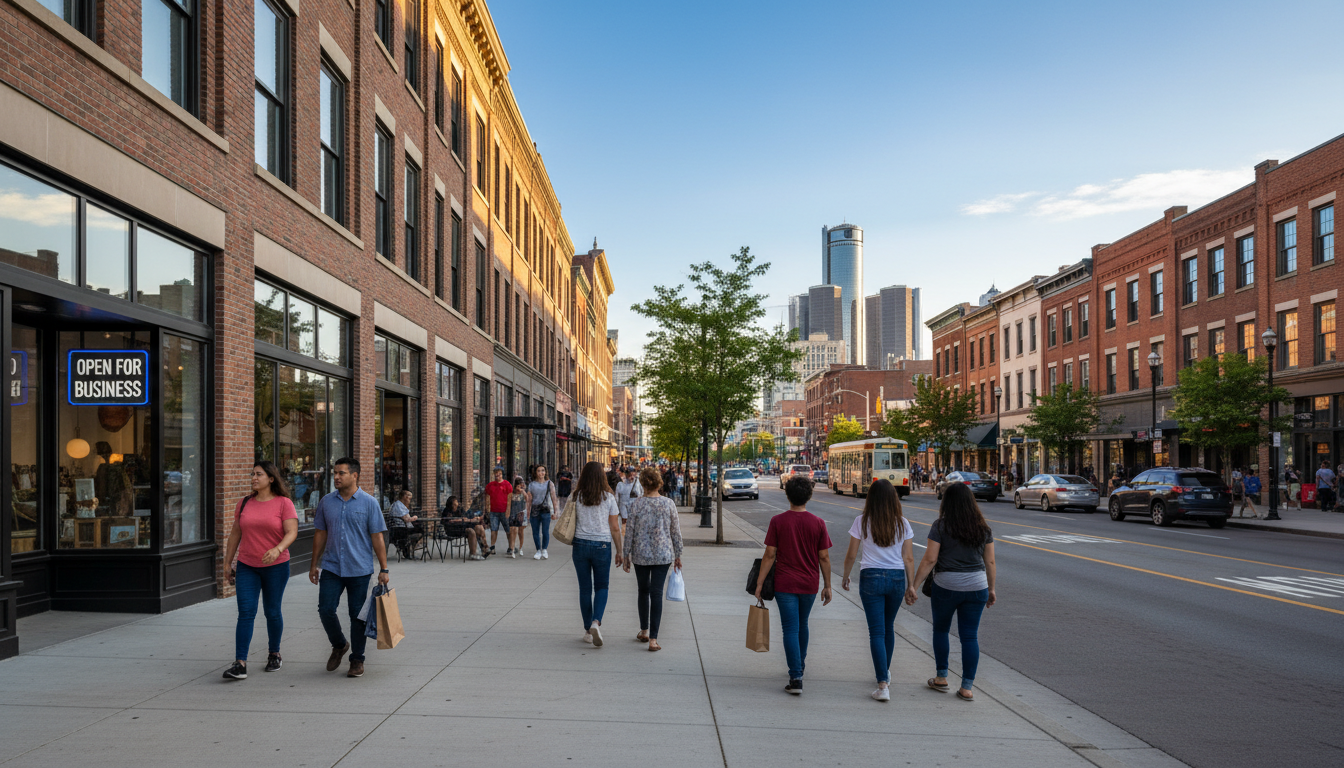
Statistics from the U.S. Census Bureau highlight a notable trend: Wayne County has consistently ranked among the top counties in Michigan for new business applications. While many of these are individual ventures, a significant portion represents scalable startups that contribute to the local tax base. This trend is not confined to the downtown and Midtown cores. Areas such as the Livernois Avenue of Fashion, the North End, and the Eastside have seen a influx of capital investment.
The emphasis on neighborhood-level development is a cornerstone of current municipal policy. Rather than focusing solely on large-scale corporate headquarters, the city is prioritizing the growth of the small business Detroit community to ensure that economic benefits are distributed across all zip codes. This strategy aims to reduce the commercial vacancy rate, which has seen a steady decline over the last five years in targeted development zones.
Impact on Detroit Residents
The revitalization of local commerce has immediate and tangible effects on Detroit residents. Beyond the convenience of having essential services and retail within walking distance, the growth of small businesses is a significant job creator. Research into the local economy suggests that small businesses are more likely to hire residents from the surrounding community, thereby keeping capital circulating within the city.
Furthermore, the rise of entrepreneurship in Detroit is providing a pathway for generational wealth building. Minority-owned businesses, in particular, have seen an increase in support through specialized incubators and localized funding rounds. For many Detroiters, these businesses are more than just commercial entities; they are community hubs that improve the quality of life and foster a sense of pride in the neighborhood.
The Detroit Startup Ecosystem
Parallel to the retail growth is a burgeoning tech and innovation sector. Detroit has recently been recognized by several national publications as one of the fastest-growing emerging startup ecosystems in the United States. Venture capital firms are increasingly looking toward the Midwest, with Detroit-based firms focusing on mobility, logistics, and fintech.
Startups such as those operating out of Newlab at Michigan Central are redefining Detroit’s identity as a hub for hardware and software integration. These companies often graduate from small coworking spaces into larger offices, contributing to the city’s commercial real estate recovery. The synergy between high-tech startups and traditional small businesses creates a balanced economy where innovation meets service-based stability.
Challenges and the Future Outlook
Despite the upward trajectory, the small business Detroit sector faces ongoing challenges. Access to traditional bank financing remains a hurdle for many first-time business owners. Rising interest rates and inflation have also increased the cost of doing business, particularly for the construction and renovation of older commercial spaces. To address this, organizations like the Michigan Economic Development Corporation (MEDC) are expanding their outreach to provide technical assistance and low-interest loan products.
Looking ahead, the city plans to continue its support of Detroit development through simplified zoning processes and enhanced digital infrastructure. The focus is shifting toward sustainability and ensuring that the current momentum translates into long-term economic health. As the city prepares for upcoming fiscal cycles, the success of its small business owners will remain a primary metric for Detroit’s overall recovery.
City planners and economic analysts agree that while large-scale investments make headlines, the day-to-day resilience of Detroit’s neighborhood entrepreneurs provides the foundation for the city’s future. With continued support from both the public and private sectors, the small business Detroit landscape is poised for sustained growth through the middle of the decade.