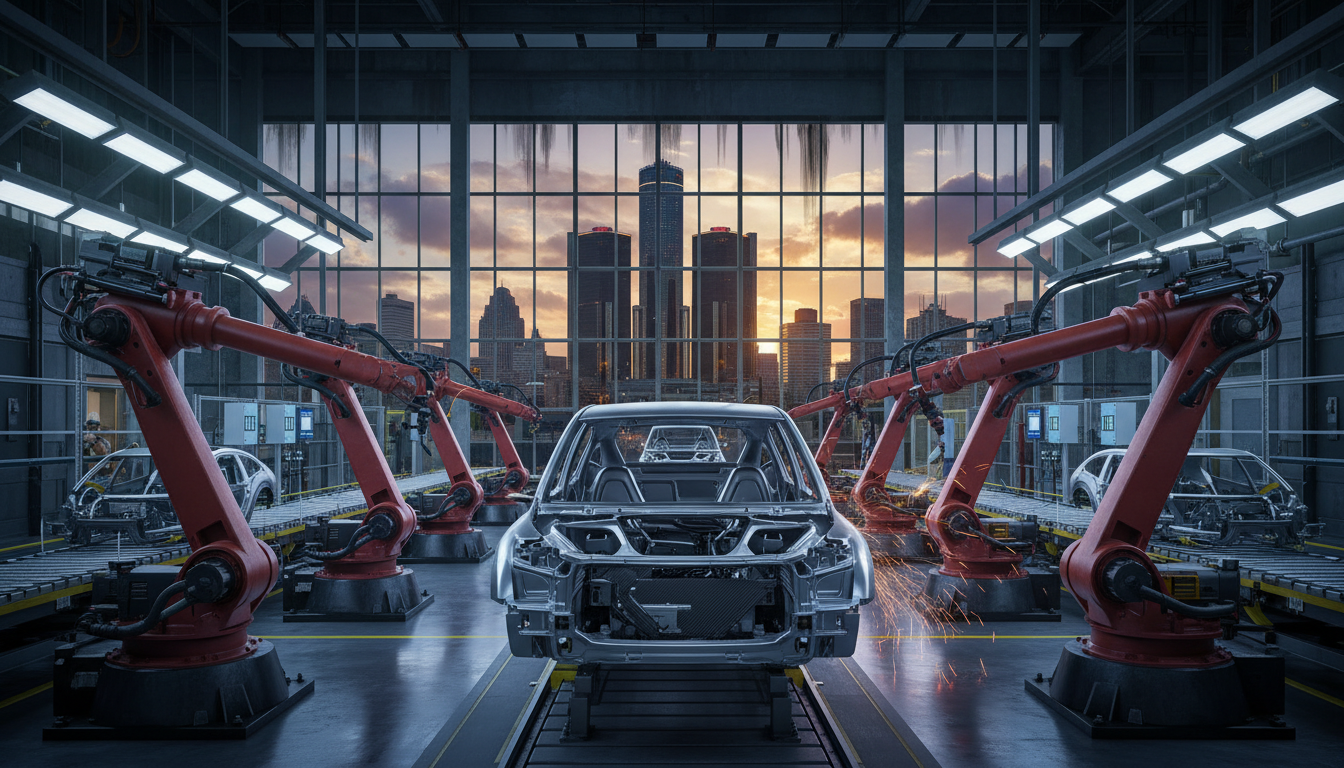
For over a century, the Detroit auto industry has served as the heartbeat of the American manufacturing sector. However, as the 2024 fiscal year progresses, the landscape is shifting beneath the wheels of the legendary Big Three. Faced with an aggressive transition toward electrification, fluctuating interest rates, and fierce competition in the global market, companies like General Motors and Stellantis are forced to recalibrate their strategies to remain competitive. The implications of these changes are being felt not just in corporate boardrooms in the Renaissance Center, but across the factory floors and neighborhood streets of Detroit.
The Electrification Pivot and General Motors
General Motors (GM) has been at the forefront of the Detroit auto industry’s push toward a zero-emission future. The company’s commitment to its Ultium battery platform remains a cornerstone of its long-term strategy, yet the transition has not been without hurdles. According to reports from the Center for Automotive Research (CAR), the capital-intensive nature of building out a domestic EV supply chain has put significant pressure on quarterly earnings. While GM’s internal combustion engine (ICE) vehicles continue to generate the profits necessary to fund this transition, the pace of consumer adoption in the global market has been slower than many analysts originally predicted.
A major challenge for GM involves balancing manufacturing output with actual consumer demand. In recent months, the company has had to adjust its production schedules at several North American facilities to prevent inventory bloat. Despite these adjustments, GM remains a dominant force in the Detroit economy, recently announcing further investments in its technical centers and assembly plants to ensure the workforce is prepared for the high-tech requirements of modern vehicle assembly. Readers interested in the broader scope of local growth can explore our recent coverage on Detroit economic development trends for more context.
Stellantis and the Pressure of Global Market Inventory
While GM navigates the EV transition, Stellantis is facing a different set of challenges related to inventory management and manufacturing efficiency. Stellantis, which oversees iconic brands like Jeep and Ram, has seen its market share fluctuate as it grapples with higher pricing models that have deterred some middle-class buyers. Data from the Michigan Economic Development Corporation (MEDC) suggests that the automotive sector’s health is intrinsically tied to the stability of these large-scale manufacturing operations.
Stellantis has recently come under scrutiny from labor organizations and local officials regarding production pauses at key facilities, such as the Warren Truck Assembly Plant. The company has cited the need to align production with lower-than-expected sales volumes in the North American region. This friction highlights a growing trend in the Detroit auto industry: the need to lean out operations while simultaneously investing billions into software-defined vehicles. For Stellantis, the global market is no longer just about horsepower; it is about digital integration and cost-competitiveness against emerging brands from overseas.
Impact on Detroit Residents and the Local Economy
The fluctuations within the Detroit auto industry have a direct and measurable impact on the residents of Southeast Michigan. Manufacturing remains one of the largest employers in the city, and any shift in production schedules often results in a ripple effect through the local service economy. When shifts are cut or plants are idled, the impact is felt by small business owners, from neighborhood diners to local logistics providers. According to the U.S. Bureau of Labor Statistics, manufacturing jobs in the Detroit-Warren-Dearborn metropolitan area provide a wage premium that supports the city’s growing middle class, making the stability of these roles vital for neighborhood revitalization.
Local leaders are also concerned about the long-term prospects for the city’s tax base. The revenue generated from these massive industrial footprints funds essential city services, including infrastructure and public safety. As the industry moves toward more automated manufacturing processes, there is a pressing need for workforce retraining programs. Organizations like Detroit at Work are partnering with automotive firms to ensure that residents are not left behind as the industry evolves. We have previously discussed how these shifts influence local housing and Detroit neighborhood development initiatives, which are closely linked to the financial health of the workforce.
Global Competition and Manufacturing Realities
One of the most significant external pressures on the Detroit auto industry today is the rise of international competitors, particularly from China. Brands like BYD have begun to dominate the global market for affordable electric vehicles, putting pressure on American manufacturers to lower their price points. While federal policies like the Inflation Reduction Act (IRA) provide incentives for domestic manufacturing, the cost of labor and raw materials in the United States remains a challenge for companies trying to compete on a global scale.
According to a recent analysis by the Michigan Bureau of Labor Market Information and Strategic Initiatives, the state must continue to diversify its industrial base to hedge against the cyclical nature of the car business. While Detroit remains the global hub for automotive engineering, the “manufacturing” component is increasingly becoming a high-tech endeavor involving semiconductors and advanced chemical engineering for batteries. This requires a level of agility that the Detroit auto industry has historically struggled to maintain, though the current leadership at the Big Three appears more committed to rapid iteration than in decades past.
What Happens Next for Detroit
The future of the Detroit auto industry depends on its ability to successfully bridge the gap between its heritage as a mechanical powerhouse and its future as a technology-driven mobility sector. The next two years will be critical as more EV models hit the showroom floors and the infrastructure for charging continues to expand across Michigan. For more information on state-level initiatives supporting these changes, residents can visit the official Michigan Economic Development Corporation website.
Despite the current challenges, there is a sense of cautious optimism. The Detroit auto industry has survived financial crises, global pandemics, and massive technological shifts before. As long as General Motors, Stellantis, and Ford can continue to innovate while maintaining their commitment to the local workforce, Detroit will likely remain the automotive capital of the world. The focus now turns to the upcoming earnings reports and labor negotiations that will set the tone for the 2025 manufacturing cycle.