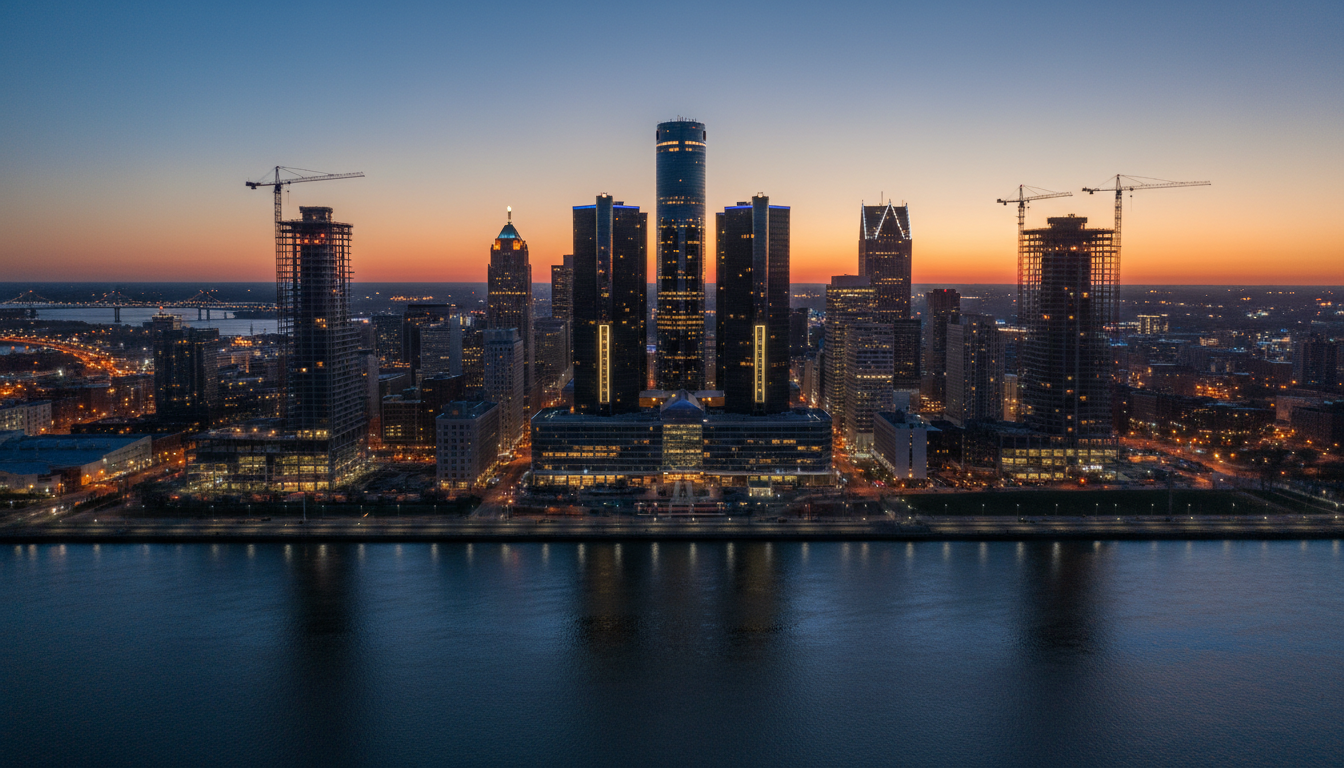
In a transformation that has caught the attention of global markets, the city of Detroit is currently experiencing an unprecedented surge in capital infusion. From the revitalization of the historic Michigan Central Station to the massive $3 billion expansion plans by Henry Ford Health and the Detroit Pistons, the movement to invest in Detroit has shifted from a speculative venture to a cornerstone of regional economic strategy. Local officials and economists suggest that this wave of investment is fundamentally different from previous eras, as it prioritizes long-term infrastructure and neighborhood stability over short-term gains.
According to the Detroit Economic Growth Corporation (DEGC), the city’s pipeline for development has reached a historic high, with billions in committed capital slated for projects over the next decade. These initiatives are not limited to the glitzy skyscrapers of the urban core but are increasingly penetrating the city’s residential corridors through public-private partnerships. As corporate giants and independent entrepreneurs alike seek new Detroit opportunities, the city’s financial landscape is being rewritten in real-time.
Major Projects Driving the Business Investment Detroit Needs
The anchor of recent growth remains the ambitious District Detroit project, a joint venture between Related Cos. and Olympia Development. This multi-phase development aims to bridge the gap between downtown and midtown, creating thousands of construction and permanent jobs. However, the scope of business investment Detroit is attracting goes beyond commercial office space. The tech sector has found a new home in the Corktown neighborhood, where the Michigan Central innovation hub is actively drawing startups specializing in mobility and clean energy.
Data from a recent University of Michigan economic outlook report indicates that the city’s employment rate has shown resilience, bolstered by these large-scale projects. Researchers at the university point out that the diversification of the local economy—moving beyond traditional manufacturing into healthcare, technology, and logistics—has made the city a more attractive prospect for institutional investors. This shift has created a snowball effect: as more companies establish a presence, the demand for high-quality real estate Detroit can provide has surged, leading to further residential and retail development.
Impact on Detroit Residents and Local Neighborhoods
For the long-term residents of the city, the question is often how this macro-economic growth trickles down to the block level. The City of Detroit has addressed this through the Strategic Neighborhood Fund (SNF), a model that pairs corporate investment with neighborhood-specific needs like park improvements, streetscapes, and affordable housing. This initiative ensures that when developers invest in Detroit, a portion of the progress is anchored in the community.
Local business owners in the Livernois-McNichols area and the Jefferson-Chalmers district have reported a noticeable increase in foot traffic and consumer spending. “The investment we see today is helping to stabilize the tax base, which in turn improves city services for everyone,” noted a spokesperson for a local community development corporation. By focusing on “20-minute neighborhoods”—where residents can access essential services within a short walk or bike ride—the city is utilizing new financial growth Detroit has captured to enhance the overall quality of life for its citizens.
Real Estate Detroit: A Changing Market Landscape
The housing sector remains a focal point for many looking at Detroit opportunities. While the city was once synonymous with urban decay and vacancy, the narrative has flipped toward scarcity in certain high-demand districts. Real estate Detroit experts are seeing a significant uptick in the rehabilitation of historic multi-family units and the construction of new mixed-income housing. This growth is supported by federal tax credits and local incentives designed to keep housing accessible while encouraging high-density urban living.
Recent reports indicate that property values in some Detroit neighborhoods have appreciated faster than the national average over the last three years. For those interested in the Detroit housing market trends, the data suggests that while the entry price for investors has risen, the long-term yield remains high due to the city’s ongoing population stabilization efforts. Furthermore, the city’s Land Bank Authority continues to work with residents to turn vacant lots into community assets, further boosting local property values.
Background & Data: Understanding the Financial Growth Detroit has Achieved
The road to this economic recovery was paved by a decade of fiscal discipline following the city’s 2013 municipal bankruptcy. Since then, Detroit has achieved multiple credit rating upgrades, making it cheaper for the city to borrow and invest in its own infrastructure. According to the Detroit Economic Growth Corporation, the city has successfully leveraged every dollar of public investment to attract approximately seven dollars of private capital.
Statistical evidence from the U.S. Census Bureau and the Bureau of Labor Statistics shows a steady increase in the number of small business starts within the city limits. This grassroots local business growth in Midtown and surrounding areas is a vital component of the city’s broader financial health. The influx of capital is not just coming from outside the state; local foundations and Michigan-based banks have been instrumental in providing the bridge loans and grants necessary for these projects to break ground.
What Happens Next: The Future of Detroit Opportunities
Looking ahead, the city is preparing for several landmark events that are expected to further catalyze investment. The upcoming expansion of the Joe Louis Greenway—a 27.5-mile loop of hiking and biking trails—is expected to spur development in dozens of neighborhoods that have historically been overlooked by major developers. This project represents the next phase of Detroit’s growth: connectivity.
As the city continues to refine its business-friendly environment, the focus is shifting toward sustainability and green energy. The emergence of the “New Economy” in Detroit is likely to center on electric vehicle infrastructure and sustainable urban planning. For those looking to invest in Detroit, the message from City Hall and the business community is clear: the city is no longer just a place for a turnaround story; it is a destination for innovation and long-term financial growth Detroit can sustain for generations to come.