As Detroit moves through the middle of the decade, the narrative of a “comeback city” is transitioning into one of a sustained, modern urban economy. The Detroit economy 2026 outlook suggests a period of stabilization and maturation, moving away from the volatile recovery cycles of the early 2020s toward a more diversified industrial base. Local leaders and economists point to significant investments in electric vehicle (EV) infrastructure, healthcare expansion, and neighborhood-level entrepreneurship as the primary drivers of this shift.
According to the University of Michigan’s Research Seminar in Quantitative Economics (RSQE), the city’s economic trajectory remains cautiously optimistic. Analysts suggest that while national inflationary pressures persist, Detroit’s unique position as a global hub for mobility innovation provides a degree of insulation. The city is no longer solely reliant on traditional assembly lines; instead, it is carving out a niche in the high-tech research and development sectors that will define the next half-century of transportation.
The Evolution of Jobs in Detroit
The landscape for jobs in Detroit has undergone a profound transformation leading into 2026. While manufacturing remains a cornerstone of the local labor market, the nature of these roles has shifted. The integration of advanced robotics and AI-driven logistics into the Detroit 2026 economy has created a high demand for skilled technicians and software engineers. This evolution is supported by local initiatives such as the Detroit at Work program, which has pivoted its focus to provide training for green energy and technical roles.
Healthcare has also emerged as a dominant employer. The multi-billion dollar expansion of the Henry Ford Health campus in New Center, alongside the Michigan Medicine investment, has created thousands of permanent positions ranging from clinical research to administrative support. Data from the U.S. Bureau of Labor Statistics indicates that healthcare and social assistance now account for a significant percentage of the city’s total employment, rivaling the traditional dominance of the automotive sector.
Business Growth Detroit: A Shift to the Neighborhoods
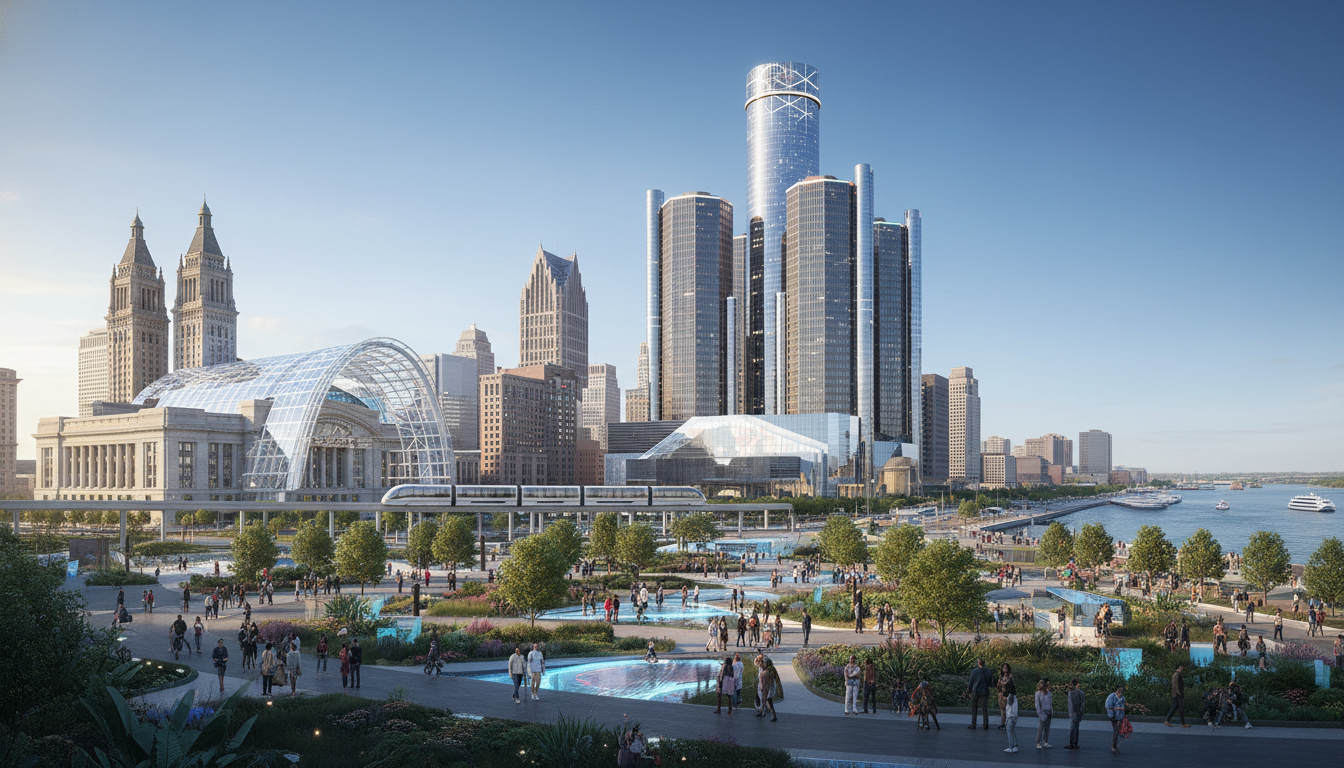
The story of business growth Detroit in 2026 is no longer confined to the central business district. While the skyline continues to evolve with projects like the Hudson’s Site and the Monroe Blocks, the most impactful growth is occurring in the city’s commercial corridors. The Detroit Economic Growth Corporation (DEGC) has reported a record number of small business openings in neighborhoods like Livernois, Jefferson-Chalmers, and the North End.
Programs such as Motor City Match have been instrumental in this trend, providing the capital and technical assistance necessary for local residents to move from side-hustles to storefronts. This hyper-local business growth has not only reduced vacancy rates but has also increased the local tax base, allowing for better municipal services. Residents are seeing more grocery stores, specialized retail, and service-based businesses within walking distance of their homes, a key metric for urban vitality.
Impact on Detroit Residents
For the average Detroiter, the economic outlook translates into tangible changes in daily life. Wage growth in the city has finally begun to outpace the national average in certain sectors, particularly in the trades and logistics. However, this growth brings its own set of challenges, specifically regarding the real estate trends affecting housing affordability. As more people move into the city for high-paying tech and healthcare roles, the pressure on the existing housing stock has intensified.
To combat this, the City of Detroit has implemented strict requirements for affordable housing set-asides in all major residential developments. The impact of the Detroit economy 2026 is also visible in the improved transportation infrastructure, with the expansion of the DDOT bus fleet and the completion of several major Joe Louis Greenway segments, making it easier for residents to connect to these new employment hubs without relying solely on private vehicles.
Background & Data: The Mobility Capital
The foundation of the Detroit economy 2026 rests on the success of the Michigan Central innovation district. Since its full reopening, the campus has served as a magnet for global tech companies looking to collaborate with the Big Three automakers. According to a report by the Michigan Economic Development Corporation (MEDC), the district has attracted over 100 startups specializing in everything from autonomous drone delivery to advanced battery chemistry.
U.S. Census Bureau data shows a stabilization in Detroit’s population, with a notable increase in the 25-to-34-year-old demographic. This influx of young professionals is fueling the demand for new business opportunities and services. However, the data also highlights a persistent skills gap. While jobs are available, a portion of the long-term resident population requires further vocational training to qualify for the higher-tier positions within the newer Detroit industries.
What Happens Next
Looking toward the end of 2026 and into 2027, the focus for the city will be on infrastructure resiliency and workforce equity. The massive federal investments from the Bipartisan Infrastructure Law and the Inflation Reduction Act have begun to bear fruit, with revamped bridges, modernized electrical grids, and new EV charging networks appearing across the city. The official city economic reports suggest that if Detroit can maintain its current pace of diversification, it will be well-positioned to weather any potential national downturns.
The economic outlook Detroit remains tethered to its ability to innovate. As the global economy transitions to a carbon-neutral future, Detroit’s legacy as the “Arsenal of Democracy” is being rewritten as the “Laboratory of Mobility.” For investors, entrepreneurs, and residents alike, 2026 represents a year where the vision for a modern, inclusive Detroit is no longer a plan—it is a reality in motion.