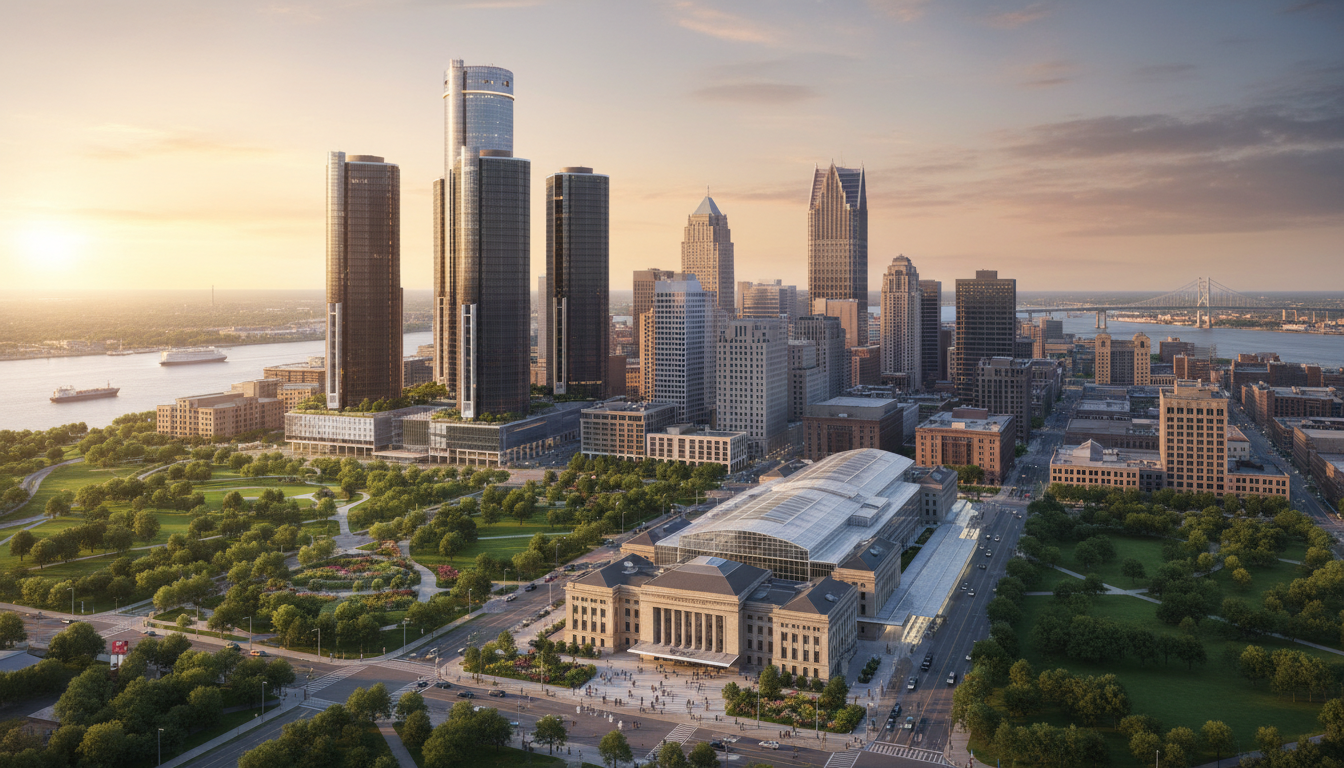
As 2026 approaches, the city of Detroit is standing at a critical economic crossroads, transitioning from a post-bankruptcy recovery phase into a period of sustainable, long-term growth. The narrative of the city is no longer defined solely by its industrial past but by a multifaceted expansion into technology, health care, and specialized manufacturing. Recent data and forecasts from leading academic and governmental bodies suggest that the Detroit economy 2026 will be characterized by a more diversified labor market and a renewed focus on neighborhood-level commercial development.
The Core Drivers of Growth
According to the latest “Detroit Economic Outlook” report released by the University of Michigan’s Economic Forecasting Team, the city’s economic trajectory remains positive, despite broader national inflationary pressures. Researchers suggest that Detroit’s employment levels will continue to see steady gains through the middle of the decade. The report highlights that while the pace of growth might moderate compared to the immediate post-pandemic surge, the quality of jobs being created is shifting toward higher-wage sectors.
A primary engine for this growth is the massive investment in the Michigan Central innovation district. As the campus nears full operational capacity in 2026, it is expected to serve as a global hub for the mobility industry. This project, spearheaded by Ford Motor Company, is not just about automotive manufacturing; it is about software engineering, autonomous vehicle testing, and energy solutions. This shift is a cornerstone of business growth Detroit, attracting startups and venture capital that previously overlooked the region.
Jobs in Detroit: A Changing Landscape
The landscape for jobs in Detroit is undergoing a significant transformation. Traditionally reliant on blue-collar manufacturing, the city is seeing a rise in “new-collar” roles—positions that require specialized training but not necessarily a four-year degree. Programs like Detroit at Work have been instrumental in aligning the skills of local residents with the needs of emerging industries.
Healthcare and social assistance remain the largest employment sectors in the city. The massive expansion of the Henry Ford Health campus in New Center, a multibillion-dollar investment in partnership with the Detroit Pistons and Michigan State University, is expected to create thousands of permanent jobs by 2026. This development serves as a secondary anchor for the city’s economy, providing stability that balances the cyclical nature of the automotive sector. Furthermore, the completion of the Hudson’s Site development by Bedrock will introduce significant retail and hospitality roles to the downtown core, further diversifying the employment pool.
Impact on Detroit Residents
For long-time residents, the economic shift brings both opportunities and challenges. The growth in the Detroit economy 2026 is intended to be more inclusive than previous cycles. Local business owners in neighborhoods like Livenois-McNichols and Jefferson-Chalmers are seeing increased foot traffic as the city’s population density begins to stabilize in key corridors. However, the rising cost of living and the potential for displacement remain central concerns in local policy discussions.
To mitigate these issues, the City of Detroit has implemented various tax incentive programs tied to local hiring requirements. Residents are encouraged to take advantage of the Detroit housing market stability programs to ensure they can remain in their communities as property values rise. Economic analysts note that for the growth to be truly successful, the “skills gap” must be bridged, ensuring that the new high-tech jobs in Detroit are accessible to the people who have lived in the city for decades.
Business Growth Detroit: The Small Business Renaissance
While large-scale developments like the Gordie Howe International Bridge capture headlines, the backbone of the city’s 2026 outlook is its small business ecosystem. Organizations like Detroit Means Business have provided a roadmap for entrepreneurs to navigate the complexities of urban commerce. Business growth Detroit is increasingly driven by minority-owned firms in the service and tech sectors. By 2026, the city expects a 15% increase in the number of active business licenses compared to 2021 figures, reflecting a vibrant entrepreneurial spirit.
Investment is also flowing into Detroit neighborhoods, where “Strategic Neighborhood Funds” are being used to renovate storefronts and improve walkability. These micro-investments are crucial for creating a city that functions well beyond the 7.2 square miles of the downtown and Midtown areas. The focus on neighborhood commercial corridors ensures that the benefits of the 2026 economy are distributed more equitably across the city’s 139 square miles.
Infrastructure and Future Outlook
The economic outlook Detroit for 2026 is also heavily tied to infrastructure. The completion of major transit improvements and the continued expansion of the Joe Louis Greenway are expected to enhance labor mobility, making it easier for residents to reach job centers. Furthermore, Detroit’s role as a primary gateway for international trade is set to expand with the full commissioning of the new bridge, which will streamline logistics for the Detroit industries that rely on just-in-time delivery with Canada.
In conclusion, the Detroit economy 2026 appears resilient. While global economic headwinds are always a factor, the city’s strategic pivot toward mobility tech, healthcare expansion, and neighborhood reinvestment provides a sturdy foundation. As the city continues to shed its former reputation and embrace a role as a hub of innovation, the focus remains on ensuring that the resulting prosperity reaches every corner of the community. Local leaders and economists agree that the next two years will be defining for Detroit’s place in the 21st-century global economy.