City officials and state lawmakers are intensifying their push for a fundamental shift in how Detroit assesses property taxes, a move advocates say will provide much-needed relief to homeowners while penalizing land speculators. The proposed Land Value Tax plan, championed by Mayor Mike Duggan and supported by a growing coalition of community leaders, seeks to overhaul a system that many residents argue has long incentivized urban decay.
The Core of Detroit Property Tax Reform
Under the current system, Detroit’s property tax rates are among the highest in the nation for a major city. This high rate is largely driven by the assessment of improvements—such as houses or commercial buildings—rather than the land itself. According to the City of Detroit’s official proposal, this structure creates a “blight bonus,” where owners of vacant lots or crumbling buildings pay negligible taxes, while homeowners who invest in their properties are hit with steep bills.
The proposed Detroit property tax reform aims to flip this script. By significantly increasing the tax rate on land and decreasing the tax rate on improvements, the city intends to make it more expensive to hold onto vacant, unproductive land. Data provided by the Mayor’s Office suggests that the average Detroit homeowner could see an 18% to 25% reduction in their property tax bill under this new model.
Impact on Detroit Residents
For the typical resident in neighborhoods like Bagely, Morningside, or Jefferson-Chalmers, the impact of Detroit property tax reform would be immediate and tangible. The city estimates that more than 95% of homeowners would see a tax decrease. This shift is designed to stabilize the Detroit housing market by making homeownership more affordable and preventing tax foreclosures that have historically decimated local blocks.
Local community organizers have noted that the current tax burden often prevents seniors on fixed incomes from maintaining their family homes. “We see residents who want to repair their roofs or upgrade their windows but are terrified of the subsequent assessment increase,” a representative from a Detroit neighborhood association noted during a recent public forum. By decoupling the tax burden from building improvements, the city hopes to encourage widespread neighborhood revitalization efforts without the fear of immediate tax hikes.
The Economic Argument for Land Value Taxation
The concept of a land value tax is not new, but its application in a city the size of Detroit would be a landmark shift in American municipal policy. According to a study by the Lincoln Institute of Land Policy, taxing land more heavily than buildings encourages development. When the cost of holding vacant land rises, owners are faced with a choice: develop the land to generate revenue, or sell it to someone who will.
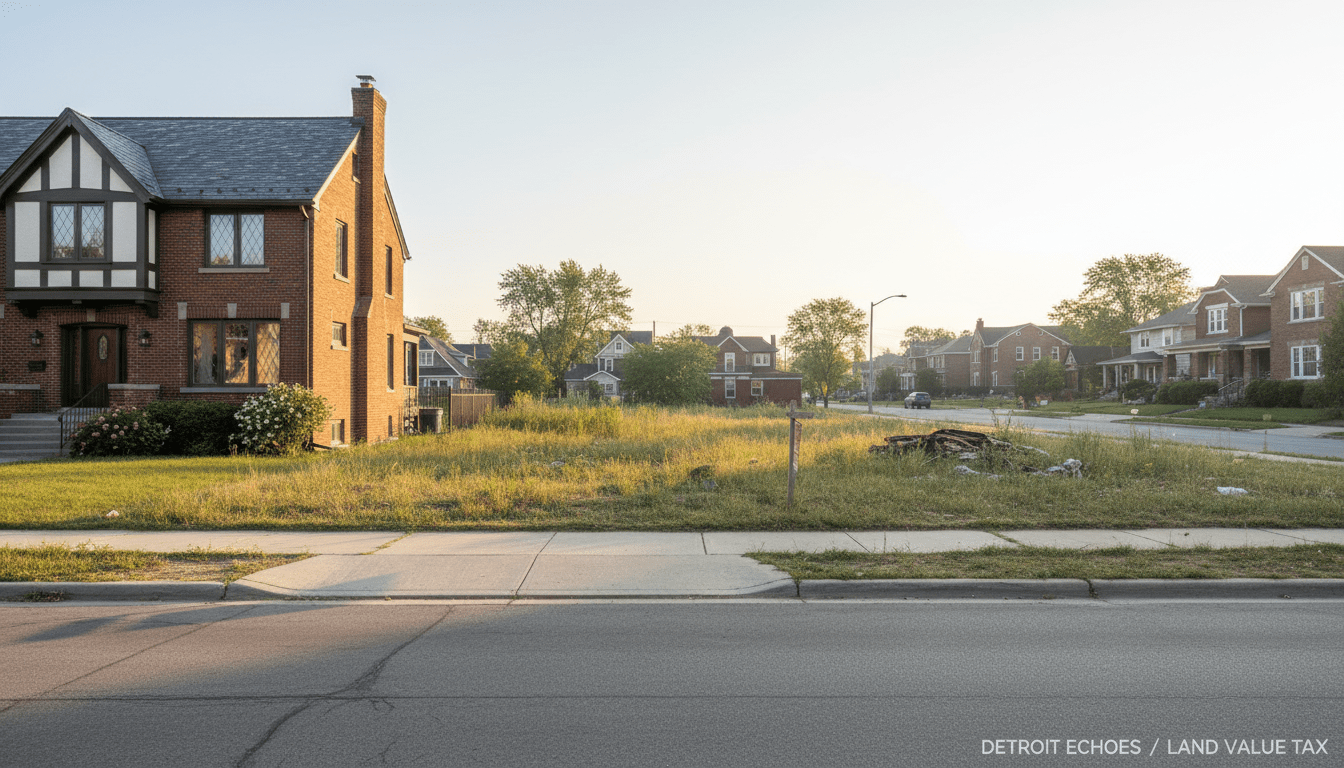
Critics of the current system point to the thousands of vacant parcels owned by out-of-state speculators. These owners often wait for property values to rise due to surrounding public investment while contributing nothing to the local tax base. The Detroit property tax reform plan would effectively triple the tax rate on these vacant lots, scrap yards, and parking lots, generating the revenue needed to offset the tax cuts provided to residential homeowners.
Legislative Hurdles and the Path Forward
Despite local support, the plan cannot be implemented by the Detroit City Council alone. Because Michigan state law dictates how municipalities can levy taxes, the Detroit property tax reform requires enabling legislation from the Michigan State Legislature. House Bill 4990 and its companion bills have been the subject of intense debate in Lansing.
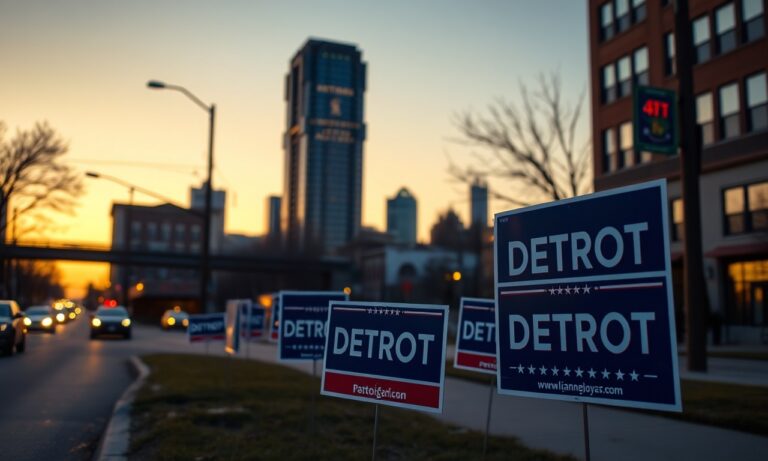
While the Michigan House of Representatives has shown movement on the issue, some lawmakers from outside the city have expressed concerns about the complexity of the transition. However, Detroit’s legislative delegation has remained largely unified, arguing that the city requires unique tools to address its unique history of depopulation and land vacancy. If the state legislature passes the enabling bills, the final decision will return to Detroiters, who would need to approve the change through a city-wide ballot initiative.
Background and Statistical Context
Data from the U.S. Census Bureau and the Detroit Bureau of Research indicates that Detroit’s effective tax rate has been a significant barrier to both residential stability and commercial growth. Currently, Detroit’s total millage rate for homeowners is significantly higher than that of neighboring suburbs like Grosse Pointe or Royal Oak, despite Detroit having lower median property values.
Economic projections released by the city’s finance department suggest that the Detroit property tax reform would be revenue-neutral for the city’s overall budget. The goal is not to increase the total amount of money collected by the city, but to shift the source of that revenue from those who live in and care for the city to those who are holding its land hostage to speculation.
What Happens Next
The timeline for the Detroit property tax reform depends heavily on the legislative calendar in Lansing. Advocates are hopeful for a vote before the end of the current session. If successful, Detroit residents could see the proposal on their ballots as early as the next general election. In the meantime, the City of Detroit plans to continue its series of community meetings to explain the nuances of the shift to residents.
For a city that has spent the last decade emerging from bankruptcy and rebuilding its core services, this tax reform represents a potential turning point. By aligning the tax code with its goals of growth and stability, Detroit is attempting to create a more equitable environment for its residents and a less hospitable one for the blight that has plagued its neighborhoods for decades.