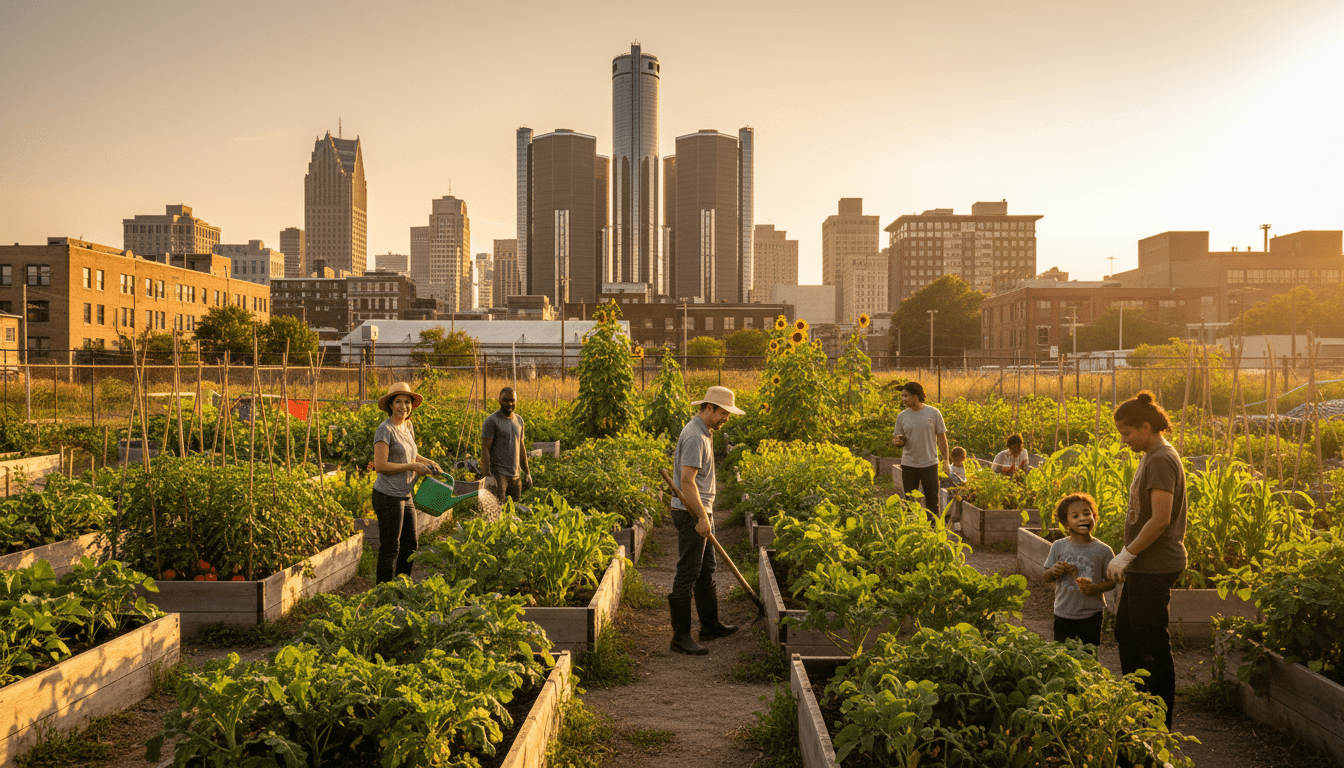
For decades, the narrative surrounding Detroit’s landscape was dominated by statistics of vacancy and blight. However, a quiet but powerful transformation has taken root across the city’s 139 square miles. A robust Detroit urban farming movement is redefining how the city utilizes its land, turning empty lots into productive agricultural hubs and community green spaces. This shift is not merely cosmetic; it represents a fundamental change in the city’s approach to food security, land management, and neighborhood cohesion.
The Shift from Blight to Agricultural Beauty
The scale of land availability in Detroit is unique among major American cities. According to data from the Detroit Land Bank Authority (DLBA), the city has managed tens of thousands of publicly owned vacant parcels. In recent years, policy has shifted from simple blight removal—demolishing structures and leaving grass—to intentional repurposing. Local organizations and residents are increasingly utilizing these spaces for agriculture.
Reports from Keep Growing Detroit, a premier organization dedicated to food sovereignty in the city, indicate that there are now over 2,000 gardens and farms operating within city limits. These range from small side-lot vegetable patches to large-scale commercial operations like the Michigan Urban Farming Initiative (MUFI) in the North End. This density of agriculture places Detroit at the forefront of the national urban farming movement.
The push for green spaces is also a matter of city planning. The Detroit Planning and Development Department has integrated open space guidelines into neighborhood framework plans, recognizing that traditional development may not return to every block immediately. By legalizing and regulating urban agriculture, the city has provided a pathway for residents to take ownership of their surroundings.
Impact on Detroit Residents and Food Security
For many Detroiters, this is not just a hobby; it is a matter of access. Large portions of the city have historically been classified as food deserts—areas with limited access to affordable and nutritious food. Detroit urban farming initiatives are directly addressing this gap by bringing fresh produce into neighborhoods where grocery stores are scarce.
Local resident and community gardener Marcus Thorne explained the shift in his neighborhood near the Gratiot corridor. "It used to be that you saw an empty lot and worried about dumping or high grass," Thorne said. "Now, we have three lots on our block growing collard greens, tomatoes, and peppers. Neighbors come out to weed and harvest. It changes the conversation from what we lack to what we can grow."
Furthermore, these green spaces act as critical "third places" for social interaction. In areas where community centers may have closed, the community garden has become the new town square. The produce grown is often sold at the Eastern Market or distributed directly to neighbors, circulating capital within the local economy.
This grassroots economic impact is significant. Read more about how local markets are boosting neighborhood revenue here. By reducing the grocery bills of participating families and generating supplemental income through market sales, urban farms are contributing to household financial stability.
Background & Data: The Economics of Greening
The economic logic behind the greening of Detroit is supported by hard data. A study by the University of Pennsylvania’s Wharton School found that greening vacant lots can increase surrounding property values by reducing the perception of crime and neglect. In Detroit, where property value stabilization is a key goal for the administration, this is a low-cost, high-reward strategy.
According to the City of Detroit’s Open Data Portal, thousands of side lots have been sold to adjacent homeowners for as little as $100. Many of these have been converted into expanded gardens and landscaped yards, effectively removing them from the city’s maintenance rolls and returning them to the tax base, albeit at a modest rate.
Environmental data is equally compelling. The Detroit Water and Sewerage Department (DWSD) has acknowledged the role of green infrastructure in managing stormwater. Detroit’s combined sewer system can be overwhelmed during heavy rains, leading to street flooding. Urban farms, with their deep-rooted plants and amended soils, absorb significantly more rainwater than compacted turf or concrete. This biological function reduces the strain on the city’s aging infrastructure.
The Role of Policy and Zoning
In 2013, Detroit passed an Urban Agriculture Ordinance, a landmark policy that distinguished between "market gardens" and "urban farms," setting clear zoning rules for each. This legal framework allowed operations to scale without fear of being shut down for code violations. It formalized what residents had been doing informally for years.
Currently, discussions regarding the proposed Land Value Tax are also relevant. If implemented, tax structures could further incentivize the productive use of land, making it more affordable to hold land that is being used for community benefit rather than speculation. See our deep dive on the Land Value Tax proposal here.
What Happens Next for Detroit Agriculture
As Detroit continues its revitalization, the tension between traditional development and green space preservation will likely increase. As property values rise in neighborhoods like Corktown and Midtown, the pressure to develop vacant lots into housing or retail intensifies. However, the city’s "Detroit Future City" framework suggests a hybrid approach, where high-density development coexists with intentional green zones and blue infrastructure.
The future of Detroit urban farming also relies on soil safety. Legacy pollution from the city’s industrial past requires that farmers test soil diligently. Organizations like the City of Detroit Planning & Development Department continue to work on guidelines to ensure safe growing practices, often advocating for raised beds and imported clean soil.
Ultimately, the push for green spaces is transforming Detroit into a model for post-industrial cities worldwide. By turning liabilities into assets, Detroiters are proving that a city can grow more than just cars—it can grow a sustainable future.