Detroit’s economic landscape is undergoing a profound transformation, moving beyond its traditional manufacturing roots toward a diversified ecosystem of technology, clean energy, and healthcare. As the city prepares for a series of major development completions, the outlook for jobs in Detroit 2026 looks increasingly robust. According to recent data from the Michigan Department of Labor and Economic Opportunity (LEO), the city is witnessing a steady climb in workforce participation, bolstered by billion-dollar investments in the downtown core and surrounding neighborhoods.
Economists and city officials suggest that the current momentum is not merely a post-pandemic recovery but a fundamental shift in how the city attracts talent. With several high-profile projects slated for completion over the next 18 to 24 months, the demand for skilled labor is reaching levels not seen in decades. This surge is reflected in the high volume of Detroit hiring now across sectors ranging from hospitality to high-tech research and development.
The Core Drivers of Growth: Michigan Central and Beyond
The centerpiece of Detroit’s employment evolution is the Michigan Central innovation district in Corktown. This 30-acre campus, anchored by the restored train station, is becoming a hub for the mobility industry. According to project leaders, the district is expected to eventually house thousands of workers, focusing on autonomous vehicle technology and smart city infrastructure. This development is a primary driver for specialized Michigan job openings, attracting engineers and software developers from across the country.
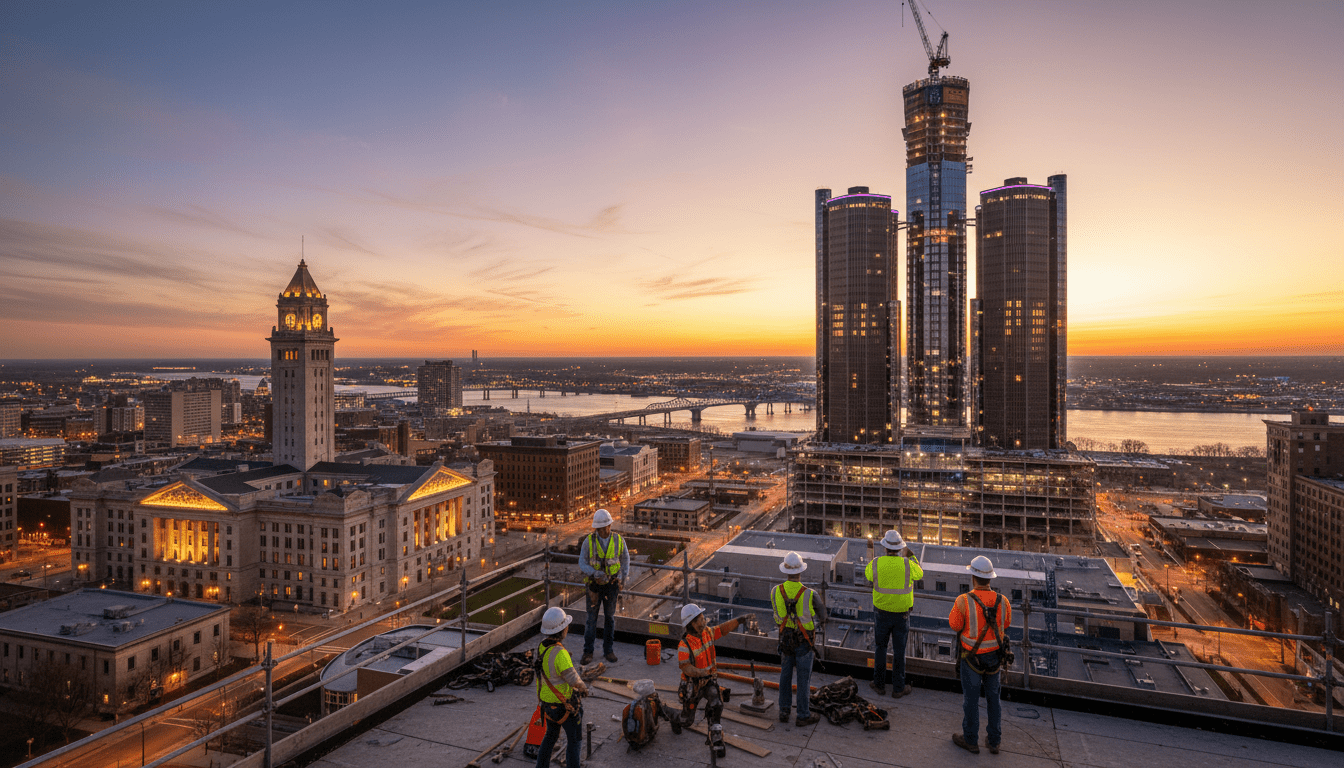
Parallel to the tech surge, the Hudson’s Site development by Bedrock is nearing its final stages. This project alone is expected to create thousands of temporary construction jobs and hundreds of permanent positions in retail, luxury hospitality, and office management. Local analysts note that these large-scale projects create a multiplier effect, stimulating growth in small businesses and service providers located within the city limits. This is part of a broader trend of neighborhood-level investment that aims to revitalize commercial corridors outside of the immediate downtown area.
Impact on Detroit Residents
For long-time residents, the expansion of the job market brings both opportunity and the need for new skill sets. The city’s “Detroit at Work” initiative has been instrumental in bridging the gap between available roles and local talent. By providing free training in high-demand fields such as healthcare, IT, and construction, the program ensures that Detroiters are first in line for new opportunities. Data from the Mayor’s Office indicates that the unemployment rate in Detroit has reached its lowest point in over 20 years, a testament to the efficacy of these local hiring mandates.
However, the influx of new jobs in Detroit 2026 also poses challenges regarding transit and housing. As more people move into the city for work, the pressure on the local transportation infrastructure increases. The City of Detroit has responded by expanding bus routes and exploring regional transit partnerships to ensure that residents in all 139 square miles of the city can access the new employment hubs effectively. Community advocates emphasize that the true measure of success for this economic boom will be the degree to which it reduces the poverty rate and increases the median household income for the city’s legacy population.
Background and Economic Data
To understand the current trajectory, one must look at the data provided by the U.S. Bureau of Labor Statistics. The Detroit-Warren-Dearborn Metropolitan Statistical Area has seen a consistent year-over-year increase in non-farm payroll employment. Specifically, the education and health services sectors have shown remarkable resilience, adding thousands of positions as the city’s hospital systems, including Henry Ford Health and Corewell Health, embark on massive campus expansions.
Furthermore, the automotive sector’s transition to electric vehicles (EVs) is recalibrating the manufacturing workforce. While traditional assembly roles remain vital, there is an increasing number of Michigan job openings for battery technicians and chemical engineers. The Michigan Economic Development Corporation (MEDC) has reported that state-level incentives are being used to ensure that EV supply chain manufacturers choose Detroit-adjacent sites, further securing the region’s status as a global leader in automotive innovation.
A Diversified Economy: Small Business and Culture
Beyond the industrial and tech giants, Detroit’s “entrepreneurial spirit” is fueling a resurgence in the small business sector. The Detroit Economic Growth Corporation (DEGC) has highlighted that minority-owned businesses are opening at record rates, supported by grants and local incubators. These businesses are essential to the city’s identity and provide a significant portion of the Detroit hiring now in the service and retail industries. From the restaurants in Midtown to the boutiques in the Avenue of Fashion, small businesses are a critical component of the city’s economic floor.
The cultural sector is also contributing to job growth. As Detroit continues to gain recognition as a global destination for design and music, the creative economy is expanding. This growth is supported by an increase in tourism and events, which in turn fuels demand for event planning, security, and digital marketing roles. This diversification is seen as a safeguard against the cyclical nature of the automotive industry, which historically dictated the city’s economic health.
What Happens Next: Looking Toward 2026 and Beyond
As we look toward 2026, the focus will shift from construction and groundbreaking to operational sustainability. The completion of major residential projects will coincide with the opening of new corporate headquarters, creating a permanent shift in the city’s daily population density. Officials from the Michigan Department of Treasury have noted that the city’s tax revenue is stabilizing, allowing for more consistent investment in public services and infrastructure.
The upcoming years will also see Detroit hosting major national events, which will serve as a catalyst for short-term employment and long-term branding as a business-friendly city. The consensus among local leaders is that the groundwork laid today will define the city’s prosperity for the next generation. For those searching for jobs in Detroit 2026, the message is clear: the city is not just hiring; it is reinventing itself. The combination of industrial heritage and a new focus on technological innovation is creating a unique market for Michigan job openings that promises long-term growth and stability.