Recent polling data indicates a significant tightening in the political landscape across Michigan, a critical battleground state that has historically swung national elections. According to a new Trump Michigan poll conducted by the Detroit News and WDIV-TV, the former president maintains a narrow lead within the state, fueled by robust approval ratings among the Republican base and a growing focus on economic concerns within urban centers like Detroit.
Analyzing the Trump Michigan Poll and GOP Approval
The latest data reflects a consolidation of support among Michigan Republicans, with the former president maintaining a substantial lead over potential primary and general election challengers. The survey, which sampled likely voters across both peninsulas, suggests that the GOP’s messaging on manufacturing and inflation is resonating with a demographic that feels sidelined by recent federal economic policies. According to the Detroit News, the polling shows that nearly 80 percent of self-identified Republicans in Michigan view the former president’s platform as the primary driver for the state’s economic recovery.
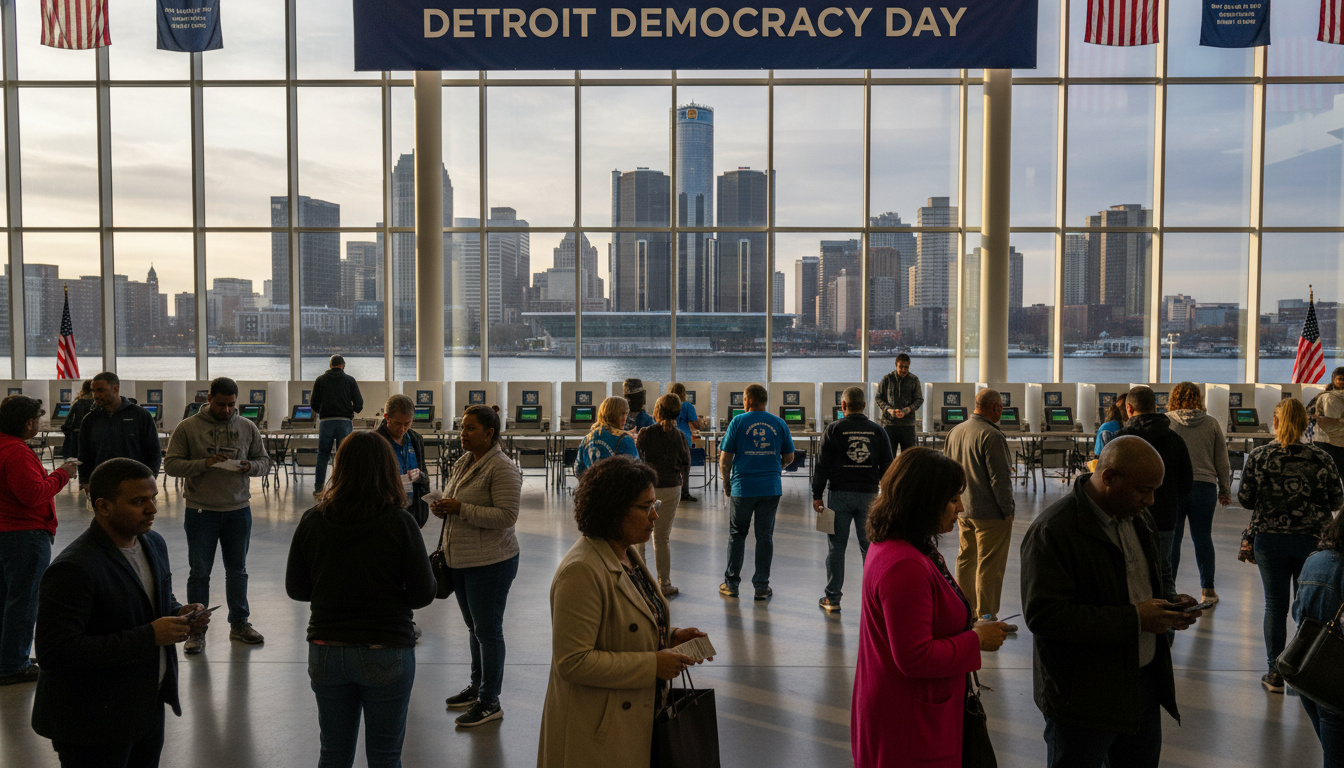
While statewide figures remain competitive, the internal metrics of the poll reveal a specific trend: a gradual shift in Republican outreach efforts. For years, the GOP struggled to gain a foothold in Wayne County, yet recent events, including community meetings in the heart of Detroit, suggest a strategy aimed at chipping away at the traditionally solid Democratic margins. This strategy is reflected in the Trump Michigan poll results, which show a marginal but notable increase in GOP approval among independent voters in the metro Detroit area.
Impact on Detroit Residents
For residents of Detroit, these shifting political tides carry practical implications for local development and federal funding. Political analysts suggest that as Michigan becomes more competitive, both parties are likely to increase their presence in the city, potentially leading to more direct engagement with Detroit’s neighborhood associations and small business owners. When candidates focus on Detroit neighborhoods, it often brings national attention to local infrastructure needs and housing affordability issues.
Local business leaders have noted that the emphasis on “America First” manufacturing policies, a cornerstone of the current GOP platform, has sparked renewed debate in Detroit’s automotive sector. According to the U.S. Census Bureau, the manufacturing industry remains a primary employer for Detroit residents, meaning any shift in federal trade or environmental policy directly impacts the livelihoods of thousands of families in the 313 area code. The high visibility of the Trump Michigan poll results ensures that these economic concerns remain at the forefront of the legislative agenda in Lansing and Washington D.C.
Background and Historical Data
To understand the current figures, one must look at the 2020 election results where Michigan was decided by approximately 154,000 votes. Data from the Michigan Secretary of State office highlights that voter turnout in Detroit was a decisive factor in that outcome. The current polling suggests a different atmosphere for 2024, with enthusiasm gaps closing between the two major parties. Unlike previous cycles, the Republican party in Michigan has focused heavily on grassroots organizing within urban corridors, a move that some experts believe could alter the traditional math of the state’s electoral college contribution.
Furthermore, the Emerson College Polling group recently released a study showing that the “undecided” block in Michigan is shrinking faster than in previous years. This suggests that voters are hardening their positions earlier in the cycle. For the Republican party, the challenge remains maintaining high GOP approval while expanding their appeal to the suburban “donut” surrounding Detroit—areas like Oakland and Macomb counties, where elections are often won or lost on razor-thin margins. Historically, these areas have served as the ultimate barometer for the state’s political leanings.
What Happens Next for Michigan Politics
As the election cycle progresses, Michigan is expected to see a record-breaking influx of campaign spending. Both the Republican National Committee and the Democratic National Committee have designated Michigan as a “must-win” state. For Detroit, this means an increase in political advertisements, town hall meetings, and localized campaigning. The Trump Michigan poll serves as a preliminary roadmap for where these resources will be deployed, with a heavy emphasis likely placed on the tri-county area.
Observers should also keep a close eye on the Michigan Republican Party’s internal leadership dynamics, which have seen significant changes over the last year. These shifts will determine how effectively the party can mobilize the high GOP approval ratings seen in recent polls into actual votes on Election Day. For more information on local civic engagement, residents can visit Detroit development updates to see how political shifts influence city planning and growth projects. With the state’s primary and general elections approaching, the data from this Trump Michigan poll will continue to be a baseline for measuring the political pulse of the Great Lakes State.