As temperatures plummet across Southeast Michigan and the first significant snowfalls of the season loom on the forecast, state and local authorities are intensifying their call for driver preparedness. The annual shift from autumn rains to freezing precipitation brings a familiar but dangerous challenge to Metro Detroit’s highways, prompting the release of updated Michigan winter driving tips designed to mitigate the seasonal spike in traffic accidents.
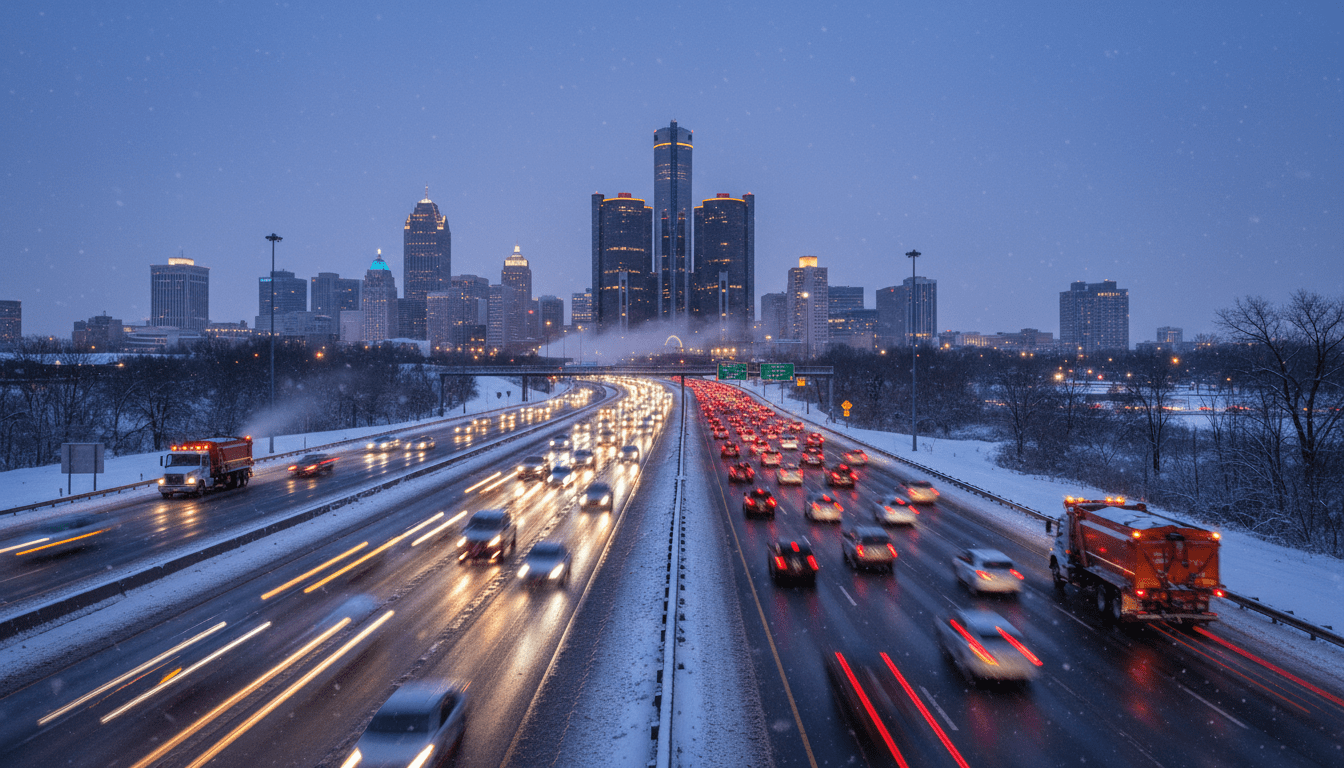
Data from the Michigan State Police (MSP) indicates that winter weather-related crashes remain a leading cause of injury and property damage in the state. With Detroit’s complex network of freeways—including the bustling I-75, I-94, and the Lodge—often serving as flashpoints for pileups during sudden freezes, officials are emphasizing that safety begins before the engine even starts.
Michigan Winter Driving Tips and Vehicle Preparation
The Michigan Department of Transportation (MDOT) and law enforcement agencies stress that vehicle maintenance is the first line of defense against hazardous conditions. Mechanics across Detroit are currently reporting a surge in appointments as residents rush to winterize their vehicles, a proactive measure that safety experts say is critical.
According to AAA Michigan, battery failure is the number one cause of roadside assistance calls during the winter months. Cold weather significantly reduces a battery’s cranking power while simultaneously increasing the electrical demand required to start the engine. Experts recommend that drivers have their batteries load-tested if they are more than three years old.
Furthermore, the condition of tires cannot be overstated. While all-season tires are standard for many, winter tires provide superior traction when temperatures drop below 45 degrees Fahrenheit. “The rubber compound in winter tires is designed to stay flexible in the cold, whereas all-season tires can harden and lose grip,” stated a representative from a Corktown-based automotive safety group. For those sticking with all-season rubber, ensuring tread depth is sufficient is a non-negotiable aspect of Michigan winter driving tips.
Visibility is another major concern. The MSP reminds drivers to replace windshield wipers that streak and to keep the washer fluid reservoir filled with de-icing fluid. A common oversight cited by troopers involves drivers failing to clear snow from their entire vehicle. Under Michigan law, driving with snow or ice that obstructs vision or could dislodge and strike another vehicle is illegal. The “Clear the Snow Before You Go” rule is strictly enforced to prevent blinding trailing drivers with flying sheets of ice.
Navigating Detroit’s Unique Infrastructure
Driving in Detroit presents unique challenges compared to rural parts of the state. The city’s density, combined with ongoing Detroit development projects, means that drivers must navigate narrow construction lanes often bordered by concrete barriers. These areas leave little room for error when roads are slick.
MDOT focuses heavily on treating major arteries like I-696 and I-75, but surface streets can remain treacherous longer. Bridges and overpasses, such as the Ambassador Bridge ramps or the interchanges near the GM Renaissance Center, freeze faster than regular pavement due to airflow beneath the road deck. This phenomenon creates invisible patches of “black ice,” which are responsible for numerous spin-outs every year.
“Drivers often gain a false sense of security on surface streets because speeds are lower,” said a spokesperson for the Detroit Department of Public Works. “However, intersections are where the ice is most polished and dangerous due to the constant stopping and starting of vehicles.”
Local authorities advise increasing following distances significantly. While the standard recommendation is a three-second gap, winter conditions require expanding that to eight to ten seconds. This buffer provides the necessary time to react if the car ahead loses control or if braking requires more distance than anticipated.
Impact on Detroit Residents and Insurance Rates
The stakes for safe driving are particularly high for Detroiters. The city has historically contended with some of the highest auto insurance rates in the nation. An increase in collision claims during the winter months contributes to these sustained high premiums. Avoiding accidents is not just a matter of physical safety, but also of financial stability for local households.
Commute times also suffer drastically during the winter. A typical 20-minute drive from neighborhoods like Palmer Woods or Indian Village into downtown can easily triple during a snow event. Public transportation, including DDOT buses, also faces delays, impacting the workforce that relies on transit to reach jobs in the city center and suburbs.
Community organizations in neighborhoods like Southwest Detroit have begun distributing information on assembling winter emergency kits. These kits are vital for survival if a motorist becomes stranded. Recommended items include a blanket, non-perishable food, a flashlight, jumper cables, a shovel, and a bag of sand or cat litter for traction. Keeping the fuel tank at least half full is also advised to prevent the fuel line from freezing and to provide heat if stranded.
The Science of Stopping and Steering
A crucial component of Michigan winter driving tips involves understanding the physics of a skid. Modern vehicles equipped with Anti-lock Braking Systems (ABS) require a different technique than older cars. If a vehicle begins to slide, drivers should apply steady, firm pressure to the brake pedal and steer in the direction they want the front of the car to go. Pumping the brakes is generally discouraged in ABS-equipped vehicles, as the system automatically pulses the brakes faster than a human can.
However, technology is not a substitute for caution. “All-wheel drive helps you get moving, but it doesn’t help you stop,” is a mantra repeated by driving instructors across the region. The inertia of a heavy SUV on ice is the same regardless of how many wheels are receiving power.
Future Outlook and Weather Predictions
Meteorologists predict a fluctuating winter for the Great Lakes region, with periods of thaw followed by rapid freezes. This freeze-thaw cycle is notoriously damaging to Detroit roads, creating new potholes that add another layer of hazard to winter driving. Residents are encouraged to report dangerous road conditions to the city through the Improve Detroit app.
As the season progresses, staying informed is key. Drivers are encouraged to check local traffic updates and weather reports before heading out. While the infrastructure to clear roads exists, the sheer volume of precipitation can overwhelm plows during peak storms.
Ultimately, patience remains the most valuable tool for Detroit drivers. Leaving early, slowing down, and respecting the power of winter weather are the surest ways to arrive safely. As the MSP advisory concludes: “Ice and snow, take it slow.”