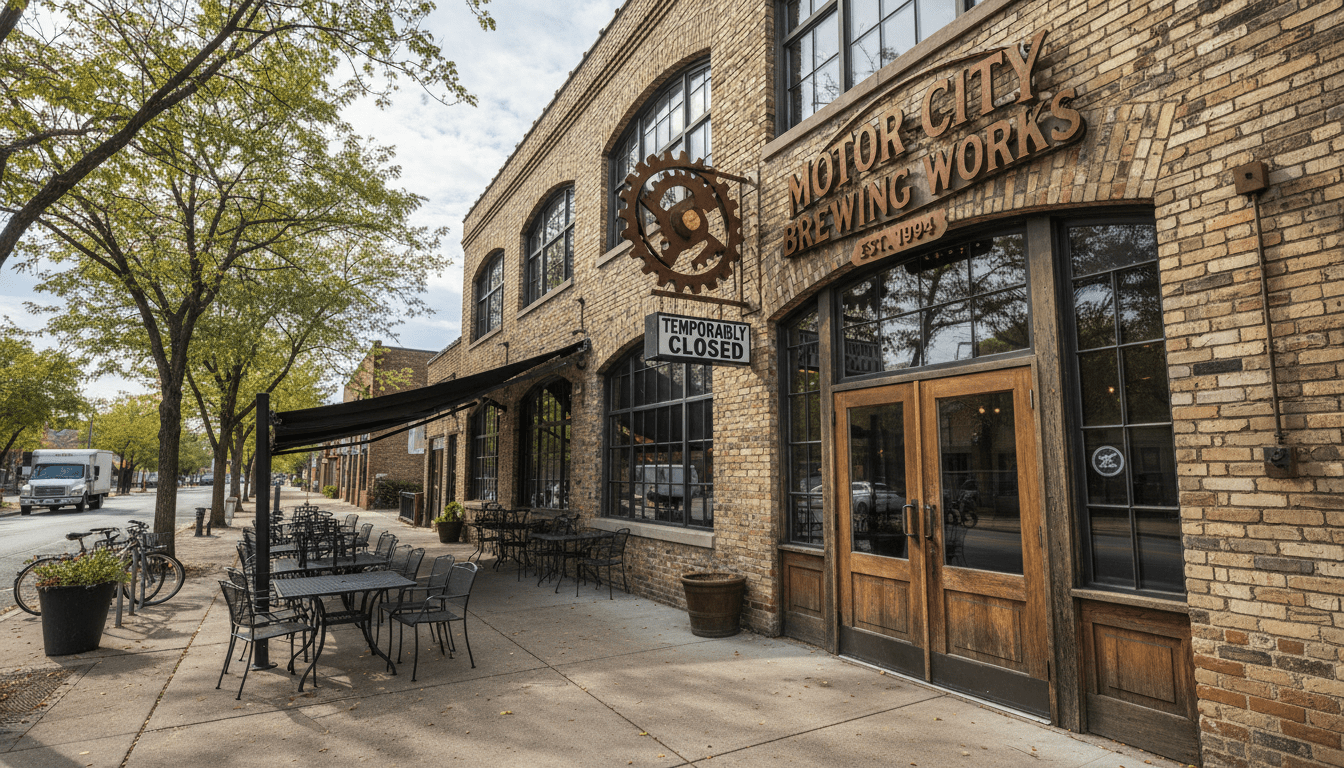
After three decades of defining the craft beer landscape in Detroit, Motor City Brewing Works has announced a temporary pause in operations at both its original Midtown location and its newer outpost on the Avenue of Fashion. The move comes as the brewery celebrates its 30th anniversary, marking a significant transition point for one of the city’s oldest microbreweries.
The announcement, which affects the taproom on West Canfield Street and the Livernois location, has sparked conversations across the city regarding the sustainability of legacy businesses in a post-pandemic economy. While the closure is described as temporary, the pause is intended to allow the business to restructure, renovate, and recalibrate for the future.
A Strategic Pause for a Detroit Staple
Founded in 1994 by John Linardos, Motor City Brewing Works was a pioneer in the Detroit craft beer scene long before microbreweries became a ubiquitous part of the city’s hospitality landscape. Known for its iconic Ghettoblaster ale and its commitment to local art, the brewery has been a cornerstone of the Cass Corridor’s transformation into the modern Midtown district.
According to a statement released by the brewery, the decision to halt operations is a proactive measure to ensure the business can survive another 30 years. The ownership cited the need to “take a breather” to address necessary facility updates and internal restructuring.
“It is no secret that the hospitality industry has faced unprecedented challenges over the last few years,” the management team noted in a release. “To ensure we can continue serving Detroit with the quality and creativity you expect, we are pressing pause to retool our operations.”
The pause affects the flagship brewery at 470 W. Canfield St., located across from the recently closed Traffic Jam & Snug—another historic loss that shook the neighborhood in 2022—and the Detroit neighborhoods location on Livernois, which opened in 2021 as part of the revitalization of the Avenue of Fashion.
Impact on Detroit Residents and Culture
For many Detroiters, Motor City Brewing Works is more than just a place to get a beer; it is a cultural institution. The brewery was among the first to prioritize local ingredients and collaborated heavily with Detroit artists for its distinctive label art. The taproom’s patio has long been a communal gathering space for residents, students from Wayne State University, and visitors alike.
“It’s worrying to see the stalwarts having to step back,” said Marcus Davis, a Midtown resident and long-time patron. “Motor City Brewing was here when there weren’t streetlights working on every corner. They built this culture. If they are struggling to make the numbers work, it says a lot about the current economic climate for local businesses.”
The closure leaves a temporary void in the Midtown nightlife and dining ecosystem. With the nearby Traffic Jam & Snug destroyed by fire and subsequently closed, the Canfield block is currently quieter than it has been in years. This “pause” serves as a stark reminder of the fragility of the local restaurant ecosystem.
Economic Headwinds Facing Craft Breweries
The situation at Motor City Brewing Works is reflective of broader trends impacting the craft beer industry in Michigan and across the United States. While the brewery has not released specific financial data, industry analysts point to a “perfect storm” of rising input costs, labor shortages, and changing consumer habits.
According to the Brewers Association, a national trade group, the cost of raw materials like malt and hops has risen significantly due to inflation and supply chain disruptions. Additionally, the cost of aluminum cans and packaging has spiked.
“Mature breweries are facing a different set of challenges than start-ups,” explained industry analysts in a recent report by national brewing trade organizations. “They have aging infrastructure that requires capital investment at a time when margins are thinner than ever. The choice to pause and renovate rather than slowly bleed out is often a strategic necessity.”
In Detroit, these national trends are compounded by local factors, including shifting population dynamics in Midtown and the slow return of office workers to the city center, which has reduced the lunch and happy hour foot traffic that businesses like Motor City Brewing Works rely on.
The Livernois Location and Expansion Struggles
The pause also brings attention to the brewery’s expansion efforts. The Livernois taproom, known as MCBW 2, opened in mid-2021. It was designed to anchor the commercial resurgence of the Avenue of Fashion. However, opening a second location in the middle of a pandemic presented significant hurdles.
Local business owners on the Avenue of Fashion have expressed hope that the Livernois location will reopen soon, as it serves as a key draw for foot traffic in the area. The success of this satellite location is seen as a bellwether for other established Detroit brands looking to expand into the neighborhoods.
What Happens Next?
Currently, there is no fixed date for the reopening of either location. The brewery has stated that they will use this time to perform maintenance on their brewing equipment and refresh the taproom interiors. They have promised to keep the public updated through their social media channels.
For now, fans of the brand can still find Ghettoblaster and other flagship beers in retail stores, as distribution operations appear to be less affected by the taproom closure. This retail presence is crucial, as it keeps the brand visible and generates revenue while the physical locations undergo their transformation.
As Detroit local business news continues to evolve, the community remains hopeful. The “pause” strategy has been used effectively by other hospitality groups to restructure debt and remodel concepts, but the risk remains that temporary closures can sometimes become permanent if the underlying financial issues aren’t resolved.
DetroitCityNews.com will continue to monitor the situation and provide updates on when residents can expect to return to the patio on Canfield.