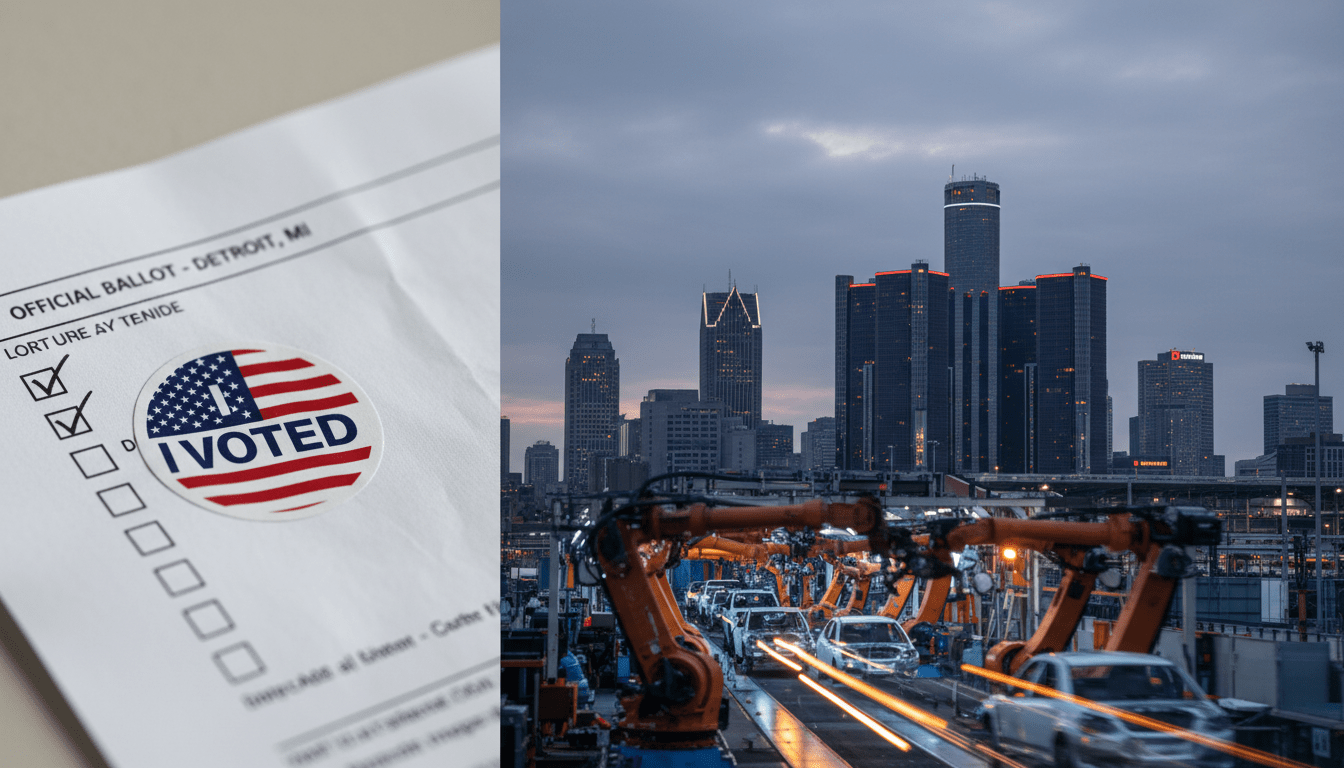
A new statewide survey indicates that while the economy remains the top priority for the electorate, a significant portion of Michigan voters are expressing growing concern regarding former President Donald Trump’s economic agenda. As the political landscape shifts toward the next administration’s policy implementation, Detroit residents and industry insiders are closely scrutinizing how proposed tariffs and tax modifications could impact the local manufacturing base.
The poll, conducted by a coalition of regional researchers including data reflected in recent reports by the Detroit Regional Chamber, suggests that while voters are frustrated with current inflation levels, there is deep apprehension about the volatility associated with Trump’s proposed trade policies. Specifically, the potential for renewed trade wars is weighing heavily on voters in Wayne, Oakland, and Macomb counties.
Poll Breakdown: Economic Anxiety Remains High
According to the data, 62% of Michigan voters list the economy as their primary concern heading into the new legislative cycle. However, when asked specifically about Trump’s economic agenda, the responses revealed a complex divide.
Approximately 45% of respondents expressed belief that Trump’s policies would spur growth, citing his previous term’s tax cuts. Conversely, 48% of voters expressed worry that his proposals—particularly a universal baseline tariff on imports—would raise costs for consumers and destabilize the automotive supply chain. The remaining 7% were undecided or felt the policies would have no significant impact.
“The data shows that Michigan voters are not looking at the economy in a vacuum,” said Dr. Sarah Jenkins, a political analyst monitoring regional economic sentiment. “They are remembering the pre-pandemic economy fondly, but they are simultaneously fearful of the specific mechanisms—like tariffs—that are being floated to return to that state.”
Impact on Detroit’s Auto Industry
The most acute source of friction for Detroit voters revolves around the automotive sector. Detroit, inextricably linked to the health of the global auto market, stands to be disproportionately affected by aggressive protectionist trade measures.
Industry experts have warned that the proposed tariffs on foreign goods could trigger retaliatory measures, increasing the cost of raw materials like steel and aluminum, as well as imported components essential for vehicle assembly. For a city that is finally stabilizing after years of restructuring, these potential disruptions are a major voting consideration.
“We run on thin margins as it is,” said Mark Henderson, an operations manager at a Tier 2 supplier in Warren. “If the cost of imported electronics or chassis components goes up by 10% or 20% due to tariffs, we can’t absorb that. It gets passed to the automakers, and eventually to the buyer. That slows down sales, which slows down shifts at the plant. It’s a domino effect.”
Local union representatives have also voiced mixed feelings. While protectionism often appeals to domestic manufacturing labor, the fear of supply chain chaos—similar to the semiconductor shortage of recent years—dampens enthusiasm for a hardline trade stance.
Inflation and Cost of Living Concerns
Beyond the auto industry, the poll highlighted a general fear that Trump’s economic agenda could inadvertently reignite inflation. While current inflation rates have cooled according to the Bureau of Labor Statistics, prices for groceries and housing in Metro Detroit remain elevated compared to 2019 levels.
The concern among economists cited in reports accompanying the poll is that broad tariffs effectively function as a sales tax on American consumers. If importers raise prices to offset duties, Detroit families could see the cost of household goods climb, erasing wage gains made over the last two years.
Additionally, housing remains a critical issue. High interest rates have stalled mobility in the Detroit real estate market. Voters are skeptical about whether tax cuts for corporations will translate into relief for first-time homebuyers in neighborhoods like Bagley or East English Village.
Local Business Sentiment
Small business owners in Detroit appear equally divided. In Corktown and Midtown, restaurant and retail owners are wary of any policy that restricts immigrant labor or increases the cost of imported goods, such as food products or equipment.
“Uncertainty is the enemy of small business,” explained Elena Rodriguez, owner of a boutique logistics firm in Southwest Detroit. “We need stability. If we enter a period of erratic trade policy, it makes it impossible to sign long-term contracts. The concern isn’t just political; it’s operational.”
Conversely, some manufacturing-adjacent businesses in the suburbs expressed optimism, hoping that deregulation efforts promised in Trump’s economic agenda would lower overhead costs related to energy and environmental compliance.
What Happens Next?
As policy debates continue, Michigan remains a bellwether for the national mood. The skepticism revealed in this poll suggests that voters are looking for detailed economic plans rather than broad rhetoric. They want assurance that protecting American jobs won’t come at the cost of higher prices at the checkout line.
The coming months will be crucial as Detroiters assess whether the promised economic boom outweighs the risks of trade disputes and inflationary pressure. For now, the sentiment is one of caution.