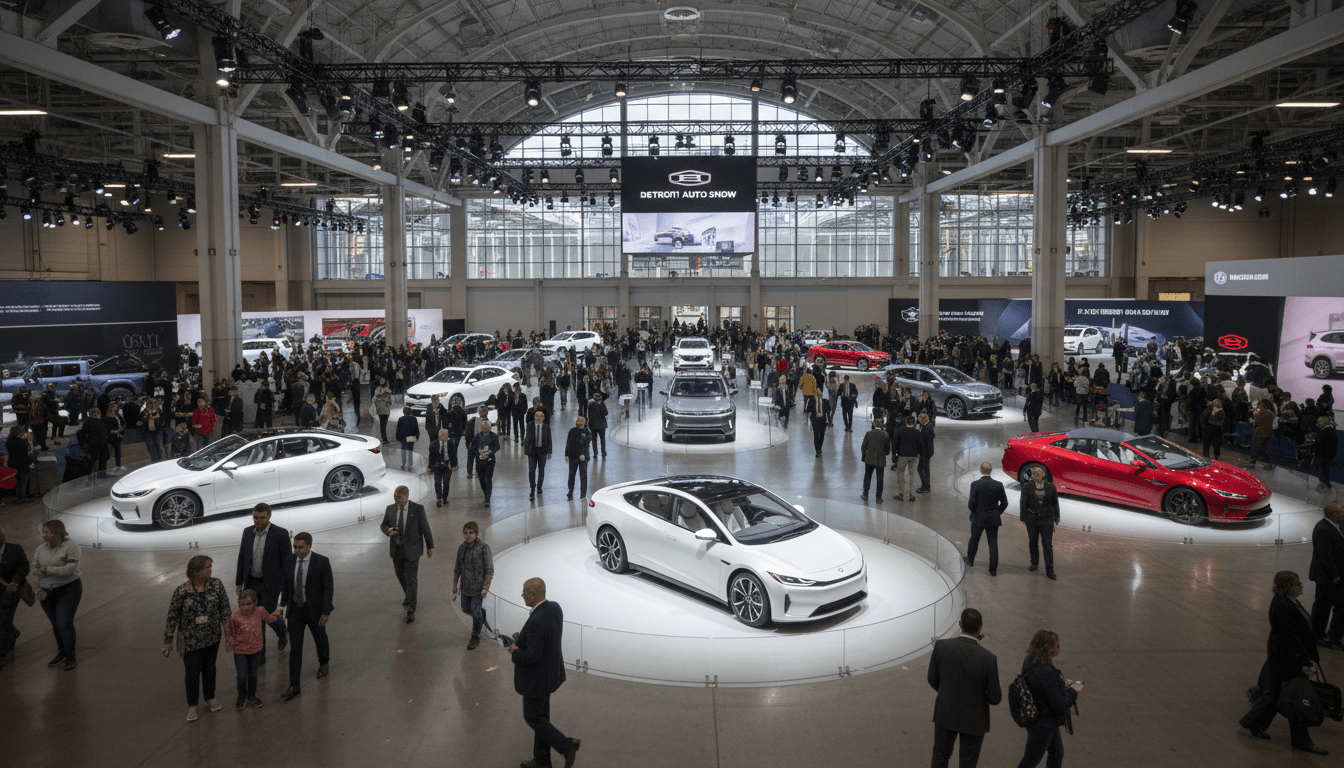
The doors at Huntington Place have swung open once again for the North American International Auto Show (NAIAS), marking a significant moment for the Motor City’s cultural and economic calendar. However, visitors walking the floor this year will notice a palpable shift in the atmosphere. As the automotive industry grapples with the costly transition to electric vehicles (EVs) and fluctuating market demand, automakers have significantly pared back the splashy, theatrical debuts that once defined the Detroit Auto Show.
While the event remains a cornerstone for Detroit, the era of descending vehicles from the ceiling and multi-million dollar press conferences appears to be on pause. Instead, the focus has shifted toward consumer engagement, practical demonstrations, and a leaner, more business-focused approach. This evolution reflects broader trends in the global automotive sector, where marketing budgets are being scrutinized and reallocated toward digital channels and direct-to-consumer experiences.
A Changing Landscape for Automakers
For decades, the Detroit Auto Show was the primary stage for global manufacturers to unveil their flagship models to the world media. In recent years, however, the dynamic has changed. According to industry analysts, the rise of the Consumer Electronics Show (CES) in Las Vegas and the increasing popularity of standalone, manufacturer-specific reveal events have diluted the exclusivity of traditional auto shows.
This year, the presence of the “Big Three”—General Motors, Ford, and Stellantis—is markedly different. While GM and Ford maintain a significant footprint, the displays emphasize current lineups and near-future EV technology rather than conceptual moonshots. Stellantis, citing challenging market conditions and the need to optimize costs during their EV transition, has opted for a more strategic, limited engagement compared to previous years.
“The industry is in a capital-intensive period right now,” said a representative from a major automotive analysis firm based in Troy. “Every dollar spent on a trade show floor is a dollar not spent on battery development or software integration. You are seeing a much more pragmatic approach to these events. It is no longer about who has the loudest pyrotechnics, but who has the inventory that sells.”
Despite the scaled-back theatricality, the show floor is far from empty. The focus has pivoted to “ride-and-drive” activations, allowing attendees to experience vehicles firsthand rather than just viewing them on a turntable. This experiential marketing strategy is designed to convert attendees into buyers directly, moving away from pure brand awareness.
Impact on Detroit Residents and Economy
For the City of Detroit, the auto show remains a critical economic engine, regardless of the size of the press conferences. The influx of visitors provides a vital revenue stream for the downtown hospitality sector, which has been steadily recovering and expanding over the last decade.
Local business owners in the downtown core report that hotel occupancy rates remain high during the show’s run. Restaurants in the financial district and Corktown are seeing increased reservations, driven by industry executives and tourists visiting Huntington Place. However, the economic footprint has evolved alongside the show.
“The crowds are different now,” noted a manager at a popular Woodward Avenue restaurant. “We used to get massive waves of international media for two weeks. Now, it is more concentrated on the public days and regional visitors. It is still a great week for business, but it is not the two-week takeover of the city it was twenty years ago.”
Beyond the immediate spending, the show serves as a barometer for the health of the local business ecosystem. The presence of Tier 1 suppliers and technology startups on the show floor highlights Detroit’s ongoing pivot from pure manufacturing to mobility technology. For residents, the show offers a tangible look at the vehicles that will likely be produced in local assembly plants, directly impacting regional employment security.
Background & Data: The Shift in Numbers
The contraction of traditional auto shows is supported by data seen across the global circuit, from Geneva to Tokyo. According to the Detroit Auto Dealers Association (DADA), the organizers of the NAIAS, the goal has been to reinvent the show to remain relevant in a digital-first world. The move back to a January timeline for 2025, after experimenting with a September schedule, was a strategic decision to realign with the global industry calendar and dealer inventory cycles.
Statistics from previous years indicate that while media attendance has dipped compared to the early 2000s, public attendance remains robust, often exceeding hundreds of thousands of visitors. However, the sheer square footage of manufacturer displays has decreased. Data from industry reports suggests that some automakers have reduced their trade show spending by as much as 30% to 50% post-pandemic, redirecting those funds to digital reveals where they can control the narrative without competing for attention on a crowded floor.
Furthermore, the North American International Auto Show continues to integrate more mobility and technology partners. The “AutoMobili-D” showcase, a dedicated section for tech startups and mobility providers, has grown in importance, signaling that Detroit is competing not just with other auto shows, but with tech summits.
What Happens Next for the Auto Show
As the Detroit Auto Show continues its run at Huntington Place, the industry is watching closely to see if this “pared-back” model is sustainable. The consensus among experts is that the days of unchecked spending on auto show floors are likely over. Future shows will likely function as hybrid events—part consumer sales drive, part industry networking hub, and part technology showcase.
For Detroit, the challenge will be to maintain the event’s prestige even as the industry fragments. The city’s ability to host major events remains strong, bolstered by recent improvements in Detroit transportation and infrastructure. City officials remain optimistic, viewing the show’s evolution not as a decline, but as a necessary adaptation to a changing world.
As the week progresses, the true measure of success will not be the number of viral moments generated, but the foot traffic on the floor and the engagement from the buying public. In a city built on the automobile, the Auto Show remains a resilient, albeit changing, tradition.