Detroit, long known globally as the Motor City and the heart of the automotive industry, is rapidly redefining its industrial identity through a series of ambitious clean energy initiatives. Leading the charge is a controversial yet groundbreaking proposal to convert hundreds of acres of vacant residential land into municipal solar fields, a move that city officials argue will stabilize neighborhoods, reduce municipal energy costs, and contribute to global decarbonization efforts.
The transition marks a significant pivot for the city’s infrastructure strategy. As Detroit continues to address the lingering effects of population loss and urban blight, the integration of Detroit clean energy projects into the urban fabric is becoming a central tenet of the city’s revitalization plan. According to the City of Detroit’s Office of Sustainability, these efforts are not just about environmental optics but are rooted in economic pragmatism and community stabilization.
The Solar Neighborhoods Initiative
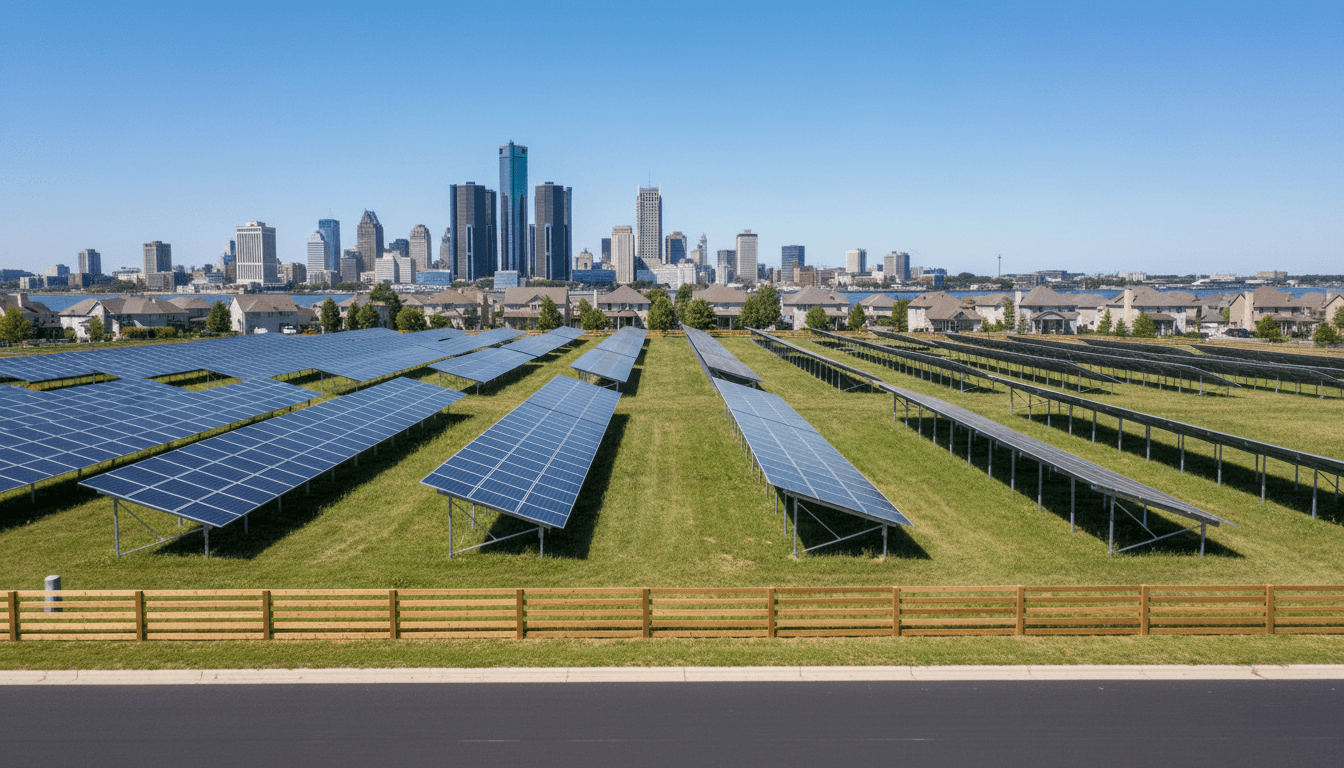
At the forefront of this shift is the “Solar Neighborhoods” initiative. Announced initially by Mayor Mike Duggan and currently moving through various stages of City Council approval and community engagement, the plan seeks to utilize approximately 250 acres of vacant/blighted property to build solar arrays. These arrays would generate enough electricity to offset the power usage of 127 municipal buildings, including City Hall and various police and fire stations.
The city has identified specific neighborhoods where vacancy rates are high, proposing to purchase homes from willing sellers to assemble the necessary land. This approach differs significantly from traditional solar farms, which are typically located in rural areas with vast, uninterrupted acreage. In Detroit, the strategy involves stitching together urban plots to create distributed energy generation hubs.
“This is about turning blight into beauty and energy,” city officials stated during recent community meetings in District 3. The proposal suggests that by concentrating solar developments in the most distressed areas, the city can reduce the burden of maintaining vacant lots while generating renewable power.
Impact on Detroit Residents and Homeowners
For local residents, the push for Detroit clean energy infrastructure brings a mix of opportunities and concerns. The immediate impact for homeowners in selected solar zones includes financial incentives. Under the current framework of the proposal, homeowners who choose to stay in neighborhoods designated for solar fields would receive energy efficiency upgrades to their homes, such as new windows, insulation, and efficient appliances, funded by the project’s partners.
Furthermore, the city has structured the deal to provide community benefits. Neighborhood block clubs and associations in the affected areas are slated to receive annual payments derived from the energy production, which can be used for local improvements, landscaping, or community programming. This model aims to ensure that the transition to green energy directly benefits the immediate stakeholders—the neighbors living next to the panels.
However, the reaction has been mixed. Some residents have expressed skepticism regarding property values and the aesthetics of living adjacent to utility-scale solar arrays. To address these concerns, planners have incorporated vegetative buffers and fencing designs intended to blend the infrastructure into the residential context. It is a critical test case for how post-industrial cities can repurpose land for Detroit neighborhoods without alienating long-term residents.
Federal Funding and Corporate Partnerships
The financial viability of these projects is heavily bolstered by federal support, particularly through the Inflation Reduction Act (IRA). The IRA provides substantial tax credits for renewable energy projects, especially those located in low-income communities or “energy communities”—a designation that applies to regions with a history of fossil fuel employment, fitting Detroit’s profile perfectly.
In addition to municipal efforts, DTE Energy is playing a critical role. The utility company is partnering with the city to connect these solar arrays to the grid. DTE has also been expanding its own renewable portfolio, driven by state mandates to achieve carbon neutrality. According to DTE’s CleanVision plan, the utility aims to reduce carbon emissions by 85% over the next decade.
Local academic institutions are also weighing in on the data. Researchers from the University of Michigan’s School for Environment and Sustainability have highlighted that urban solar installations can help mitigate the “urban heat island” effect, a phenomenon where city centers become significantly hotter than surrounding rural areas due to concrete and asphalt. By replacing vacant, often concrete-laden lots with green infrastructure and solar panels, the city could see modest temperature regulations in those specific zones.
The Broader Green Economy
Solar power is only one arm of the strategy. The automotive sector’s transition to Electric Vehicle (EV) manufacturing constitutes the industrial backbone of Detroit’s sustainability efforts. With General Motors’ Factory ZERO operating on the Detroit-Hamtramck border, the demand for clean energy to power these manufacturing hubs is skyrocketing.
This industrial demand creates a feedback loop: as automakers build more EVs, the local grid must become greener to ensure the lifecycle emissions of those vehicles are truly lower. This economic pressure is accelerating Detroit economy diversification, moving it from a pure manufacturing hub to a center for green technology and innovation.
Challenges and Future Outlook
Despite the momentum, significant challenges remain. The aging infrastructure of Detroit’s electrical grid requires massive upgrades to handle distributed generation from neighborhood solar fields. Additionally, the political landscape involves navigating complex zoning laws and ensuring that the displacement of residents—even if voluntary—does not echo the painful history of urban renewal projects in the city.
What happens next depends largely on the success of the pilot solar neighborhoods. If the city can demonstrate that converting vacant land into energy hubs provides tangible economic relief to neighbors and the municipal budget, it could serve as a blueprint for other Rust Belt cities facing similar land-use issues.
As the City Council reviews the final contracts and land assembly continues, 2024 and 2025 will be pivotal years. The success of Detroit clean energy initiatives will likely be measured not just in megawatts generated, but in the trust rebuilt with residents and the stability brought to the city’s most vulnerable blocks.