For years, the narrative surrounding Detroit’s redevelopment has focused on potential. However, as the city approaches 2026, that potential has solidified into steel, glass, and concrete. A wave of transformational developments is nearing completion, fundamentally altering not just the visual skyline, but the economic and social fabric of the city. From the soaring heights of the Hudson’s site to the sprawling health campuses in New Center, Detroit is undergoing its most significant physical evolution in decades.
As cranes continue to dot the horizon, residents are witnessing the culmination of billions of dollars in investment. These Detroit construction projects are no longer just renderings; they are rapidly becoming the places where Detroiters will work, live, and heal. This report examines the status of these major developments and what they mean for the city as we look toward 2026.
The Anchor: Hudson’s Detroit
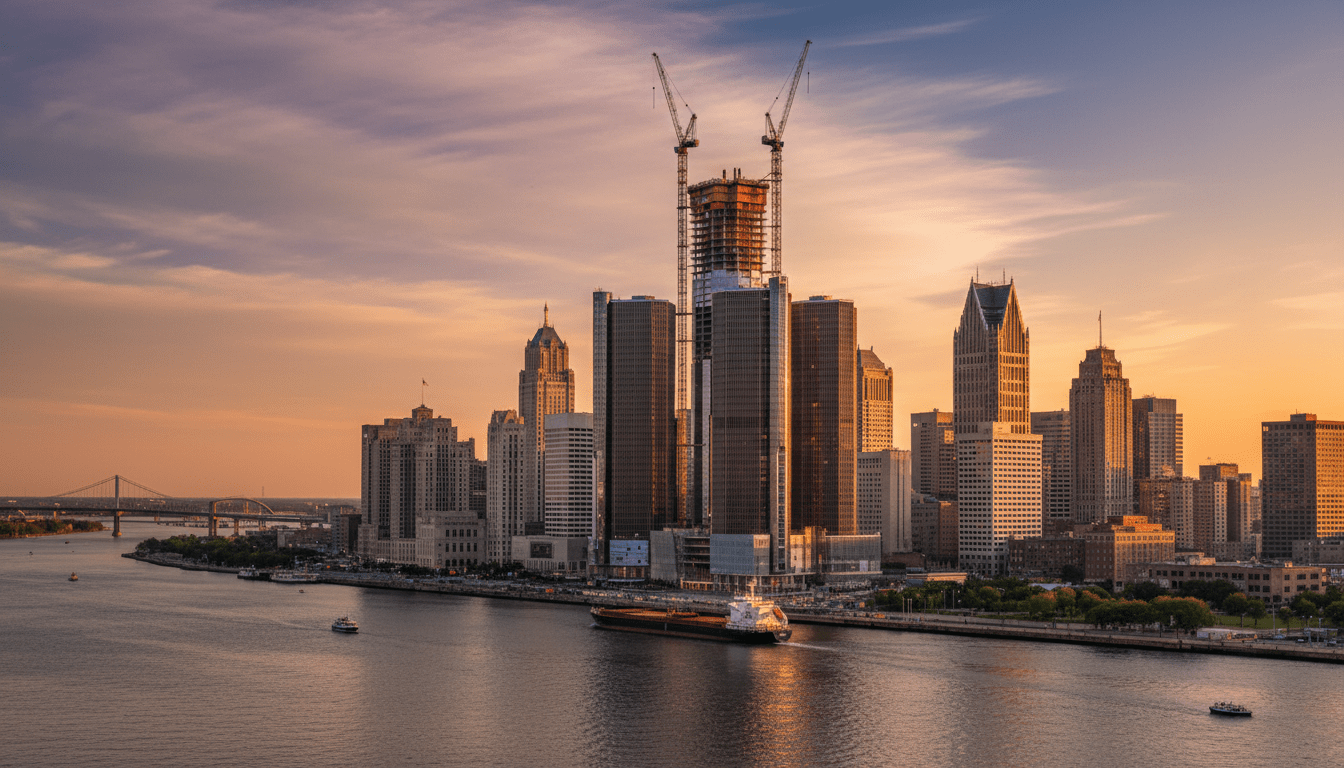
The most visible symbol of this new era is undoubtedly the development on the former J.L. Hudson’s department store site. Managed by Bedrock, this project has reclaimed a vacancy that haunted Woodward Avenue for decades. As of late 2025, the tower has reached its full structural height, establishing itself as the second-tallest building in the city and redefining the downtown silhouette.
According to updates from Bedrock, the project—which includes over 1.5 million square feet of office, retail, residential, and hotel space—is on track for full activation in 2026. The development features a luxury hotel and shifting floor plates that create a distinct, stepped profile against the sky.
“The Hudson’s project is more than a skyscraper; it is a vertical neighborhood,” stated a spokesperson for the development team in a recent press briefing. “By 2026, this site will facilitate thousands of jobs and bring a density to Woodward Avenue that hasn’t been seen in generations.”
The Innovation Corridor: UMCI and The District Detroit
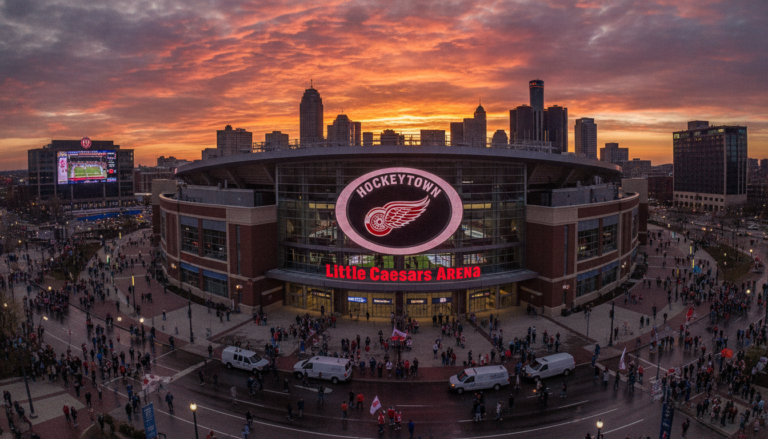
While the Hudson’s tower dominates the vertical conversation, the ground-level transformation in The District Detroit is equally significant. The University of Michigan Center for Innovation (UMCI), a $250 million academic building funded largely by a donation from Stephen Ross and built on land donated by the Ilitch organization, is set to anchor a new corridor of technology and education.
Located near Grand Circus Park, the UMCI is designed to be a catalyst for high-tech job creation. Construction progress has been steady, with the facility expected to welcome students and startups by 2027, though the physical structure will be a dominant fixture by 2026. This project is part of a broader $1.5 billion proposal for The District Detroit, which includes new office towers and residential units.
For more on how these commercial developments influence local markets, read our analysis on Detroit’s evolving economic landscape.
New Center’s $3 Billion Health Expansion
Moving north of the downtown core, New Center is experiencing a construction boom rivaling the Central Business District. The partnership between Henry Ford Health, Tom Gores, and Michigan State University is reshaping the neighborhood with a massive $3 billion expansion. This includes a new hospital tower, a medical research center, and mixed-use residential developments.
Data from the City of Detroit Planning and Development Department indicates that this is the largest single development investment in the city’s neighborhoods in decades. The new hospital facility, designed to be a destination for specialized care, is rising rapidly. By 2026, the structural shell of the new hospital tower will be a prominent feature of the skyline north of I-94, bridging the visual gap between Midtown and New Center.
Transforming the Waterfront
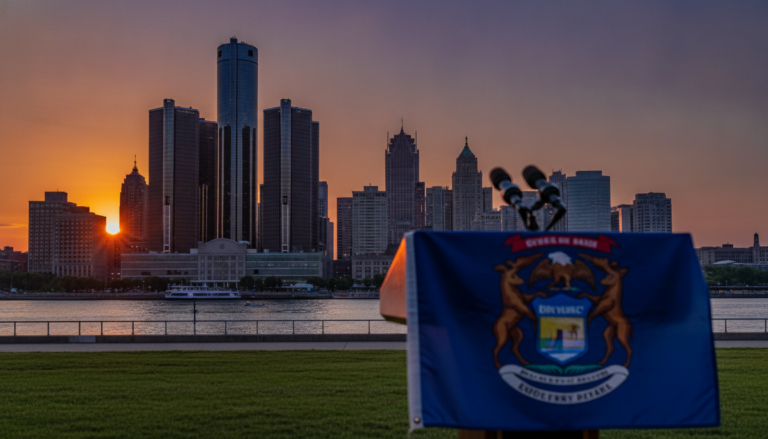
Not all vertical construction is commercial. The transformation of the West Riverfront into the Ralph C. Wilson Jr. Centennial Park represents a massive infrastructure undertaking. While not a skyscraper, the terraforming and construction of the park’s recreational hills and structures are reshaping how the city interacts with the Detroit River.
Set to be fully open to the public in 2025, the park will be a mature fixture by 2026. It serves as a critical link in the Detroit Riverwalk, which has been consistently voted the best in the nation. The completion of the Uniroyal Promenade has finally connected the East Riverfront to Belle Isle, creating a seamless pedestrian path that was merely a dream ten years ago.
Impact on Detroit Residents
While the skyline changes are photogenic, the impact on local residents remains the most critical aspect of these Detroit construction projects. The flurry of development has brought renewed scrutiny regarding affordable housing and community benefits.
Under the city’s Community Benefits Ordinance (CBO), large-scale projects like the Future of Health and The District Detroit were required to engage with Neighborhood Advisory Councils. These negotiations resulted in commitments to affordable housing units, job training programs, and direct investments in surrounding neighborhoods.
However, locals express a mix of optimism and caution. “It’s good to see the cranes, it means money is flowing,” said Marcus Davis, a longtime resident of the Cass Corridor. “But we need to make sure the jobs building these towers go to Detroiters, and that the rent in the new buildings isn’t just for people moving in from the suburbs.”
The city has reported that strict adherence to the “51% rule”—which mandates that 51% of work hours on publicly funded construction projects be performed by Detroit residents—remains a priority enforcement area. For details on housing availability, see our report on affordable housing initiatives in the city.
What Happens Next?
As 2026 approaches, the focus will shift from structural steel to interior build-outs and tenant occupancy. The completion of the Hudson’s site will likely trigger a psychological shift in the city, marking the end of the “blight era” narrative and the beginning of a stabilized, dense urban core.
The success of these projects will ultimately be measured not by their height, but by their occupancy and their integration into the street-level life of Detroit. With the NFL Draft having successfully showcased the city in 2024, Detroit is positioning itself to host major conventions and international tourism by 2026, supported by this new inventory of hotels and public spaces.