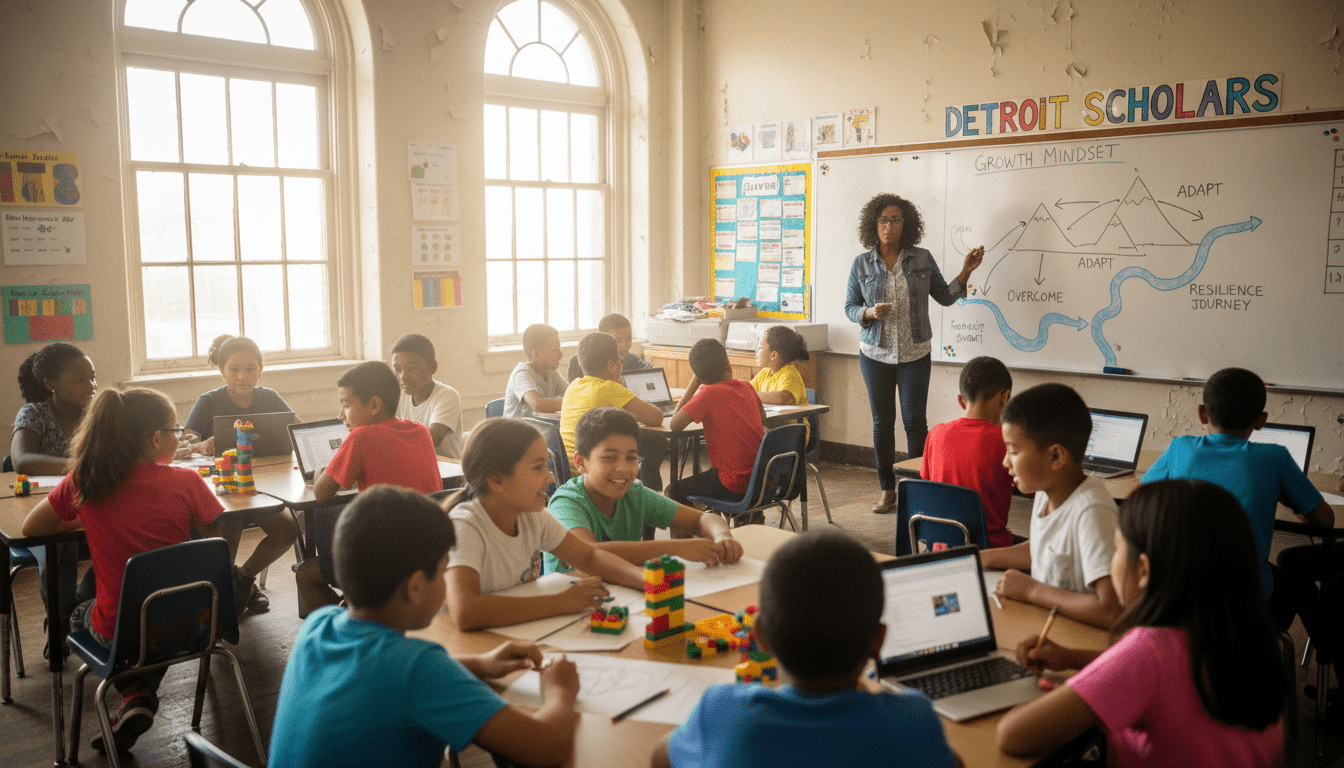
In classrooms across the city, a quiet shift is taking place in how Detroit educators approach student achievement and mental health. Moving beyond traditional standardized testing metrics, the Detroit Public Schools Community District (DPSCD) and local non-profit organizations are increasingly integrating "growth mindset" frameworks to help students navigate post-pandemic challenges.
The concept, originally coined by psychologist Carol Dweck, emphasizes that intelligence and abilities can be developed through dedication and hard work. For Detroit students, many of whom faced disproportionate hardships during the COVID-19 pandemic, this psychological approach is being retooled as a critical survival skill and a pathway to academic recovery.
Shifting the Narrative in Detroit Classrooms
According to recent reports from the DPSCD, the focus has broadened from rote memorization to social-emotional learning (SEL). District officials have noted that fostering resilience is no longer an optional add-on but a prerequisite for academic success. Teachers are being trained to praise the process of learning rather than just the result, a core tenet of growth mindset strategies.
"We are seeing a deliberate move to help students understand that struggle is a part of learning, not a sign of failure," said a representative from the Detroit Federation of Teachers in a recent statement regarding professional development initiatives. "When a student in Detroit faces obstacles—whether it’s transportation issues or economic instability at home—the school environment needs to be the place where they feel empowered to overcome those hurdles, not defeated by them."
This pedagogical shift aligns with broader efforts detailed in the recent city education budget allocation, which earmarked specific funds for mental health support and counseling services designed to bolster student retention.
Impact on Detroit Residents and Families
For parents and guardians in neighborhoods like Brightmoor and Southwest Detroit, the practical application of the growth mindset in Detroit schools offers a renewed sense of partnership between home and the classroom. It moves the conversation away from deficit-based language—focusing on what students lack—toward asset-based language that values their resilience.
Local community centers are also adopting this language. The Skillman Foundation and other Detroit-based philanthropic organizations have supported after-school programs that reinforce these concepts. By aligning the language used by coaches, mentors, and teachers, the community is creating a safety net that encourages youth to persist through challenges.
The impact is tangible for families navigating the complex landscape of recovery. When schools prioritize resilience, attendance rates often stabilize. Data suggests that students who feel supported emotionally are more likely to show up for class. This is crucial for Detroit, where chronic absenteeism has been a persistent challenge highlighted by ongoing transportation infrastructure discussions within the city council.
Background and Data: The Need for Resilience
The necessity for this approach is backed by hard data. According to the U.S. Census Bureau, the poverty rate in Detroit, while improving, remains a significant barrier to educational attainment. Poverty often introduces chronic stress, which can inhibit cognitive development. Educational psychologists from the University of Michigan have published research indicating that interventions focusing on mindset and resilience can help mitigate the negative cognitive effects of socioeconomic stress.
Furthermore, national data from the National Assessment of Educational Progress (NAEP) showed historic declines in math and reading scores across the country following the pandemic. In Detroit, where resources were already stretched, the gap widened. The district’s response has been to double down on support systems.
According to the Detroit Public Schools Community District, strategic plans now include specific metrics for school culture and climate, acknowledging that a student’s belief in their ability to improve is statistically linked to higher test scores over time.
Local Business and Workforce Implications
The application of the growth mindset extends beyond K-12 education and into Detroit’s workforce development. Detroit at Work, the city’s employment agency, frequently encounters job seekers who require retraining for the modern economy, particularly in the burgeoning electric vehicle (EV) manufacturing sector.
Local business owners report that soft skills—specifically adaptability and resilience—are in higher demand than ever. "We can teach technical skills," said a manufacturing plant manager in the Jefferson Chalmers neighborhood. "What we need are employees who don’t give up when they hit a snag. That resilience starts in the schools."
What Happens Next?
Looking ahead, the integration of growth mindset principles is expected to deepen. The district is exploring partnerships with mental health professionals to provide more robust wrap-around services. The goal is to create a sustainable ecosystem where resilience is taught, practiced, and rewarded.
While challenges remain—including funding disparities and teacher shortages—the commitment to changing the psychological landscape of education in Detroit marks a significant turning point. By treating resilience as a skill that can be taught, Detroit is investing in its most valuable resource: its next generation.