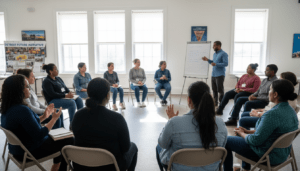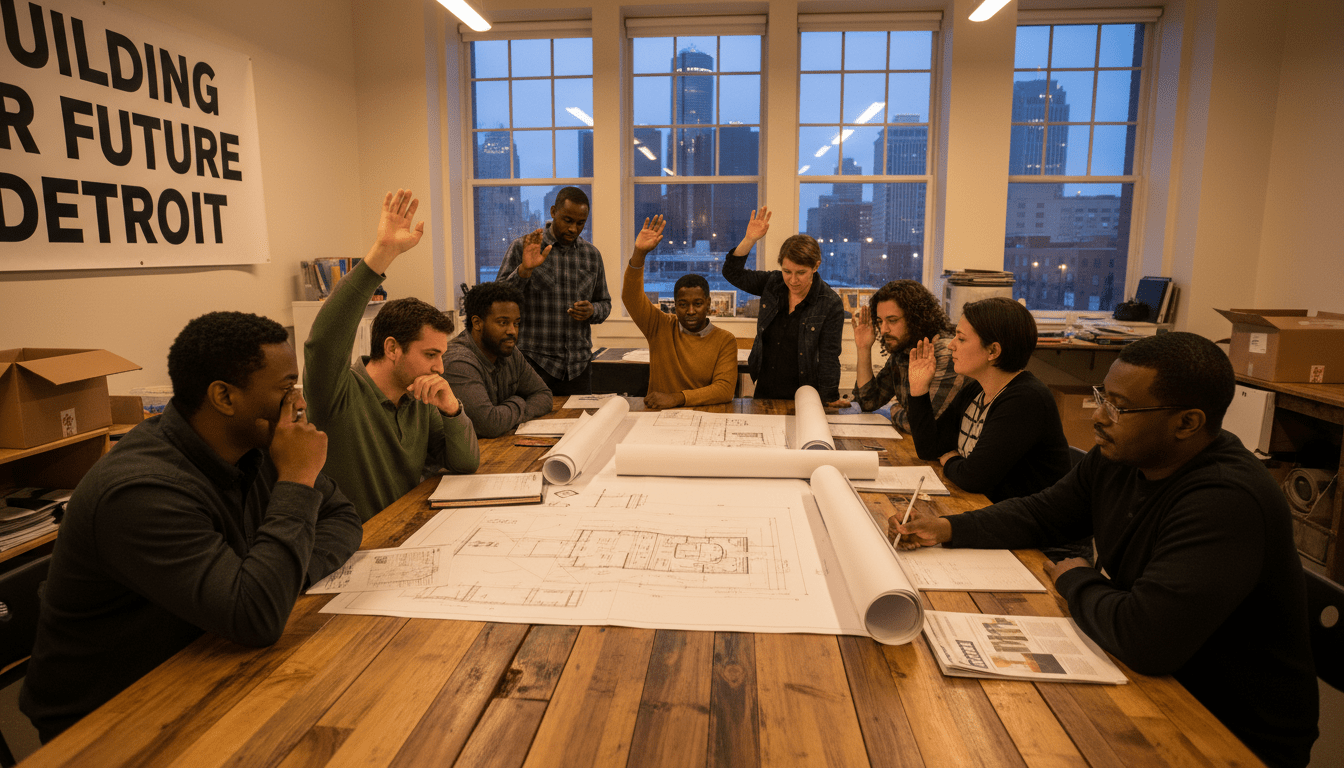
In the basement of a community center on Detroit’s West Side, the historic model of neighborhood governance is undergoing a quiet but significant transformation. For decades, many of Detroit’s block clubs and community associations operated on a model of exhaustive consensus—a process where decisions regarding park cleanups, grant applications, and blight reporting often waited until every voice was in total agreement. While democratic, this approach often left critical funds unspent and projects in limbo.
Today, urgency is driving a shift in strategy. With millions in American Rescue Plan Act (ARPA) funds on the table and strict federal deadlines for expenditure looming, Detroit’s grassroots organizations are moving from slow-motion consensus to effective, strategic action. This shift in Detroit neighborhood revitalization is not just about bureaucracy; it is about how residents exercise power to reshape their immediate surroundings before resources dry up.
The Challenge of Consensus in Crisis
According to data from the City of Detroit, the sheer volume of neighborhood improvement grants available since 2021 is unprecedented. However, the capacity of volunteer-led groups to process these opportunities has been a bottleneck. The Department of Neighborhoods has noted in recent public meetings that while funds are available for beautification and capacity building, some organizations struggle to execute contracts due to internal decision-making paralysis.
Local District Managers have observed that groups clinging to 100% unanimity often miss application windows. The transition from “talking about the problem” to “voting on a solution” is the central friction point. In the past, a disagreement over which contractor to hire for a community garden could stall a project for a full growing season. Now, groups are adopting bylaws that allow for majority votes and delegating authority to executive committees to ensure Detroit neighborhood revitalization projects move forward without delay.
Structuring for Effective Action
The pivot toward effective action involves more than just faster voting; it involves professionalizing how community groups operate. Intermediary organizations and non-profits across the city are stepping in to train block club leaders in board governance and strategic planning. The focus is shifting from grievance-based meetings to agenda-driven decision-making.
Reports from the City of Detroit Department of Neighborhoods indicate a rise in registered neighborhood organizations updating their operational bylaws. These updates often include specific clauses for “emergency decision making”—a direct response to the need for agility when city or federal grants are announced with short turnaround times.
Local business owners in the Jefferson Chalmers and Live6 areas have expressed support for this streamlined approach. In reported statements at recent corridor meetings, commercial stakeholders emphasized that predictable, decisive community leadership gives developers the confidence to invest. When a neighborhood association can quickly signal support or negotiate community benefits with a unified voice, commercial development tends to follow faster than in areas plagued by factional infighting.
Impact on Detroit Residents
For the average resident, this shift in governance style translates to visible results. Instead of years of meetings regarding a vacant lot, neighbors are seeing prompt action: lots being cleared, pocket parks being installed, and alleys being secured. The efficiency of the decision-making process directly correlates to the quality of life on the block.
Furthermore, this evolution empowers residents to better advocate for themselves at the city level. When the Detroit City Council reviews development proposals, Community Advisory Councils (CACs) that present clear, majority-backed demands are finding they have more leverage than those presenting fractured opinions. The ability to reach a decision—even a difficult one—and stick to it is proving to be a potent political tool.
Data and Future Outlook
The pressure to refine group decision-making is backed by hard numbers. The U.S. Census Bureau’s recent estimates show stabilizing populations in several key Detroit neighborhoods, increasing the demand for organized services. Concurrently, the timeline for ARPA obligates cities to commit funds by the end of 2024 and spend them by 2026. This “use it or lose it” scenario creates a natural selection pressure: groups that decide quickly attract resources; those that don’t risk being left behind.
Looking ahead, the model of Detroit development projects is likely to rely increasingly on these modernized community structures. As the city moves away from top-down management toward public-private-community partnerships, the organizational health of neighborhood groups becomes a key economic indicator.
The era of the endless meeting is ending. In its place, a new culture of executive function is emerging within Detroit’s neighborhoods, ensuring that the voice of the community results in concrete, brick-and-mortar reality.